2 Rare-Earth Stocks to Buy Right Now, and 1 to Sell

Key Points
-
China dominates rare-earth extraction and processing, creating a major supply-chain vulnerability for the U.S.
-
The U.S. is investing heavily in domestic rare-earth mining, processing, and “mine-to-magnet” production.
-
MP Materials, USA Rare Earth, and TMC are three rare-earth stocks that have caught investors’ attention.
Rare-earth elements are crucial for modern technologies, including electric vehicles, data centers, and advanced defense systems. Yet the supply chain is heavily concentrated in China, which controls 70% of global rare-earth extraction and 90% of rare-earth processing, according to research by The Motley Fool.
This reliance on a single country makes the U.S. vulnerable to supply chain disruptions, and policymakers are taking steps to boost domestic production of these critical minerals. Over the past year, several publicly traded companies have emerged to address this gap, including MP Materials (NYSE: MP), USA Rare Earth (NASDAQ: USAR), and TMC The Metals Company (NASDAQ: TMC).
Missed Nvidia in 2009? This Rare Signal Is Flashing Again.In 2009, a “Double Down” signal flashed for a little-known chipmaker called Nvidia. For the first time in years, that same “Total Conviction” signal is flashing for a company 1/100th the size of Nvidia. Continue »
These companies are leading the charge as the U.S. builds a vertically integrated “mine-to-magnet” supply chain, but each has a very different risk profile. If you’re considering investing in rare-earth stocks, two of these are a buy, while one faces far more uncertainty. Here’s what you need to know.
Image source: Getty Images.
The rare-earth supply push
Rare-earth elements are crucial for emerging technologies, and magnet metals such as neodymium, praseodymium (NdPr), dysprosium, and terbium are key minerals used to manufacture high-powered permanent magnets. These magnets are used in electric vehicle motors, semiconductors, data center cooling systems, and military applications like fighter jets and missile guidance systems.
China has a stronghold on rare-earth elements and has used its position to tighten export controls as leverage in trade negotiations with the U.S. For this reason, the U.S. is taking drastic steps to boost its rare-earth industry, including launching a Strategic Critical Minerals Reserve, providing funding to help companies build out their mining and processing capabilities, and entering into historic partnerships that include investments in these rare-earth stocks.
These two rare-earth stocks are better buys right now
When it comes to rare-earth stocks, MP Materials and USA Rare Earth look like more appealing investment options, while The Metals Company faces more regulatory risk with its deep-sea mining pursuits.
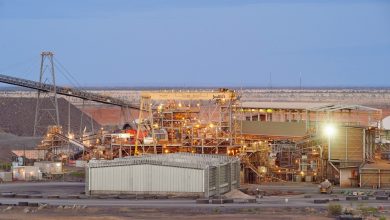
MP Materials has the most developed mining business, operating the only commercial-scale, active rare-earth mine in North America at Mountain Pass, California. The company has a first-mover advantage and was a clear choice when the U.S. government began investing in building out its domestic mine-to-magnet supply chain.
Last year, MP entered into a public-private partnership with the U.S. Department of Defense that included several unprecedented guarantees. The government established a 10-year price protection agreement (PPA) that guarantees a minimum price of $110 per kilogram for MP’s neodymium-praseodymium (NdPr) product. This comes as the U.S. aims to protect MP from China’s aggressive state-subsidized programs.
As part of this, the DOD purchased $400 million in convertible preferred stock and warrants, which could represent up to 15% ownership in the rare-earth stock. In addition, the government has committed to purchasing 100% of the magnet production from MP’s planned 10X facility, locking in an annual minimum earnings before interest, taxes, depreciation, and amortization (EBITDA) of $140 million.
USA Rare Earth is another company emerging as an attractive rare-earth stock thanks to government funding and huge acquisitions of established assets that diversify it away from Chinese supply chains. The company secured $1.6 billion in federal financing under the CHIPS and Science Act to boost its mine-to-magnet business, which will help pay for its $1.2 billion permanent magnet facility in South Carolina.
Last year, USA Rare Earth acquired Less Common Metals (LCM), providing it with immediate metal-making capabilities and securing feedstock for its Oklahoma production plant. It also acquired the Serra Verde Group for $2.8 billion, giving it control of Brazil’s Pela Ema mine, the only scaled producer outside Asia with all four critical magnetic rare-earth elements. This deal is expected to close in the third quarter.
TMC faces unique legal and regulatory risks
TMC relies on developing commercial-scale deep-sea mining capabilities. But while the sea floor is rich in polymetallic nodules, mining the deep ocean floor has not been tested on a large scale. Not only that, but the company also faces scrutiny from environmentalists who are concerned that it could release toxins or stored carbon through sediment plumes, causing permanent damage to ocean biodiversity.
The company benefits from a Trump administration executive order designed to expedite permitting for deep-sea mining, but faces legal risk along the way. That’s because the International Seabed Authority (ISA) has not yet finalized exploitation regulations, and there is heavy debate over whether the U.S. even has the authority to issue mining permits in these waters.
On July 20, 2026, the Seabed Disputes Chamber of the International Tribunal for the Law of the Sea (ITLOS) issued unanimous provisional orders ordering the International Seabed Authority (ISA) to respect due process regarding TMC’s subsidiaries. While this removes some regulatory uncertainty, TMC is still a highly risky stock until the ISA finishes the formal Exploitation Code and approves TMC’s commercial extraction applications.
The bottom line on rare-earth stocks
Rare-earth elements have come into focus in recent years, and for good reason. As the U.S. builds up its mining and processing capabilities and boosts mine-to-magnet production, MP Materials and USA Rare Earth stand ready to benefit. While TMC could benefit from this push as well, the company faces significantly more regulatory risks than the others do.
Investors should keep in mind that investing in any of these stocks carries risk, and sudden policy pivots or operational delays could trigger significant volatility. With that said, aggressive investors bullish on the rare-earth theme are better off buying MP Materials and USA Rare Earth, while avoiding (or selling) TMC until its regulatory and legal pathways become clearer.
Should you buy stock in MP Materials right now?
Before you buy stock in MP Materials, consider this:
The Motley Fool Stock Advisor analyst team just identified what they believe are the 10 best stocks for investors to buy now… and MP Materials wasn’t one of them. The 10 stocks that made the cut could produce monster returns in the coming years.
Consider when Netflix made this list on December 17, 2004… if you invested $1,000 at the time of our recommendation, you’d have $390,394!* Or when Nvidia made this list on April 15, 2005… if you invested $1,000 at the time of our recommendation, you’d have $1,209,184!*
Now, it’s worth noting Stock Advisor’s total average return is 899% — a market-crushing outperformance compared to 206% for the S&P 500. Don’t miss the latest top 10 list, available with Stock Advisor, and join an investing community built by individual investors for individual investors.
*Stock Advisor returns as of July 29, 2026.
Courtney Carlsen has positions in MP Materials, TMC The Metals Company, and USA Rare Earth. The Motley Fool has positions in and recommends MP Materials. The Motley Fool has a disclosure policy.