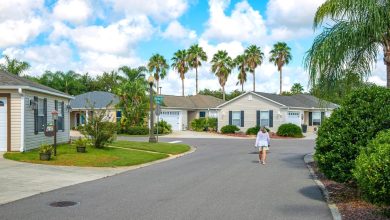
$2,500 a Month in Sun City: Here’s How to Retire There at 62 Without Touching Your Savings

Retiring to Sun City on Social Security alone sounds straightforward until two budget lines most people skip quietly blow up the math before age 65 even arrives.
This post may contain links from our sponsors and affiliates, and Flywheel Publishing may receive compensation for actions taken through them.
The pitch is familiar: sell a higher-cost state, buy a paid-off home in Sun City, Arizona, live on Social Security, leave savings untouched. The community was built for exactly this scenario, and the arithmetic looks tidy at first glance. The problem is that most versions skip two critical lines: three years without Medicare and a Social Security benefit that shrinks permanently when filed at 62. Here is what the budget actually absorbs and where the $2,500 target holds up or breaks.
What Sun City Actually Costs in 2026
Sun City may be age-restricted with mostly single-story homes, but that does not shield buyers from Arizona’s broader price trends. The FRED All Transactions House Price Index for Arizona sat at 731.21 in the second quarter of 2026, down slightly from 732.7 at the start of the year. That is a statewide number, not a Sun City listing, but it tells you the market has cooled without giving much ground. Nationally, existing home sales ran at an annualized 4.06 million in July 2026, which the data calls a soft market.
The expenses that make Sun City workable are the ones that stay relatively steady. Arizona ranks 15th overall on the Tax Foundation’s 2025 State Tax Competitiveness Index, with an 8th-place ranking on individual income tax and a 13th-place ranking on property tax. Social Security is not taxed at the state level. The overall cost of living index sits at 100.677, basically right at the national average. Sun City itself adds a low mandatory recreation assessment, and property tax bills in Maricopa County typically run well below what you would pay for a comparable home in Illinois or New Jersey.
Summer cooling is the one utility line you have to respect. A Phoenix-area home running air conditioning from May through September won’t come in at $120 a month. Anyone budgeting Sun City off Midwestern utility averages will be off by an amount that eats up the entire discretionary column.
Social Security at 62 Is a Permanent Reduction
The Social Security Administration’s rule for anyone born in 1960 or later is that filing at 62 locks in a benefit roughly 30% below the full retirement age amount, for life. Cost-of-living adjustments apply to the reduced amount, not the original (we boiled the 62 versus 67 versus 70 decision down to a one-page framework in a free guide, here). The 2027 COLA is tracking toward 3.1% based on the first month of the third-quarter tracking window, which lifts the check but does not undo the reduction.
If the $2,500 monthly target is entirely Social Security, the underlying full retirement age benefit has to be roughly $3,570 for the reduced check to hit $2,500. That is above the average retired worker benefit reflected in the $1,645.4 billion in Social Security transfer receipts recorded in the second quarter of 2026, and it implies a fairly strong 35-year earnings record.
A second wrinkle for anyone considering part-time work before full retirement age. The earnings test claws back $1 of benefits for every $2 earned above the annual limit set by SSA.
Health Insurance Gap at 62
Medicare eligibility begins at 65. The standard 2026 Medicare Part B premium is $202.90 per month, with an annual Part B deductible of $283, and approximately 99% of beneficiaries pay no Part A premium. None of that helps at 62. The three-year bridge must be filled by an ACA marketplace plan, COBRA from the last employer, or coverage through a working spouse.
The ACA contains the trap that makes this scenario harder than it looks. Marketplace premium tax credits are calculated off modified adjusted gross income. A retiree living on $30,000 of Social Security, with no wage income and no large IRA withdrawals, lands inside subsidy territory and can buy a silver plan in Maricopa County for a modest net premium. The moment the same retiree touches a traditional IRA or taxable brokerage to plug a budget hole, MAGI climbs, subsidies phase down, and the net premium can jump by hundreds of dollars a month. That is the direct tension with this plan’s premise. The whole point was to leave savings alone. The ACA rewards exactly that behavior with a subsidy and punishes any deviation with a premium spike that lasts until Medicare kicks in.
Does $2,500 Actually Cover It?
Show up at Sun City with the house fully paid off, file for Social Security at 62 and accept a benefit around $2,500 after the permanent reduction, keep MAGI low enough to hold a subsidized silver plan, and treat the summer electric bill as the real number it actually is, and the budget is tight but doable. Property taxes, the community recreation assessment, homeowners insurance, water, electric, groceries, and a reserve for a used vehicle replacement all fit inside $30,000 a year, largely because Arizona’s tax structure and Sun City’s built environment keep fixed costs low.
Now flip the assumptions. If you are still carrying a mortgage, renting a two-bedroom at current Phoenix rents, or your full retirement age benefit does not clear the mid-$3,000s, that $2,500 won’t cover it once the ACA bridge is priced at market rates. The plan only works with both a paid-off home and a subsidized health plan in place. The number to keep in mind is the modified adjusted gross income figure that preserves the health premium subsidy for those three years between 62 and 65, because that is the constraint everything else in the budget has to bend around.
Contact [email protected] for any questions or corrections.