Nasdaq Futures Tonight – The Quiet Market Signal Traders Watch Before Dawn
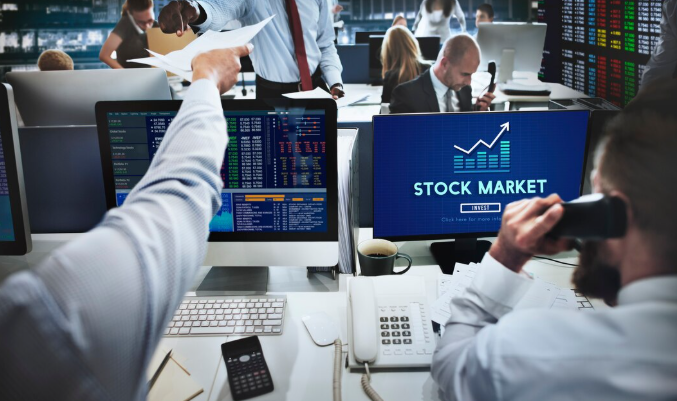
Nasdaq futures continue to move silently on trading screens worldwide late at night, long after the majority of people have given up on the stock market. At 24,231, the number was down about 1.78 percent for the session. That change may seem abstract to someone who isn’t involved in finance. However, those few hundred points convey a very real message inside trading rooms and dark apartments where night traders view charts.
Nasdaq futures function as a sort of prelude to the stock market’s more boisterous discourse. Through the CME’s Globex system in Chicago, the contracts trade virtually continuously, allowing the market to essentially follow the sun across time zones. While New York traders are sleeping, someone in London, Singapore, or Dubai is analyzing the same data in an attempt to predict the opening time of the tech-heavy Nasdaq-100 index in the morning.
| Category | Details |
|---|---|
| Contract Name | E-mini Nasdaq-100 Futures |
| Symbol | NQ |
| Exchange | Chicago Mercantile Exchange (CME) |
| Current Price | 24,231.25 USD |
| Daily Change | −439.00 (−1.78%) |
| Opening Price | 24,435.25 |
| Day High | 24,473.00 |
| Day Low | 24,000.00 |
| Previous Close | 24,670.25 |
| Volume | 116,230 Contracts |
| Open Interest | 267,652 |
| Contract Size | $20 × Nasdaq-100 Index |
| Settlement Type | Cash Settlement |
| Reference Website | https://www.cmegroup.com |
It can be oddly cinematic to watch these contracts move. On a recent evening, as news headlines flashed across financial terminals, the market opened at 24,435, surged momentarily toward 24,473, and then slid closer to 24,000. Every small action was a response to whatever the world economy was throwing at investors at the time, sometimes rational, sometimes sentimental.
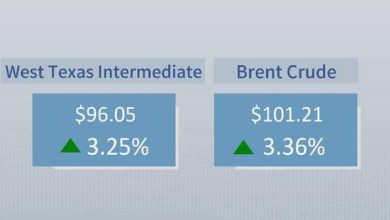
Surprisingly, people outside the technology sector have been causing a lot of the tension lately. Interest-rate anxiety, rising oil prices, and geopolitical conflicts have all infiltrated the discussion. Recently, oil prices surged above $111 per barrel, causing equity markets to tremble a little. Despite the fact that technology companies do not use oil like airlines do, investors frequently interpret rising energy prices as a sign that inflation may continue to remain stubbornly high.
That relationship isn’t always logical. Markets, however, seldom act like tidy economic textbooks. Traders frequently react first, then do analysis. Suddenly, investors start bracing for a weaker opening bell on Wall Street as futures charts start to decline and algorithms quicken the movement.
The change in mood might have more to do with psychology than the basics. Companies that have long dominated the technology economy, such as Apple, Microsoft, Nvidia, and Amazon, are represented in large numbers on the Nasdaq-100 index. They continue to make good profits. However, high-growth technology stocks are typically the first to feel the strain when global uncertainty increases.
It’s difficult to ignore the odd silence surrounding such a massive market when you’re outside the Chicago Mercantile Exchange early in the morning, before the financial district is completely awake. Rows of servers running automated trading programs that respond in milliseconds to economic headlines blink under fluorescent lights inside the exchange’s data centers. These machines are now used for most Nasdaq futures trading.
Algorithms monitor oil prices, read news feeds, forecast interest rates, and occasionally even scan social media sentiment. There’s a headline. A program responds. In a matter of seconds, futures move several points. Although the speed is remarkable, it also begs the question of how much of contemporary trading is still genuinely human.
Nevertheless, emotion continues to infiltrate the system. Nasdaq futures frequently experienced overnight spikes during the height of the AI boom as traders projected growing demand for chips, cloud computing, and AI software. Even before the U.S. markets opened, the excitement was evident. Throughout the Asian trading session, futures would rise steadily, as if global investors were already certain that the tech industry would continue to grow for years to come.
Now there’s a little more caution in the tone. Not exactly pessimistic. Just be cautious. According to technical indicators, the futures contract has recently fallen below important moving averages, including those that a lot of traders keep a close eye on. Although it doesn’t ensure a downturn, breaking those thresholds tends to unnerve investors.
Leverage is another intriguing component. $20 times the Nasdaq-100 index is represented by each E-mini Nasdaq futures contract. Because of this structure, even tiny price changes can result in significant financial gains—or excruciating losses. While short-term traders chase overnight volatility, professional hedge funds use these contracts to hedge portfolios.
It’s difficult to ignore the significant shift in the market’s rhythm over time. The opening bell in New York felt like the official start of the day’s events decades ago. Nowadays, a large portion of the story has already taken place in futures markets thousands of miles away by the time traders get to their desks on Wall Street.
Occasionally, the signals turn out to be precise. Overnight, futures decline, and the following morning, technology stocks open lower. At other times, once the cash session starts, the market totally turns around. Part of the peculiar allure of trading futures is its unpredictable nature.
It’s similar to studying the ocean before a storm hits land to watch Nasdaq futures move through the night. Long before the coastline is affected, the waves start to change. Even though investors are aware that the signals aren’t perfect, they still keep an eye on them in an effort to find hints about what the market might do tomorrow.