Viral Iran Analysis Puts Congressional Candidate Adam Dunnigan in the Spotlight
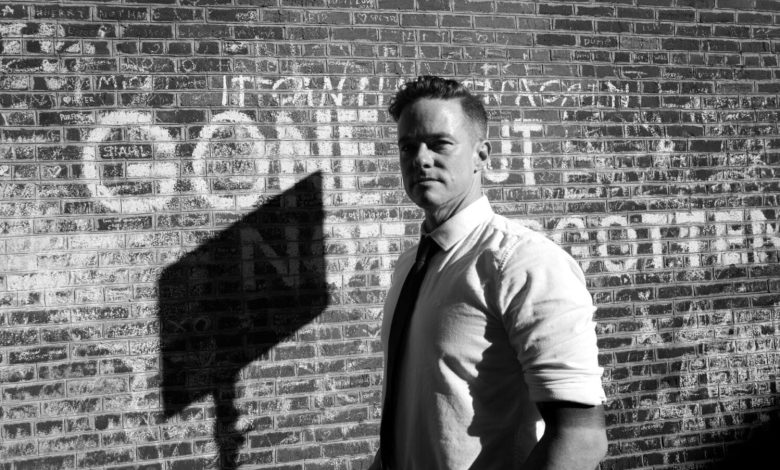
Two months ago, Adam Dunnigan had no public digital footprint.
Today, the former Marine and CIA case officer has built a social media following that exploded to more than 170,000 people in just a few weeks, fueled largely by a series of detailed video breakdowns of the growing conflict with Iran. In one viral stretch, Dunnigan’s audience jumped from roughly 3,000 followers to more than 140,000 almost overnight. He is suddenly one of the most prominent voices in Virginia discussing the conflict.
The sudden attention has turned a relatively unknown Democratic primary challenger into someone people across the country are now watching, not only as a candidate but as a voice offering real-time analysis on international security.
Dunnigan originally entered the race in Virginia’s 8th Congressional District primary, but with redistricting now reshaping the map, he is expected to run in the newly configured 7th District.
We caught up with him in Charlottesville last week.
You’ve been on the campaign trail for a couple months now. What has the transition been like from a very private life to suddenly being in the public eye?
I don’t think I can understate what a fundamentally different paradigm it is to be in the public eye, versus classified CIA life. I resigned from CIA in protest because I could no longer support or be part of the policy agenda that I saw coming, and that was in December. Then January 2, I filed my formal paperwork with the FEC to run, just because I didn’t see the anger that I felt reflected in our elected officials.
In that transition, I went from zero to sixty immediately. I never had social media, and now it’s out there. I never had these public contact networks. Most of my time was spent overseas, undercover.
So having to start from scratch and build a campaign, it’s been a hell of a transition, both emotionally and intellectually. Especially dealing with the fact that I cannot be anonymous anymore, I’m no longer under the radar.
At events it’s impossible to blend in, everybody wants to talk to you. But I take it as a compliment. I still approach this with a sense of humility. I have things that I want to see reflected in government, and things to say that might give people more confidence that there are still good-faith actors in politics. Even if I feel taxed, overstressed, or overstimulated, I still see this thing I’m trying to do as the most important.
Was there a particular moment that made you decide to run?
I wasn’t looking at running. It never really crossed my mind. I’ve made jokes before about getting on some [Congressional] committees and making my former bosses brief me. But I had no serious plans. It was not the intention.
But then Trump got elected again in 2025. I already sat through the entire first Trump administration, having to execute on bad policy that I believe probably got people killed—and that’s not giving anything away from classified work.
I believe some sloppy oversight on intelligence led to substandard performance on the part of the agencies, but it was also a lack of trust in the electorate between state security and everything else. So I saw all of that, and then the feeling hit me, especially with Stephen Miller as a relevant advisor in the orbit of foreign and domestic policy—those appointments, and many others motivated me.
Even on the Democratic side, we’re not in love with our elected leaders at this point. I saw some bad behavior and bad policy coming, along with some people who I didn’t believe had the best interest of the U.S. at heart. So that’s what kicked me over the edge.

Last week your analysis of the Iran conflict suddenly reached a huge audience online. What was that experience like for you?
Overwhelming, validating, and humbling. The overwhelming part is that I’ve never been on social media before. To go from a small following that was following a clip I could understand to the outpouring of support, interest, and outreach that I got over the last week—I’m still getting my head around it.
But it’s validating because a lot of the stuff I’m putting out isn’t just me. I’m surrounding myself with really smart people who are just as frustrated as the voters are with Democrats. It’s cool to see that what we have to say is resonating.
When I was buried in the federal architecture and intelligence agencies, I never had direct reassurance that what I was doing mattered. This does matter. If I can use that to make people feel better, reduce anxiety, or keep them informed participants in our democracy, that’s already a service regardless of the election.
Do you think a large social media following actually translates into votes?
I don’t know. We’re going to find out. I do think it will correlate to some degree. A big thing in politics, especially in primary races, is impulse and name recognition, or it’s deeply entrenched Democratic voters who already vote in primaries.
So the reality is, I either have to win over every voter who voted for my [district’s] incumbent [Don Beyer] or I have to activate an entirely new voter base to vote in my current race, as it’s drawn, minus whatever happens with redistricting.
What that means for the social media hype is that I don’t consider it a victory in and of itself, because who knows what actually translates. But what I will say is that at least right now there are about three million people who have seen my name.
And if they’re in Virginia, they’re that much more inclined to engage with the project I’m putting together and see my campaign as viable in the face of a Democratic machine that does everything it can to actively discourage competition.

Redistricting could potentially move your race from the 8th District to the 7th. What are your thoughts on the redistricting debate?
Oh man, now it’s changing my race.
My thoughts on redistricting are pretty straightforward. I will vote for it. People should vote for it. But we should approach this cautiously and understand the way we are potentially exceeding the mandate for Democratic victories here in Virginia.
So redrawing these maps to win more seats and take back a more useful majority in the House? Yes, absolutely. If we don’t redistrict and we fail to achieve a majority in the House, then it will be another example of Democrats not acting when the moment demanded it of them.
So yes, I believe we should do it. However, we are clearly gerrymandering for partisan purposes, and I’m deeply uncomfortable with some of the tap dancing or celebratory tone from elected officials saying we’re making elections fair again. We’re not. We’re absolutely not.
And unless we show some contrition and follow up redistricting with serious, solid governance that makes the lives of every Virginian better, not just Democrats, but every Virginian, then we risk a snapback in 2028 or 2030.
I don’t think Democratic leaders or party officials are thinking that far ahead. They never have, and I don’t trust them to do it now.
That’s why I think candidacies like mine, and some of the other new Democrats coming up around the state are so important right now. We’re thinking about a long-term strategy, whereas the establishment risks overplaying its hand and potentially pushing Virginia back towards Republicans in future elections.

At 38, you’re part of a wave of younger candidates entering politics. What advantage do you think that brings?
I don’t think youth, like physical age on this earth, is that important a factor. I think what matters more is a youthful mentality—a state of mind. The willingness to play jazz a little bit and think outside the box on certain issues.
One of the things I keep saying in my race up north is that I entered this race to run against Congressman Don Beyer, who is objectively a good man and a good Democrat. He votes well. He’s kind. People love him. But he’s about 80 years old and he’s got around $200 million in the bank.
So I don’t think my youth is an advantage over him in terms of capability in the office. Where my youth is an advantage is the narrative we need to show voters if Democrats want to rebuild trust in their elected officials again.
Because when younger voters look up and see who is governing them, and it’s 80-year-olds worth hundreds of millions of dollars, their incentive to participate in the Democratic Party or the democratic process drops. They don’t see people who look like them or live like them.
And right now we’re in this phase of U.S. history where we need to kill our idols. Even the good ones have to go. We need a clean slate. Because if we don’t, we’re never going to attract back the participation of disaffected and younger voters that we’ve lost over the years through disappointment, inaction, and what appears to be corruption.
When people see members of Congress go in and come out millionaires with consulting contracts waiting for them, that erodes trust. That’s where being younger, fresher, and unencumbered by those networks becomes an advantage for me and for other new candidates.
Your campaign has also pledged not to take corporate or PAC money. Why was that important to you?
The main reason is that rejecting corporate and PAC money is the kind of clean moral and ethical bill of health we need from elected officials if the electorate is ever going to trust government again.
Right now everyone, left, right, center, it doesn’t matter, is deeply distrustful of government because people know these money and backroom power networks exist. And if you’ve been in politics for ten, fifteen, twenty years, you’re almost necessarily part of those networks.
So the rejection of corporate and PAC money is essentially a show of contrition to voters. It’s a way of saying: I get it. You’re right to demand this of your elected officials, even before they get into office.
For me it’s about setting the tone of the candidacy from the start and then maintaining that tone if I’m elected. The real challenge would be showing voters that if I make it through the primary, make it through the general, and actually get elected, I’m still the same guy with the same morals and the same operating rules that I had on day one.
If that happens, that becomes a service to the party. It shows voters that maybe we’re stepping out of this quagmire of money and politics and moving toward a future where more elected officials simply remove themselves from those networks from the beginning.

You’ve also talked about being a gun owner while supporting some Democratic gun reforms. Do you think there’s room for Democrats to connect with gun owners?
Oh yes, sir. Full disclosure, I am a gun owner. I am in favor of Democrats and liberals in general knowing how to operate and responsibly maintain firearms for storage.
Obviously, guns have been a problem in America for a long time, and I’m not going to turn a blind eye to that. But I will say that the reforms, or the proposed rules in Richmond right now, mimic what looks like the California system. I grew up in Los Angeles, and the California gun legislation as it currently stands right now worked. The numbers don’t lie. Shootings went down with changes, like small magazines and delayed background checks. So I am in favor of what’s happening.
However, I also think that we need to prepare for every eventuality in the face of what looks like an encroaching authoritarian project on the part of the White House and conservatives—now is not the time to lay down your weapon. There’s a great quote: if you lay down your weapon, your enemy has two.
If you don’t like guns, I don’t blame you. You shouldn’t like guns. But if you do have the opportunity to learn how to shoot, operate a weapon, and maintain one, I think with the kind of anxiety we all feel around upcoming elections and what could become a real authoritarian play for permanent power in this country, everyone should be prepared to defend themselves and know how to do so.
And another thing that’s important is putting this in context. Back in the day when conservatives were out of power, you had the Alex Jones types out there saying, ‘You’re never going to take my guns away. I’m going to buy more guns. Everybody should get a machine gun because Obama’s coming to turn your kids trans.’
And now you have those same hardcore Second Amendment advocates after the Alex Pretti shooting [in Minneapolis], saying, ‘Well, Alex Pretti had a weapon on him, so really it’s his fault, and if you don’t want to get shot by the cops, don’t have a weapon on you.’
Now that they have power, they’re a lot more uncomfortable with the people being armed. And that should give you an indication of the trajectory of what that conversation is going to look like for conservatives.
Your background includes both service in the Marine Corps and time at the CIA. How do those experiences affect how people see your candidacy?
I think the biggest and most obvious advantage is my military service. For better or worse, everybody seems to love the Marines. We get playfully clowned for eating crayons and being the dumb guys, and it’s definitely true for some of us. But people still respect Marine Corps service in a way that doesn’t necessarily apply to my CIA service.
The drawback is that I’m coming out of the intelligence community, specifically the CIA, which let’s say has gotten up to some shenanigans in the past and has been associated with some bad policy. I would even say an un-American ethos before the Church Committee reforms.
The reality, though, is that most people have never interacted with the CIA in any meaningful sense outside of movies. My colleagues back at the agency, who I still have a lot of respect for, are doing good work. But if your image of the CIA is 1970s coups on a whim, not respecting human rights, or funding secret wars, I understand why people are skeptical.
And honestly, if any of my colleagues back in Langley were to read this article, they’d probably laugh. Most of the time those guys are just trying to get their finance officers to reimburse them for travel vouchers. It’s not exactly the 1970s pre-Church Committee CIA.
But that perception is still out there, especially now that I’m getting more attention online. There’s a lot of knee-jerk skepticism that ‘once CIA, always CIA.’
For me, I’ll absolutely take forward the skills that I learned at the agency. But the fact that I resigned in protest to make this run should hopefully engender a little more trust than if I were coming out of some gilded political network where the candidate was already selected for the position.
Support RVA Magazine. Support Independent Media in Richmond.
At a time when media ownership is increasingly concentrated among corporations and the uber wealthy, RVA Magazine has remained one of Richmond’s few independent voices. Since 2005, the magazine has provided grassroots coverage of the city’s artists, musicians, and communities, documenting the culture that defines Richmond beyond the headlines.
But we can’t do this without you. A small donation, even as little as $2, one-time or recurring, helps us continue to produce honest, local coverage free from outside interference. Every dollar makes a difference. Your support keeps us going and keeps RVA’s creative spirit alive. Thank you for standing with independent media. DONATE HERE.
We’ve got merch HERE
Subscribe to the Substack HERE
And Reddit HERE
And YouTube HERE
Credit: Source link