2 Signals to Watch After Micron’s Earnings
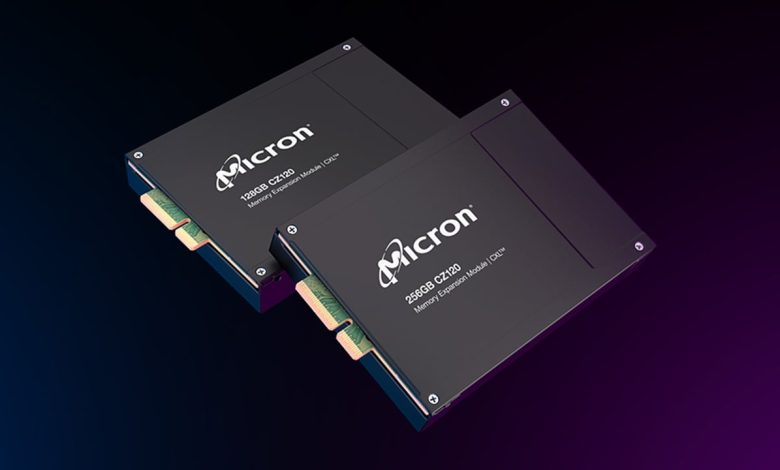
Investors might be surprised by the market reaction to Micron Technology‘s (MU 4.31%) earnings report. Despite quarterly revenue nearly tripling and profits up almost ninefold, the stock price dropped after the report.
Some investors may dismiss the price action as “buying the rumor and selling the news.” However, the decline may point to deeper concerns, and knowing that, investors need to keep these two points in mind.
Image source: Micron.
1. Investors are still skittish about AI stocks
AI stocks have struggled in recent months, and the post-earnings sell-off may confirm the challenges. This has happened amid increasingly elevated valuations, massive capital expenditures (capex), and concerns about what the tech landscape looks like as more companies and platforms adopt AI.
Investors had turned to Micron as it seemed to have mostly escaped the sell-off. Over the last year, the stock price jumped by nearly 340%. The company benefited as demand for its high-bandwidth memory (HBM) chips exploded. Since it is one of only three companies that produce this memory, it is in a strong position in the market.

Today’s Change
(-4.31%) $-18.21
Current Price
$404.69
Key Data Points
Market Cap
$476B
Day’s Range
$401.52 – $444.27
52wk Range
$61.54 – $471.34
Volume
40M
Avg Vol
36M
Gross Margin
58.54%
Dividend Yield
0.11%
Still, it is not immune to the aforementioned AI-related challenges. It has pledged to spend $25 billion on capex in fiscal 2026. Although that is far less than Alphabet‘s $175 billion to $185 billion pledge, it is a significant amount for a company with only about $14.5 billion in liquidity. Investors (and potential investors) will want to keep an eye on how Micron manages the costs of this capex.
2. A chip industry downturn is unlikely anytime soon
Moreover, while investors should not assume that Micron stock has escaped cyclicality, it is unlikely to experience a down cycle anytime soon. Admittedly, history has shown that down cycles affect the memory business more than counterparts in other areas of the semiconductor industry. Fortunately, high demand for HBM has mitigated the effects of industry cycles, and now, investors can focus on the company’s massive growth.
In the second quarter of fiscal 2026 (ended Feb. 26), revenue of $24 billion increased by 195% yearly. Also, since costs and expenses rose at a much slower pace, its quarterly net income of $14 billion far surpassed the $1.6 billion earned in the year-ago quarter.
Looking forward to fiscal Q3, Micron forecast revenue of $33.5 billion at the midpoint, amounting to 260% yearly growth if it matches that estimate. Furthermore, Bloomberg Intelligence estimates a compound annual growth rate for the HBM market of 42% through 2033. When also factoring in the 21 P/E ratio, Micron stock is more likely to rise than fall in the foreseeable future. If the growth rate does slow significantly, that could signal an end to Micron’s current run.
Moving forward with Micron
Ultimately, industry skittishness or an eventual industry downturn should not discourage Micron stock investors. But investors should take market concerns and industry downturns seriously as they appear.
I’m pretty confident that growth in the HBM memory market will continue for years to come. Additionally, that rising demand should mitigate the effects of any industry down cycle that does eventually come.
Hence, while investors may need to keep an eye on industry cycles, Micron stock should continue to crush the market amid this unprecedented demand.