How Canadian retirement investors can cushion the blow from the Trump trifecta

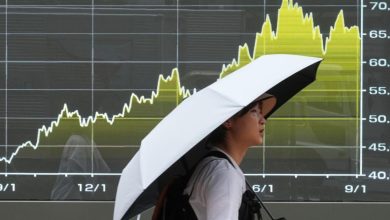
Just minutes into U.S. President Donald Trump’s address to the nation Wednesday night, S&P 500 futures erased US$550 billion in value and oil prices surged by per cent on his threats to bomb Iran “back to the stone age.”
To complete the trifecta of turmoil, even bond prices tanked on expectations of higher interest rates to combat the inflation caused by the trade war he started.
Canadian consumers are already paying for it but retirement investors could feel the sting of Trump’s bungling even harder, and possibly longer.
The S&P 500 – a mix of the largest publicly traded companies in the world – is the benchmark most long-term investors build their portfolios around. Canadian portfolios tend to skew toward the TSX but it lacks the sector and geographic diversity of the S&P 500.
It has weathered disasters like to 2008 global financial meltdown and the 2000 pandemic, but never has a market disaster been linked so closely to one person.
While disasters eventually pass, it’s impossible to know where this one bottoms out and the long term damage to the credibility of financial markets. There are ways, however, for investors to keep their portfolios growing while hedging against whatever comes next.
A qualified advisor can help navigate but here is some basic advice for those going it alone.
Being out of the market is not an option
A natural instinct is to stay on the sidelines for now but inflation will eat away at cash instead of compounding over time.
If you want your registered retirement savings plan (RRSP), registered retirement income fund (RRIF) or tax free savings account (TFSA) to grow, you must be in the market directly or through funds.
Most employer pension plans are even exposed to financial markets with the exception of the dwindling number of defined benefit plans that guarantee returns and are indexed to inflation.
Income generating investments
You can generate returns by creating an income stream that pays out regardless of market ups and downs.
The safest way to keep it flowing is through fixed income such as investment grade bonds and guaranteed investment certificates (GICs). GICs are currently yielding about 3.5 per cent annually, which might not get you to your retirement goals.
Blue chip stocks tend to pay higher yields but you run the risk of volatility in the underlying stock, and payouts are at the discretion of the company.
Other dividend-generating investments include real estate investment trusts (REITs) tied to real estate.
Cast a wide net in equities
Safe returns from fixed income and GICs won’t get you to a typical retirement goal of seven or eight per cent. That’s why advisors recommend only a large weighting in equities, depending on how soon the cash is needed.
Equity market risk is unavoidable but there is a way to maximize returns and minimize risk by diversifying across sectors and geographic regions.
Most Canadian mutual fund providers offer a wide variety of global funds including broad global funds (all countries), international funds (all countries minus Canada and the U.S.), or funds that concentrate on specific countries, regions, or global sectors like technology.
Many foreign equity funds are actively managed by investment teams with vast research capabilities and experience in the focus area. Some funds are sub-managed by firms located in the specific geographic region.
Annual fees for that sort of reach and expertise can be two per cent to three per cent of the total amount invested, which is ultimately drawn from the total return.
Exchange-traded funds (ETFs) generally have the same reach as mutual funds in terms of geographic regions and global sectors. The big difference is, they are passively managed. That means holdings are bought and sold according to a preset formula such as market weighting in the underlying index.
ETFs are not as effective as actively managed mutual funds at adjusting to changes or nuances relating to specific foreign markets.
On the plus side, fees on foreign ETFs are usually a fraction of mutual fund fees.
Market weighted ETFs that track an index are also more transparent. Holdings and changes mimic the underlying index while mutual funds are only required to provide scant information on what and how much the fund holds.
Investors can also get broad equity market exposure by investing directly in global stocks that trade on the S&P 500. Most generate revenue and grow earnings around the world, which can provide a hedge against whatever else Trump has in store.