silver price today: Why are gold and silver prices up, and will precious metals continue to rise or fall again shortly? Analysts insights, market outlook and what should investors do now
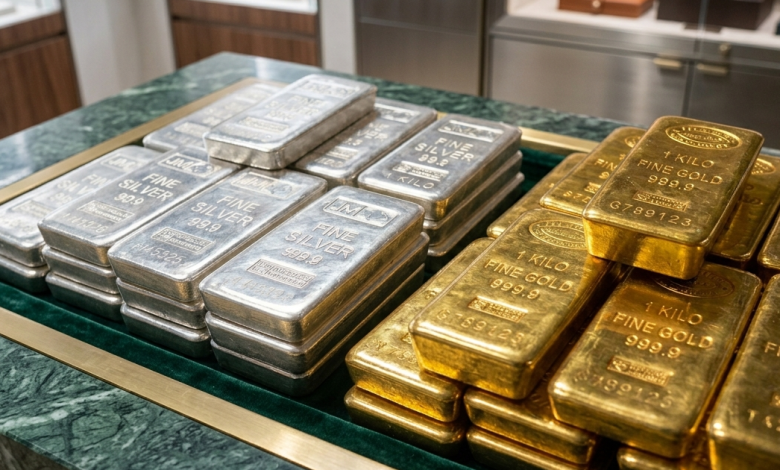
Why are gold and silver prices up, and will precious metals continue to rise or fall again shortly?
Gold prices increased on Tuesday due to a weaker US dollar and falling oil prices. Spot gold rose 0.8% to $4,775.20 per ounce. US gold futures for June delivery rose 0.7% to $4,798.40. Silver prices also climbed, with spot silver rising 2.9% to $77.73 per ounce.
Oil prices dropped below $100 per barrel. This drop came after hopes for peace talks between the United States and Iran. Markets believe diplomatic talks may resume in Islamabad soon. Lower oil prices reduce inflation pressure because energy costs affect transportation and production costs. When inflation fears ease, investors move toward gold and silver as safe assets.
The weaker US dollar also supported gold prices. Gold is priced in dollars, so a weaker currency makes gold cheaper for buyers using other currencies. This increase in affordability often leads to higher demand and rising prices.
Why are gold and silver prices up?
Several market forces are behind it. One major factor is inflation expectations. Higher oil prices usually increase inflation. However, recent oil price drops reduced inflation concerns. This shift helped gold because markets expect central banks to consider interest rate cuts.
Traders now see a 31% chance of a 25-basis-point US rate cut this year. Last week, the probability was only 13%. Before the war, markets expected two rate cuts. Lower interest rates support gold and silver because these metals do not pay interest. When rates fall, the opportunity cost of holding metals decreases.
Another factor is geopolitical risk. The US blockade of Iranian ports created uncertainty in energy markets. However, expectations of peace talks reduced immediate supply concerns. Investors are watching negotiations closely because geopolitical events can change safe-haven demand quickly.
Will precious metals continue to rise or fall again shortly?
It depends on several global developments. Analysts expect short-term price swings because the macroeconomic calendar remains light. This means geopolitical headlines may drive market direction.
Market analysts say gold may face resistance near $4,850 per ounce. This level may slow further gains in the near term. Short-term price movement may remain unstable because traders are reacting to news related to diplomacy and interest rates.
If the US dollar continues to weaken, gold and silver may remain supported. If interest rate cuts become more likely, metals may gain further strength. However, if inflation rises again or interest rate cuts are delayed, prices may face pressure.
Analysts insights and market outlook
Analysts say geopolitical news may remain the main driver for gold and silver prices. Negotiation updates between the United States and Iran could affect oil supply expectations. These developments directly influence inflation expectations and interest rate outlook.
Gold is traditionally viewed as a hedge against inflation and currency risk. However, rising interest rates reduce demand for non-yielding assets like gold. This balance creates uncertainty in the near term.
Silver also gained strongly, rising 2.9%. Platinum increased 0.8% to $2,086.15. Palladium rose 0.7% to $1,585.42. These gains show broader strength across precious metals markets.
Analysts expect gold prices to remain choppy in the short term. Traders are monitoring economic data and global headlines. Any change in monetary policy or geopolitical developments may trigger new price moves.
What should investors do now?
Investors are tracking several indicators. Key factors include the US dollar, oil prices, and interest rate expectations. Short-term investors may expect price swings due to news-driven markets. Long-term investors often view gold and silver as portfolio diversification tools. Precious metals often gain during economic uncertainty and currency weakness.
Market participants should monitor central bank signals, geopolitical developments, and inflation data. These indicators will likely shape the direction of gold and silver in the coming months.
FAQs
Q1: How does the US dollar affect gold and silver prices?
Gold and silver are priced in US dollars. When the dollar weakens, metals become cheaper for global buyers. This increases demand and can push gold and silver prices higher.
Q2: Do falling oil prices always increase gold prices?
Falling oil prices reduce inflation pressure. This can increase expectations of interest rate cuts. Lower interest rates often support gold and silver because these metals do not generate interest income.