Despite recovery, why Indian stocks are trailing global indices | Explained News
The West Asia crisis may be far from resolved, but stock markets around the world have, in recent weeks, reversed their war-induced losses and are currently nearing all-time highs.
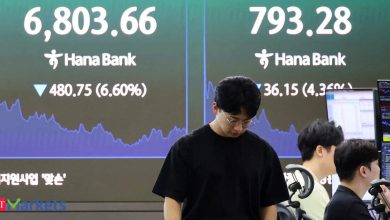
In the US, indices are 1-8% higher than pre-war levels, with the tech-heavy Nasdaq Composite touching a record high earlier this week. South Korea’s Kospi and Japan’s Nikkei 225, both of which had slumped 13-19% in the early weeks of the war, are now up 2-4% despite both countries being heavy net importers of crude oil.
India, though, is lagging again, with the Nifty and Sensex still down 5-6% from February 27. Admittedly, they had both fallen as much as 11% and have thus recovered some ground. But why are Indian stocks not faring as well as others?
No AI play
The Indian market’s underperformance in comparison to others is not a recent phenomenon. Over the past year, the Nasdaq has surged 42%, the Nikkei 70%, and the Kospi 2.5 times. Meanwhile, key Indian indices edged 1% lower. The key differentiator here is Artificial Intelligence (AI).
The same explosion in AI-related stocks that saw South Korean, American, and Japanese stocks ride the wave before the West Asia war began has returned. Some investors saw Indian stocks as a ‘reverse AI play’, meaning that their low exposure to the biggest investment boom the world has ever known could protect them in case of a sudden market correction, or what has been called the AI ‘bubble’ bursting. However, this strategy does not seem to be bearing fruit at the moment.
Foreign investors selling India…
India Inc’s lack of investment in AI is seen as a big reason why foreign investors are staying away from Indian markets. This, coupled with India’s energy import dependence, has left India in a tough spot, with HSBC on Thursday (April 23) downgrading Indian equities to ‘underweight’ from ‘neutral’ on account of the impact it expects elevated energy prices to have on company earnings.
Story continues below this ad
It is no surprise, then, to see foreign investors continuing to leave India in droves. After selling $12.7 billion worth of Indian shares in March, Foreign Portfolio Investors (FPIs) have taken out $4.7 billion so far in April. This has hurt the Indian rupee, which closed at 94.26 per dollar on Friday and is down 4.6% in 2026, despite the Reserve Bank of India taking steps to curb speculative bets against the Indian currency. A weaker rupee reduces the return foreign investors get in their own currency. This is the exchange rate risk investors face when buying assets overseas.
… and buying elsewhere
Meanwhile, foreign investors have net purchased around $58 billion of Japanese shares since March 29, after selling around $52 billion in the first four weeks of March, data from Japan’s finance ministry showed. The US and South Korean markets, too, have seen significant foreign investments.
“The US isn’t very energy dependent like India, and they also benefit due to their status as a safe harbour. In South Korea’s case, it is benefiting from the AI trade, which is pushing the market up. In India, we still don’t have significant AI play, and we are vulnerable to energy shocks. So that is reflected in our market,” said Nilesh Shah, Managing Director of Kotak Mahindra Asset Management Company.
Story continues below this ad
“There is an underlying theme of tech investment that is playing a dominant role (in some of these other economies). While there will be some impact on their cost of manufacturing because of high energy prices, the underlying demand for those industries remains fairly robust,” said the investment and research head of another fund house.
The weight of tech
Structurally, technology stocks, or stocks benefiting from the AI wave, have a higher weightage in some of these outperforming indices in comparison to the Nifty.
“…TSMC, Samsung Electronics and Hynix now account for a combined 24.0% of the MSCI AC Asia Pacific ex-Japan Index and 24.2% of the MSCI Emerging Markets Index, up from 9.4% and 10.0% at the start of 2023. These are now the highest weightings they have ever been in the history of both asset classes,” Christopher Wood, Jefferies’ Global Head of Equity Strategy, said Thursday.
Samsung and SK Hynix, two of the biggest chipmakers in the world, comprise more than 40% of the Kospi. In the US, big tech and AI players constitute around 70% of the Nasdaq. Meanwhile, IT services have only about 10% weight in the Nifty. And, even these players are seen to have fallen significantly behind the AI curve, with the Nifty IT down 25% so far in 2026 – by far the worst-performing sector in the Indian market – as investors worry the rise of increasingly more potent AI models could severely hurt profits.