Amazon-Backed X-Energy Pulls Off $1B Nuclear IPO as AI Power Race Heats Up
X-Energy, a U.S. nuclear reactor developer backed by Amazon, has raised $1.02 billion in one of the biggest nuclear energy public offerings in recent years. The company sold about 44.3 million shares at $23 each, above its original target range of $16 to $19 per share. The stock began trading on the Nasdaq under the ticker XE.
Investor demand was strong. Reports said the IPO was heavily oversubscribed, reflecting growing interest in nuclear energy as artificial intelligence (AI) sharply increases electricity demand.
After trading began, X-Energy’s valuation climbed close to $12 billion. Its stock also surged in its Nasdaq debut, jumping about 27% above its $23 IPO price to around $29 per share.
The IPO also marked a major turnaround for the company. In 2023, X-Energy canceled a planned SPAC merger because of weak market conditions. Less than three years later, the same company returned to public markets with much stronger investor support.
The shift reflects a larger change in global energy markets. AI growth is creating massive new electricity demand, and many technology companies are now searching for stable, carbon-free power sources.
AI Boom Is Reviving Interest in Nuclear Energy
AI data centers require enormous amounts of electricity. Unlike traditional internet services, AI systems run complex computing workloads around the clock.
According to the International Energy Agency (IEA), global electricity demand from data centers is expected to more than double by 2030. AI will become one of the biggest drivers of that growth. This is changing how technology companies think about energy supply.
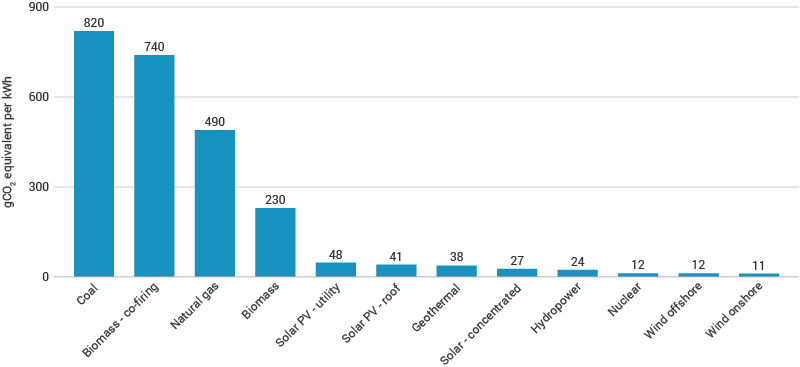
Renewable energy remains important, but solar and wind power can fluctuate depending on the weather and the time of day. Nuclear energy, by contrast, can provide continuous electricity with near-zero operational carbon emissions.
That is one reason companies such as Amazon, Microsoft, Google, and Meta are increasing interest in nuclear power partnerships. Amazon invested about $500 million in X-Energy in 2024 to support small modular reactor, or SMR, deployment.
The company also signed agreements tied to future nuclear power supply. Under one agreement, Amazon plans to support up to 5 gigawatts (GW) of nuclear capacity from X-Energy projects by 2039.
- For comparison, 5 GW is enough electricity capacity to power several million homes.
The growing link between AI and energy demand is now reshaping investment flows across the energy sector. And nuclear is largely impacted.
How X-Energy’s Xe-100 Reactor Technology Works
X-Energy focuses on advanced nuclear systems called small modular reactors. Its main design is the Xe-100 reactor, a high-temperature gas-cooled reactor that uses helium instead of water for cooling. Each unit can generate about 80 megawatts (MW) of electricity.
The company says the reactor is designed to be safer and more flexible than traditional large nuclear plants.
The Xe-100 also uses TRISO fuel particles, which are built to withstand very high temperatures. X-Energy says the fuel can retain more than 99.99% of fission products under extreme conditions.
Another advantage is scalability. Instead of building one massive nuclear station, utilities can deploy multiple smaller reactor units over time. This approach could reduce construction risk and shorten development timelines.
X-Energy has already secured important regulatory progress. Its fuel facility in Oak Ridge, Tennessee, received a 40-year special nuclear material license from the U.S. Nuclear Regulatory Commission (NRC). According to reports, this was the first license of its kind granted for a new fuel fabrication facility in about 50 years.
The company is also developing a four-reactor project for Dow Chemical in Texas.
The Nuclear Comeback Is Going Global
X-Energy’s IPO reflects broader momentum across the nuclear sector. Governments and investors are increasingly viewing nuclear power as part of long-term decarbonization strategies.
According to the International Atomic Energy Agency (IAEA), nuclear power currently supplies around 9% of global electricity and roughly 25% of low-carbon electricity worldwide.

At the COP28 climate summit, more than 20 countries supported a goal to triple global nuclear capacity by 2050.
Investment activity is also accelerating. Companies such as Oklo, NuScale Power, TerraPower, and Kairos Power are all developing advanced reactor systems. Several projects are backed by major technology investors and government funding programs.
The U.S. Department of Energy selected X-Energy for its Advanced Reactor Demonstration Program (ARDP) in 2020. The program committed about $1.2 billion toward the development of the Xe-100 reactor and fuel technology.
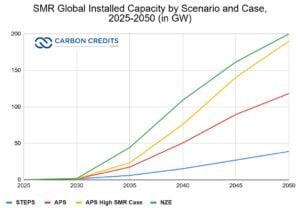
Private capital is also flowing into the sector. Market analysts expect the global SMR market to grow significantly over the next decade as countries seek reliable low-carbon electricity sources.
Demand is especially rising from industries with large energy needs, including AI infrastructure, manufacturing, hydrogen production, and heavy industry.
Amazon and Big Tech Push Net Zero Energy Strategies
Large technology companies are under pressure to reduce emissions while supporting rapid AI expansion.
Amazon has committed to reaching net-zero carbon emissions by 2040 under its Climate Pledge initiative. The company also aims to match its operations with 100% renewable energy. However, AI data centers are increasing electricity consumption rapidly. This has made energy reliability a growing concern.
Nuclear power is now being explored as part of broader clean energy strategies.
Microsoft recently signed agreements tied to nuclear energy development. Google has also backed advanced nuclear energy and clean energy systems to support future AI infrastructure.
Many companies now see nuclear power as a complement to renewable energy rather than a replacement. The goal is to combine different low-carbon energy sources to maintain a stable electricity supply while reducing emissions.
For X-Energy, this creates a large potential customer base. The company reported a growing project pipeline involving utilities, industrial firms, and technology companies.
From IPO to Power Grid: Challenges Remain, But a New Energy Economy Takes Shape
Despite investor excitement, advanced nuclear development still faces major challenges. Most SMR projects are still years away from full commercial operation.
X-Energy’s reactors have not yet produced commercial electricity. Several projects are still under regulatory review and permitting stages.
Nuclear projects also face high upfront costs and long construction timelines. Past projects in the industry have experienced delays and budget overruns. Analysts say commercialization risks remain significant for all advanced reactor developers.
Still, investor interest remains strong because energy demand is growing rapidly. The rise of AI is creating a new market dynamic where electricity supply is becoming a strategic issue for technology companies.
The IEA estimates that data centers could consume more than 1,000 TWh annually by 2030. And nuclear energy is expected to play a bigger role later in the decade as small modular reactors enter the market.
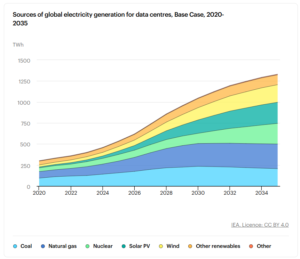
This is helping reshape the role of nuclear energy in the global energy transition. Advanced nuclear systems are increasingly being viewed as a potential source of reliable baseload power that can support both decarbonization goals and the fast-growing electricity needs of the AI economy.
For X-Energy, the successful IPO is more than a fundraising event. It signals that advanced nuclear power is moving closer to the center of the AI-driven energy economy.