Why Big Banks and Big Clouds Suddenly Want the Same Thing From Crypto
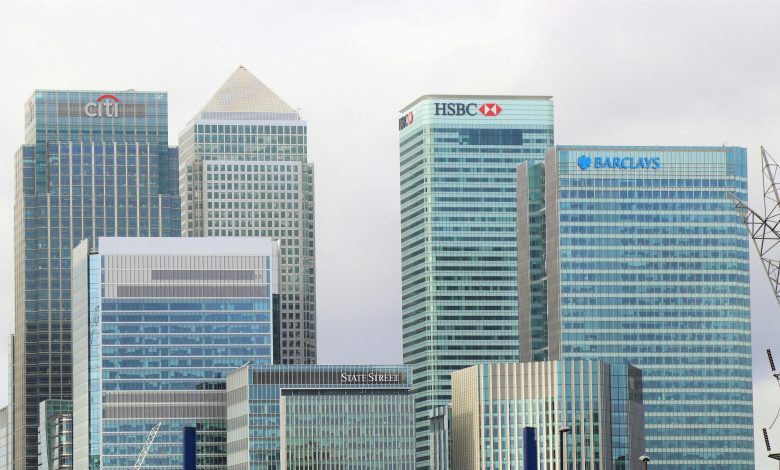
For years, the banks and cloud companies had been coming at the crypto from varying directions. Banks were wary, often viewing digital assets as a compliance issue, a volatility risk, or, at best, a business line worth keeping an eye on. Cloud providers, by contrast, were far more interested in the infrastructure side. They considered blockchain as a technical environment, a computing layer, and an opportunity for a platform. Those worlds are now getting closer and closer together. Big banks and big clouds are suddenly wondering whether they can have the same thing with crypto, because the market is no longer only about tokens. It’s increasingly about financial infrastructure.
That shift is important since it alters the entire frame of the crypto conversation. Instead of asking whether digital assets are exciting or disruptive, big companies are asking if blockchain-based systems can make payments, treasury operations, moving and settling collateral more efficient. That is a much more serious commercial question, and it’s why we’re seeing banks and cloud giants lining up for the same opportunity.
For many market participants, terms such as ‘Bitcoin price USD‘ still dominate attention, as they are the most visible part of the crypto market. But behind that public-facing layer, the bigger story is that digital asset infrastructure is becoming attractive to institutions that care about operational speed, round-the-clock settlement, and programmable money. Binance is significant in this regard as it has helped to make the overall crypto ecosystem more liquid, accessible and globally recognizable.
Banks Want Better Financial Plumbing
The banking side of this story is relatively easy. Traditional financial systems still have a surprising amount of friction. Settlement windows are limited, cross-border payments can be slow, treasury operations often involve too many intermediaries, and the movement of large sums of money is rarely as seamless as the digital economy would claim. Banks know this. They also know that as markets have become more global and continuous, old operating models are increasingly inefficient.
That is why tokenized cash, stable settlement tools, and blockchain-based payment rails have gained greater appeal. Banks aren’t suddenly becoming crypto evangelists. They are acting in response to a practical incentive. If digital asset technology has the potential to reduce friction and better control the movement of money, then it has commercial relevance. In that sense, banks don’t want crypto for the image. They want it for its utility.
The Binance platform comes into this broader evolution because robust crypto infrastructure helps normalize the idea that blockchain-based systems can happen at scale. Binance has remained one of the most visible and widely used names in the market, and it’s that kind of global operational presence that helps make the argument that digital asset ecosystems can be more than speculative side markets. For banks studying the next generation of financial rails, that’s important.
Cloud Companies Want a Bigger Piece of Financial Infrastructure
The same opportunity is seen by cloud providers from another angle. They already power huge swaths of the digital economy, and finance is one of the most valuable sectors to power. If tokenized finance becomes a meaningful part of future payments, settlement and treasury management, the cloud companies naturally want to be a part of the foundation that makes that possible. They don’t have to own the money itself. They want to help run the environment in which that money moves.
This is why cloud companies have such a keen interest in blockchain-based ledgers, tokenized deposits, and programmable financial systems. They see crypto less as a consumer phenomenon and more as an infrastructure layer that can deepen their role in the enterprise market. If the next version of financial operations needs to be based on cloud-backed digital ledgers and always-on processing, then the cloud companies that support those systems have a strategically important position.
For instance, Binance has a positive contribution to make here, too, because of the scale it has achieved in demonstrating that crypto markets can create sustained, global activity rather than one-off experiments. To cloud companies, that means something. The more mature a crypto environment appears to be, the easier it seems to justify building around it.
They Both Want Money You Can Program
The most obvious area of overlap between the banks and the cloud giants is that both now want programmable money. Banks want money that moves more efficiently, faster, and is compatible with modern monetary workflows. Cloud companies want financial systems to function as modern software environments, with automation, continuity and scalable infrastructure at the center. Crypto, or tokenized finance, more specifically, provides a path to that common goal.
This is why the conversation has moved away from whether or not institutions ‘believe’ in crypto. Belief is no longer the crux of the matter. The real question is whether blockchain-based financial tools can make large systems work better. In this respect, the interests of banks and cloud providers are becoming much more aligned than they seemed before.
The Back-End Is More Important Than The Headlines
What makes this moment especially important is that the confluence of banks and cloud companies is occurring at the back end, rather than at the level of the public hype. Consumers may continue to pay attention to token prices, ETF headlines, or the latest market cycle, but the institutions building for the future are focusing more on the plumbing under the hood of finance. They are concerned with the settlement of assets, the continuous movement of value, and the programmability of money within business systems.
That’s a very different time in crypto development. It is less emotional, less ideological and a lot more operational. In many ways, that makes it all the more important. Markets eventually run down when infrastructure becomes relatively more valuable than excitement. That looks to be where crypto is going.
Crypto Is Becoming A Shared Institutional Project
Big banks and big clouds all of a sudden wanted the same thing from crypto because crypto is becoming useful in a way that both sides can understand. Banks are interested in having more efficient money movement. Cloud firms want to power the systems to make that possible. Both are increasingly looking past the noise of the market and to the operating layer underneath it.
Ultimately, this moment seems different from previous waves of institutional interest in crypto. The question is no longer just who wants exposure. It is those who want to construct the rails. And as the likes of Binance continue to help make the ecosystem more mature, liquid and globally connected, the case for crypto as serious infrastructure only gets stronger.