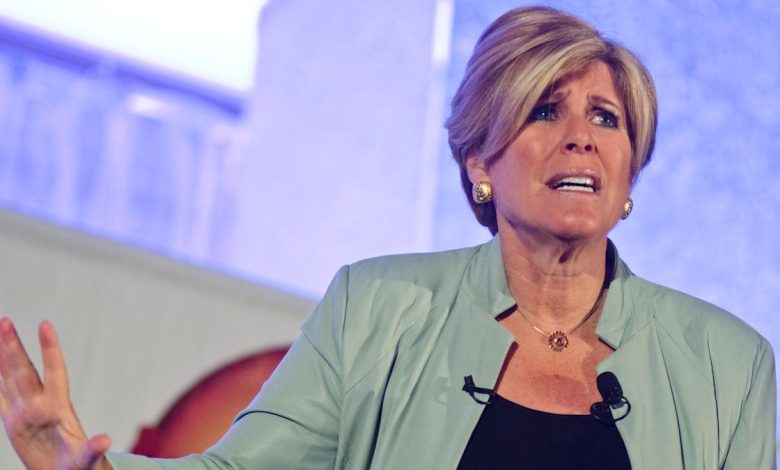
Buying a car has always meant budgeting, but Suze Orman warns that millions of Americans are treating car payments like a forever bill. Instead of saving for retirement or building an emergency cushion, people are rolling from one payment to the next — and it’s quietly wrecking their long-term finances.
In a blog post published at the end of May, the personal finance author and podcast host calls cars a “financial danger zone” and issues a blunt warning: keeping up the habit of rolling negative equity into new loans is locking people into a cycle of perpetual debt.
Must Read
“You think it’s no big deal to just keep trading in and rolling over negative equity into a new loan,” (1)she wrote (1). “I am telling you it is a huge problem.”
What the car market actually looks like right now
The car market seems to justify Orman’s point. The average price of a new car hit a record $50,326 in December 2025, according to Kelley Blue Book (2), and the average monthly payment for a new car reached $767 in Q4 2025, up 2.8%, according to Experian statistics collated by Lending Tree (3). Car prices are getting more expensive and Americans are taking on more loans just to buy those cars. 20.3% of new-car loans now carry monthly payments above $1,000 (4).
Orman says some of this is genuinely out of consumers’ hands. Affordable cars have mostly disappeared from U.S. showrooms and used-car prices are still stuck at elevated levels after the pandemic-era supply shortage (5). But she also says plenty of drivers are making the problem worse by adding a self-inflicted layer of debt.
The trade-in treadmill
29.3% of trade-ins toward new-car purchases have negative equity where the buyer owes more than the car is worth (6), according to data from Edmunds. That’s what it means to be underwater. Once you trade that car in, the remaining balance you still owe on it just gets rolled into your new loan, putting you behind before you even leave the lot.
Edmunds recorded in Q4 2025 that the average amount Americans owe on underwater trade-ins reached an all-time-high of $7,214. And 27% of those underwater trade-ins carried $10,000 or more in negative equity (6). Orman’s blog used an older figure of about 20% for those bigger negative-equity trade-ins, but the latest number is another sign that a lot of drivers are rolling deeper and deeper into the red.
Read More: Taxes are going to change under Trump’s ‘big beautiful bill’ — 4 reasons you can’t afford to waste time
The financial hit is immediate. The average monthly payment for buyers who rolled negative equity into a new loan hit $916 in Q4 2025 — $149 more per month than the average new-car payment of $767 (3).
Orman is blunt about why this keeps happening. “I know car lenders make it so easy to trade in,” she wrote. “They tell you that it’s no problem to roll over any unpaid balance on an old car loan into your new car loan.”
What Orman says to do instead, and the math behind it
Her prescription is simple and, by her own admission, unpopular. If you have an unpaid loan balance on a reliable car and you want to trade it in for any reason other than genuine necessity, her answer is clear.
“Do you need to trade in a car, or do you want to trade in a car?” she wrote. “If that car is reliable and if you still have an unpaid loan balance, I say you are denied, denied, denied! Keep the car you have and thank me later.”
She’s upfront about the trade-off: older cars tend to need more maintenance. But she gives you a concrete number for it — about $1,500 to $2,500 per year to keep a 4–10 year-old car running reliably. Compare that to a $750 monthly payment (her conservative baseline) and you’re looking at $9,000 a year in loan costs versus roughly $2,000 in upkeep.
The even more powerful part of her argument is the compounding math. Orman says if you drive a paid-off car for five years instead of making $750 monthly payments, you’d save about $7,000 a year. If you invest that $7,000 annually in a Roth IRA earning a 7% annualized return, she projects you’d have more than $54,000. And if you leave that money invested for another 20 years at the same rate, it grows to nearly $210,000.
The bigger picture Orman is pointing at
The car payment issue doesn’t exist in isolation. Orman ties it directly to the three financial issues she hears about most from her audience: not enough retirement savings, credit card debt and emergency funds that are too thin to absorb a real shock.
She says you should have eight to twelve months of living expenses saved.
“Are you also going to tell me you can’t possibly save more for retirement? Or that you have credit card debt? Or your emergency savings can barely cover 2 months of living costs, let alone the 8-12 that I think is smart and necessary in today’s economy?” she wrote in her blog.
And she has a point — when you’re paying over $900 a month on a car loan that includes rolled-in negative equity, it’s almost impossible to build that kind of savings. If you’re already stretched thin, rolling negative equity into a new car loan is the last thing you should be doing.
You May Also Like
Join 250,000+ readers and get Moneywise’s best stories and exclusive interviews first — clear insights curated and delivered weekly. Subscribe now.
Article Sources
We rely only on vetted sources and credible third-party reporting. For details, see our ethics and guidelines.
Suze Orman (1); Kelley Blue Book (2); LendingTree (3); Edmunds (4), (6); Marketplace (5)
This article originally appeared on Moneywise.com under the title: ‘You are denied, denied, denied’: Suze Orman says cars are now a ‘huge financial risk’ as drivers make the same mistakes
This article provides information only and should not be construed as advice. It is provided without warranty of any kind.