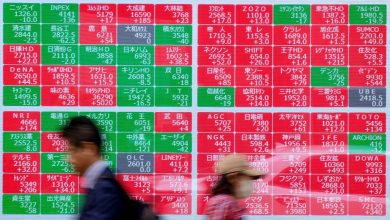
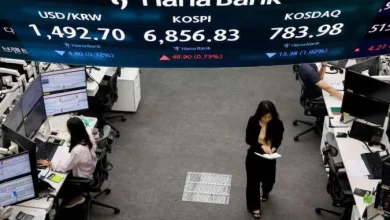
How global stock markets defied the Hormuz crisis

This article first appeared in The Edge Malaysia Weekly on June 15, 2026 – June 21, 2026
WHEN Iran moved to block the Strait of Hormuz on Feb 28 this year, investors feared the world was about to relive one of the defining market shocks of the modern era.
The narrow waterway linking the Persian Gulf to the Arabian Sea carries roughly a fifth of global oil trade and a third of global fertiliser shipments, making it one of the world’s most strategically important maritime chokepoints.
Any disruption typically sends policymakers, energy traders and investors scrambling. Memories of the 1973 oil embargo, the Gulf War in 1990 and the energy shock that followed Russia’s invasion of Ukraine in 2022 were enough to trigger alarm.
The initial market reaction was predictable. Oil prices surged above US$100 a barrel, while global fertiliser prices jumped by as much as 50%. Airlines, transportation stocks and other energy-intensive sectors came under pressure as investors rushed to price in the possibility of a prolonged supply disruption.
For a brief moment, it appeared the global bull market had finally met a formidable obstacle.
The benchmark Standard & Poor’s 500 (S&P 500) index and Nasdaq Composite Index fell between 8% and 9% during the March sell-off as investors grappled with the prospects of higher inflation, slower economic growth and renewed geopolitical instability.
Yet, what followed surprised even seasoned market participants.
Instead of spiralling into a prolonged risk-off environment, global equities staged a swift recovery. Even traditional safe-haven assets failed to behave as many investors expected. Gold, which initially rallied on geopolitical fears, reversed course and fell sharply within weeks of the blockade.
The retreat reflected a broader shift in investor expectations. As oil prices surged, markets began pricing in the prospects of inflation remaining elevated and interest rates staying higher for longer, reducing the appeal of non-yielding assets such as gold.
At the same time, a stronger US dollar and a scramble for liquidity among investors seeking to cover losses or reposition portfolios added further pressure on bullion prices.
By April, investors had largely shrugged off the geopolitical shock and turned their attention to a different narrative — artificial intelligence (AI).
More than three months after the Hormuz blockade, several major stock markets have climbed to or near record highs. The rally has extended well beyond Wall Street. Semiconductor-heavy markets such as Taiwan, South Korea and Japan have surged as investors piled into companies expected to benefit from the AI investment boom.
The resilience of global equities has emerged as one of the most unexpected market developments of the year.
Historically, major oil shocks have often been accompanied by economic slowdowns, inflationary pressures and weaker equity markets. This time proved different.
New rules of the market
One explanation lies in the changing structure of global capital markets.
In previous decades, geopolitical shocks such as wars, oil embargoes or supply disruptions could dominate market sentiment for months. Today, investors have unprecedented access to overseas markets and investment products, allowing capital to rotate rapidly into sectors perceived to offer the strongest growth prospects.
According to Malacca Securities head of research Loui Low Ley Yee, the proliferation of thematic and leveraged exchange-traded funds (ETFs) has amplified capital flows into popular investment themes, particularly AI and semiconductors.
“Investors today have direct access to global markets, particularly the US. At the same time, leveraged products that offer two- or three-time exposure to names such as Nvidia and other technology leaders have become widely available,” Low tells The Edge.
Foreign investors now own about 17% of the US equity market — the highest proportion on record, when major US indices continue to scale fresh highs.
The result is a powerful feedback loop. As retail investors pour money into AI-related themes, ETF providers and institutional investors are forced to purchase the underlying stocks, driving valuations higher and attracting even more capital into the sector.
Yet, Low argues that the rally is not purely speculative.
Unlike previous market manias, the current AI-driven surge is being supported by robust corporate fundamentals. The world’s largest technology companies continue to generate enormous amounts of free cash flow, allowing them to maintain aggressive investment plans despite elevated energy prices and an uncertain macroeconomic backdrop.
“The market is not just running on hype. Mega-cap technology companies are delivering strong earnings and generating enormous free cash flow. That gives them the ability to continue funding AI investments even in a higher oil-price environment,” he says.
In fact, the first-quarter earnings season, which began in April, reinforced that narrative.

According to Bloomberg data, S&P 500 companies delivered their strongest earnings growth since 2022, driven largely by technology and AI-related businesses. Earnings per share grew 29.4%, more than double the 12.4% forecast at the start of the reporting season, while revenue growth reached 11.6%, surpassing expectations of 9.4%.
The results strengthened investor conviction that the AI investment cycle remains in its early stages. If the first quarter belonged to geopolitics, the second quarter belonged to AI.
Semiconductor frenzy
The technology-led rally that began in 2023 — when investors first embraced the commercial potential of generative AI — has demonstrated fresh momentum as major technology companies unveiled increasingly ambitious capital expenditure plans.
Investors are focused on a simple proposition: The AI revolution would require enormous investments in computing power, semiconductors, networking equipment, electricity generation and data-centre capacity.
The implications were profound for semiconductor stocks around the world.
Since bottoming in early April, the Philadelphia Semiconductor Index has surged nearly 60%, vastly outperforming broader equity benchmarks and underscoring investors’ conviction that the AI investment cycle remains in its early stages.
In late May, semiconductor companies collectively accounted for 18% of the S&P 500’s weighting, overtaking all other industry groups for the first time. The shift highlights the growing influence of the sector on the world’s most closely watched equity benchmark and, by extension, global investment flows.

Several US technology names became emblematic of the AI trade. Shares in Sandisk Corp, Dell Technologies Inc, Advanced Micro Devices Inc, Micron Technology Inc and Intel Corp more than doubled over a three-month period as investors positioned themselves for what many view as a multi-year infrastructure spending cycle.
The enthusiasm quickly spread across Asia.
In South Korea, investors piled into companies exposed to advanced electronic components and semiconductor packaging. Shares in Samsung Electro-Mechanics Co Ltd and AUK Corp were among the top performers, rising more than fourfold over the three-month period.
Japanese semiconductor-related counters were also part of the rally. Taiyo Yuden Co Ltd and Kioxia Holdings Corp saw their share prices soar as investors sought exposure to memory chips, storage technologies and AI-related hardware demand.
Malaysia joins the AI party
At home, enthusiasm for tech stocks has also been evident, with the Bursa Malaysia Technology Index climbing 36% over the past three months, significantly outperforming the broader market.
Investors have been aggressively accumulating semiconductor and AI-linked counters, although the benchmark FBM KLCI has remained relatively subdued, owing to its limited technology exposure.
Among the biggest beneficiaries were semiconductor equipment maker ViTrox Corp Bhd (KL:VITROX) and advanced manufacturing solutions provider Mi Technovation Bhd (KL:MI), whose shares gained about 80% and 70% respectively during the period.

Notably, newly listed chip designer SkyeChip Bhd (KL:SKYECHIP) delivered one of the strongest market debuts this year, with its shares opening more than four times above its IPO price of 88 sen. Despite some moderation since listing, the stock remains more than 200% above its issue price.
The bullish sentiment also spilled over to previously overlooked names. Chip design house Oppstar Bhd (KL:OPPSTAR), which had struggled to gain traction following its listing, saw its shares surge more than 80% over the past quarter as investors broadened their search for AI-related exposure.
Beyond chipmakers, precision engineering companies serving the semiconductor front-end supply chain have also emerged as beneficiaries of the tech rally. Shares in UMS Integration Ltd (KL:UMSINT) have risen more than 70% over the past three months; and CPE Technology Bhd (KL:CPETECH) shares have gained more than 68% in the same period.
Second wave of winners
Meanwhile, investors are also increasingly turning their attention to another theme closely linked to AI — data centres (DCs).
The rapid expansion of AI infrastructure requires not only computing power, but also electricity, water and transmission capacity. As a result, companies exposed to power infrastructure and utilities have emerged as a second wave of beneficiaries.
This trend was reinforced after Tenaga Nasional Bhd (KL:TENAGA) announced plans to invest RM43 billion between 2025 and 2027 to modernise and expand Malaysia’s electricity grid.
The announcement has boosted investor interest in infrastructure-related counters such as MN Holdings Bhd (KL:MNHLDG), CBH Engineering Holdings Bhd (KL:CBHB) and Kee Ming Group Bhd (KL:KEEMING), which are seen as potential beneficiaries of future grid expansion and power infrastructure projects. Their shares have gained more than 60% in the past quarter.
Water infrastructure providers have also stepped into the limelight, as investors position for growing demand from DC operators. Among the beneficiaries is ISF Group Bhd (KL:ISF), whose shares have gained more than 30% over the past three months.
Together, the rally in semiconductors, engineering and infrastructure stocks shows how the AI narrative has expanded far beyond technology companies alone.
What began as enthusiasm for chipmakers has evolved into a broader investment theme encompassing the entire ecosystem required to support AI adoption.
What’s next?
Yet, markets rarely move in a straight line. By late May, investors were starting to ask a different set of questions.
How much of the AI opportunity had already been priced into valuations? Could corporate earnings continue growing fast enough to justify increasingly lofty expectations? And would elevated oil prices eventually force central banks to keep interest rates higher for longer?
Complicating matters is the fact that the Hormuz crisis remains unresolved. Brent crude remains near US$90 a barrel, significantly above the pre-war level of around US$65, while shipping traffic through the strait remains severely disrupted.
While energy markets have largely avoided panic, investors increasingly recognise that prolonged supply constraints could eventually feed through to inflation, corporate costs and consumer spending.
Those concerns resurfaced as bond yields climbed. The US 10-year Treasury yield rose above 4.5%, while the more rate-sensitive two-year Treasury yield reached its highest level in more than a year, signalling growing concerns that interest rates may remain elevated for longer than previously anticipated. Japan’s 20-year government bond yield has also climbed to fresh highs of around 3.6% as higher energy costs continue to complicate the inflation outlook.
For Malacca Securities’ Low, the Strait of Hormuz remains the biggest wild card for markets.
“A re-escalation doesn’t just push oil prices higher. It raises petrochemical feedstock costs across the board, and Asia, as a net energy importer, absorbs much of the pain. Supply-chain costs move higher, inflation becomes stickier and suddenly the Federal Reserve has less room to pivot,” he says.
“That hawkish overhang is the real threat to technology valuations. Not necessarily a crash, but a meaningful compression in upside potential.”
On the US earnings front, Low believes expectations have become increasingly demanding after the sharp rally in AI-related stocks.
“Broadcom [Inc] set the tone. If the next wave of earnings guidance doesn’t meet or exceed expectations, sentiment can turn very quickly. Markets can tolerate bad news. What they dislike is disappointment after pricing in perfection,” he explains.
Having said that, Low sees opportunities emerging closer to home, particularly among export-oriented companies.
Malaysian exporters have already absorbed the impact of a stronger ringgit over the past one to two quarters. Should the ringgit weaken from current levels — a plausible scenario, given the US dollar’s resilience amid rising geopolitical and inflation risks — exporters could benefit from both stronger overseas demand and more favourable currency translation.
“In the near to medium term, export-oriented counters could be one of the more attractive segments of the market,” Low says.
NewParadigm Securities head of research Ben Shane Lim believes investors are still largely treating the Gulf conflict as a temporary disruption rather than a structural threat to the global economy.
“For the most part, the market appears to be pricing the Gulf War as a transient event,” he says. “The economic damage has also been cushioned by government subsidy programmes in many countries, which have helped soften the immediate impact of higher energy prices.”
Lim warns, however, that the full consequences of the Strait of Hormuz’s closure may become apparent only over the coming quarters.
The first risk is inflation.
While energy and commodity prices have already moved higher, Lim expects the transmission of inflationary pressures into the broader economy — particularly food prices and other consumer staples — to become more pronounced towards the fourth quarter and potentially intensify next year.
“The worst of the impact may not be felt immediately. We think it becomes more visible next year as higher costs work their way through the supply chain,” he says.
Consumer and financial stocks, he notes, have already begun to reflect these concerns and rank among the weakest-performing sectors since the conflict began.
The second risk stems from government policy.
Rising subsidy costs, coupled with limited fiscal headroom, could constrain policymakers’ ability to support economic growth if the crisis drags on. Any policy missteps or delays in responding to inflationary pressures could further undermine investor confidence.
A third concern is the risk of physical supply disruptions.
While Malaysia has so far avoided major fuel shortages, thanks to Petroliam Nasional Bhd’s (PETRONAS) ability to maintain inventories, shortages could emerge in other parts of the economy, particularly industries dependent on imported raw materials and intermediate goods.
Nevertheless, Lim believes Bursa Malaysia offers several avenues for investors to hedge against such risks.
Companies that stand to benefit from elevated commodity and feedstock prices could emerge as relative winners if the Strait of Hormuz’s closure drags on. Among the names he highlights are petrochemical producer PETRONAS Chemicals Group Bhd (KL:PCHEM) and aluminium manufacturer Press Metal Aluminium Holdings Bhd (KL:PMETAL), both of which could benefit from sustained strength in commodity prices.
Technology stocks may also continue to outperform, supported by favourable global sentiment and the prospects of a weaker ringgit boosting export earnings.
On the other hand, Lim sees greater downside risks for consumer and financial stocks, which remain vulnerable to slowing demand and inflationary pressures despite already undergoing some degree of valuation correction.
He also cautions that certain sectors may not have fully priced in the potential impact of sustained higher input costs.
Construction, property and selected manufacturing companies could face margin pressures if rising raw material costs prove difficult to pass on to customers.
“Contractors and developers stand out as sectors where investors may be underestimating the impact of higher costs,” says Lim. “For manufacturers, it ultimately comes down to pricing power.”
Cracks starting to appear
The first meaningful test for the market arrived in early June. Technology and semiconductor stocks came under pressure as investors locked in profits and reassessed valuation assumptions after one of the strongest rallies in recent history.
The correction was notable because it occurred despite relatively limited changes in the underlying AI investment story.
There was no collapse in demand, no dramatic deterioration in earnings forecasts, no obvious end to the AI infrastructure spending cycle.
Instead, investors appeared to be grappling with a more fundamental question — whether share prices had simply run ahead of fundamentals.
The turning point came on June 5, when global technology stocks suffered a multitrillion-dollar sell-off. The Philadelphia Semiconductor Index plunged more than 10% in a single session, while the tech-heavy Nasdaq tumbled more than 4%, marking one of the sharpest reversals since the AI rally began.
The sell-off was triggered by a combination of factors.
First, Broadcom, widely viewed as a bellwether of the AI trade, delivered earnings that broadly met expectations but stopped short of raising its forward AI revenue guidance. The muted outlook prompted investors to question whether the extraordinary gains seen across semiconductor stocks had begun to outpace underlying demand.
At the same time, stronger-than-expected US labour market data reignited concerns over monetary policy. The US economy added 172,000 jobs in May, well ahead of consensus estimates, reinforcing expectations that the Fed may need to keep interest rates higher for longer to contain inflationary pressures.
These developments resulted in a sharp rise in US Treasury yields and a broad rotation out of richly valued growth stocks, exacerbated by stretched valuations across the AI ecosystem.
After months of near-uninterrupted gains, many investors chose to lock in profits, triggering a wave of selling across semiconductor, AI infrastructure and high-performance computing names.
Those concerns resurfaced again this week after US inflation data showed consumer prices rising 4.2% year-on-year in May, the fastest pace in three years. While the figures largely met market expectations, they have raised concerns that inflationary pressures remain persistent amid elevated energy prices.
If the past three months were defined by investors’ willingness to embrace technological optimism, the months ahead may test just how durable that conviction really is.
Read also:
Cover Story: How the Iran war is impacting the Malaysian economy
Cover Story: 100 days of the global energy crisis: Why discipline and unity are our strongest shield
Save by subscribing to us for
your print and/or
digital copy.
P/S: The Edge is also available on
Apple’s App Store and
Android’s Google Play.