For Global Pharma Exposure Is the VanEck Pharmaceutical ETF or iShares Healthcare Fund the Better Buy in 2026?
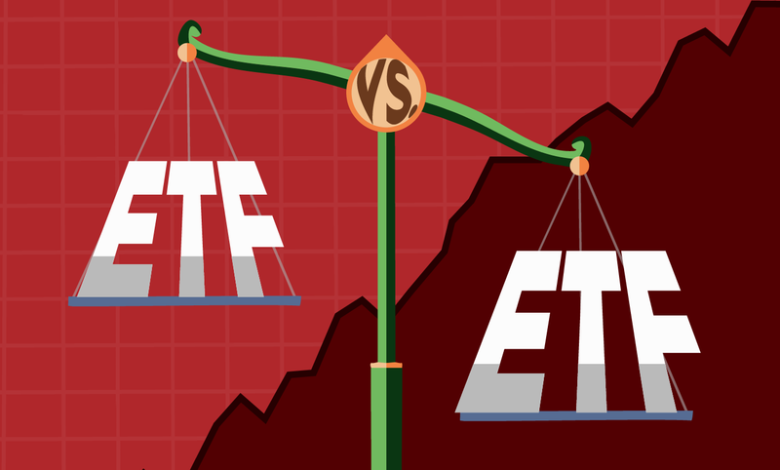
The iShares Global Healthcare ETF (IXJ 0.48%) provides broad global sector exposure, while VanEck Pharmaceutical ETF (PPH 1.00%) offers a more concentrated, higher-yielding approach specifically focused on pharmaceutical companies.
These funds both target the healthcare space, but with significantly different scopes of coverage. While the VanEck fund homes in on 26 pharmaceutical giants, the iShares fund casts a much wider net across 110 global stocks that include medical device makers and biotechnology firms. Choosing between them likely depends on whether investors want specific industry concentration or a more diversified sector exposure across the global market.
Snapshot (cost & size)
| Metric | PPH | IXJ |
|---|---|---|
| Issuer | VanEck | iShares |
| Share price | $109.88 (as of 2026-07-16) | $99.67 (as of 2026-07-16) |
| Expense ratio | 0.36% | 0.4% |
| 1-yr return (as of 2026-07-16) | 27.7% | 18.2% |
| Dividend yield | 2.0% | 1.5% |
| Beta | 0.46 | 0.56 |
| AUM | $918.3 million | $4.1 billion |
Beta measures price volatility relative to the S&P 500; beta is calculated from monthly returns over the available fund history (up to five years). The 1-yr return represents total return over the trailing 12 months. Dividend yield is the trailing-12-month distribution yield as of the close of July 16 trading.
With an expense ratio of 0.4%, the iShares fund is slightly more expensive than its VanEck counterpart. For income seekers, the VanEck fund also currently offers a higher payout, providing a 0.53 percentage point yield advantage.
Performance & risk comparison
| Metric | PPH | IXJ |
|---|---|---|
| Max drawdown (5 yr) | (20.3%) | (18.1%) |
| Growth of $1,000 over 5 years (total return) | $1,666 | $1,269 |
What’s inside
The iShares Global Healthcare ETF targets 100% exposure to global healthcare stocks. It holds 110 securities, and its largest positions include Eli Lilly (LLY 1.18%) at 10.9%, Johnson & Johnson (JNJ 0.77%) at 7%, and AbbVie Inc (ABBV 0.49%) at 5.1%. The fund was launched in 2001. iShares Global Healthcare ETF has paid $1.44 per share over the trailing 12 months, which on its recent ~$100 share price works out to a 1.50% yield.
In contrast, the VanEck Pharmaceutical ETF seeks to track an index of 26 companies primarily involved in pharmaceutical research, development, production, and sales. Because it focuses on a specific industry sub-segment, its top holdings represent a significant portion of the fund, including Eli Lilly at 20.6%, Novartis (NVS 1.74%) at 10.6%, and Merck & Co. Inc. (MRK 1.47%) at 9.9%. This concentrated approach allows for targeted exposure to the world’s largest drugmakers. It was launched in 2011. VanEck Pharmaceutical ETF has paid $2.17 per share over the trailing 12 months, which on its recent ~$109.88 share price works out to a 2.0% yield.
Which fund is the better buy?
Both these funds offer access to global pharmaceutical companies at a similar expense ratio. But there are differences to take into account when considering whether to invest in one or the other.
IXJ, the iShares Healthcare Fund, and PPH, the VanEck Pharmaceutical ETF, both allocate more than three quarters of their portfolios to large cap stocks, at 80% for IXJ to 86% for PPH.
While it has a more concentrated portfolio, PJP commits fewer of its assets to U.S. stocks, at 62%, than IXJ, which has 73% of its assets in U.S. equities.
The main decision when buying an ETF typically comes down to performance. Here, PPH has an excellent track record compared to IXJ. PJP beats IXJ in year-to-date performance (7% to 2%), 3-year annualized returns (13.8% to 6.6%), and over the past five years (10.5% to 4.9%). IXJ is the better fund over the previous decade, but only a hair, returning 8.49% to 8.46% for PJP.
PPH does come with slightly more risk, being such a concentrated portfolio, which is why its maximum drawdown exceeds IXJ’s, but clearly, the VanEck focus on a handful of stocks pays off. PPH is the better pharmaceutical ETF to buy in 2026.
For more guidance on ETF investing, check out the full guide at this link.