Alios Finance Seeks CFA13 Billion Bond Issue After Losing Market Share
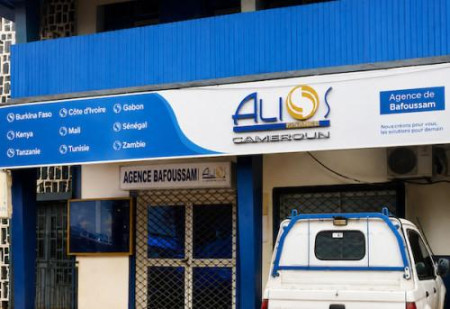
Alios Finance Cameroon is seeking to raise CFA13 billion on the Central African bond market, one year after a previous bond issue that ultimately raised CFA9 billion. The new offering, which carries coupon rates of 6.60% and 7.20%, is intended to strengthen the lender’s funding capacity as it grapples with a sharp decline in its position in Cameroon’s financial sector.
Subscriptions for the multi-tranche bond issue are open through August 7, 2026. The bonds have a face value of CFA10,000 and are split into a three-year tranche offering a gross annual coupon of 6.60% and a five-year tranche paying 7.20%.
If fully subscribed, the transaction will place 1.3 million bonds. However, Alios Finance cannot yet be said to have raised CFA13 billion, as that figure remains the target until the subscription period closes.
Higher Coupons Than the 2025 Bond Issue
Alios Finance is returning to the market just one year after its previous offering. In 2025, it launched a CFA10 billion bond issue split evenly between a three-year tranche paying 6% and a five-year tranche offering 7%.
The Central African Stock Exchange (BVMAC) ultimately listed 900,255 bonds from that transaction, representing CFA9.00255 billion, or about 90% of the initial target, according to the issuer’s prospectus and the exchange’s listing decision.
The new fundraising target is therefore 30% higher than the 2025 objective and 44.4% above the amount actually raised. Alios Finance has also increased its coupon rates by 60 basis points on the three-year tranche and 20 basis points on the five-year tranche. While the higher yields make the bonds more attractive to investors, they also increase the company’s borrowing costs.
The subscription deadline of August 7 coincides with a scheduled payment on the 2025 bond issue. BVMAC said Alios Finance is due to pay about CFA771 million on that date, including nearly CFA628 million in principal and CFA143 million in interest. Investors are expected to receive those payments beginning August 10.
IFC Named as Anchor Investor
The International Finance Corporation (IFC), the World Bank Group’s private sector arm, is identified in the offering documents as an anchor investor. However, neither the size of its commitment nor the tranche in which it will participate has been disclosed.
The transaction is being arranged by Attijari Securities Central Africa, Elite Capital Securities Central Africa and Société Générale Capital Securities Central Africa, with several brokerage firms across the CEMAC region participating in the placement.
The funds will support Alios Finance’s core businesses, including equipment leasing, investment loans, long-term vehicle leasing and short-term lending. Unlike commercial banks, the financial institution does not collect demand deposits, making bond issues one of its main sources of long-term funding for new lending.
A Test for the New Owner
The bond issue comes 15 months after Credaf Group acquired control of Alios Finance Cameroon. The financial holding company, owned by Ivorian businessman Serge-Aimé Bilé, completed the acquisition on April 30, 2025, after receiving regulatory approvals. It became the main shareholder of Alios Finance operations in Cameroon, Gabon, Côte d’Ivoire, Burkina Faso, Mali and Senegal.
The ownership change coincided with a sharp decline in Alios Finance’s position in the Cameroonian market. According to BEAC data included in the offering documents, the company’s market share among financial institutions fell from 41.27% at the end of March 2025 to 25.83% one year later, a decline of 15.44 percentage points, or 37.4% relative. That drop would have cost Alios Finance its leading position to Société Camerounaise d’Équipement.
The timing alone does not establish that the ownership change caused the decline. Instead, the bond issue represents an operational test for the new shareholder. Its success will depend not only on how much capital is raised, but also on Alios Finance’s ability to deploy these more expensive resources into new lending without weakening the quality of its loan portfolio.
Amina Malloum