SpaceX Returns To Earth As Pre-IPO Warnings Play Out
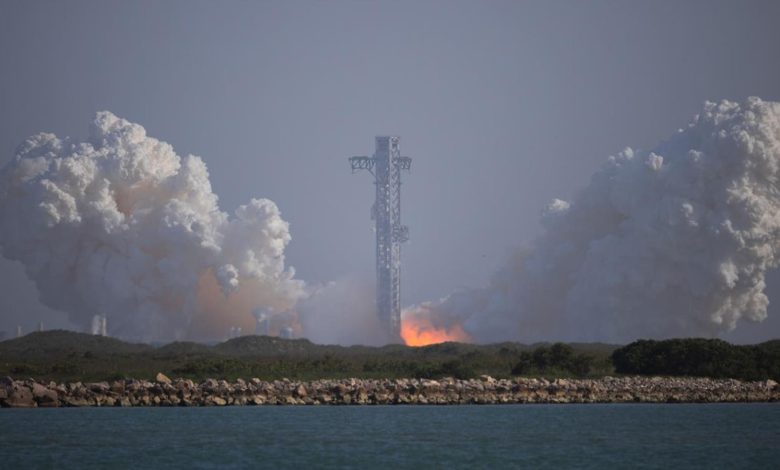
Starship 40 and Booster 20 launch from SpaceX’s facility in Cameron County, Texas, on July 24, 2026, for what the company called ”Flight 13.” The mission saw a successful deployment of Starlink V3 satellites and a soft splashdown resulting in the recovery of Ship 40. (Photo by Reginald Mathalone/NurPhoto via Getty Images)
NurPhoto via Getty Images
Six weeks after the largest IPO in history, gravity is winning. SpaceX shares touched a post-debut low of $107.01 Tuesday and, as reported by Bloomberg, briefly erased a fifth of their value from the debut before rebounding to close at $116.49. That leaves the stock nearly 14% below its $135 offering price, and at Tuesday’s lows the company’s market value sat more than $1.2 trillion beneath its June 16 peak, one of the largest market capitalization wipeouts in history.
In March, when the IPO was still speculative, I cautioned that with only a small slice of shares offered to the public, intense demand could send the stock sharply higher at debut. Once the frenzy subsided, the risk was that shares would drift well below those highs, as Rivian investors learned the hard way. The June follow-up, published after concrete terms emerged, noted that the $1.75 trillion valuation implied roughly 94 times 2025 sales, more than double Morningstar’s fair value estimate at the time, and warned that those chasing the opening pop might regret it.
Gravity Set In
The tape followed the script nearly beat for beat. Shares rocketed 67% above the offer price to $225.64 by June 16, the stock’s third trading day, then surrendered more than half that value over the following six weeks. The market has since repriced toward the skeptics. Morningstar’s $62 fair value estimate suggests the reckoning may not be finished, and HSBC initiated coverage on July 24 with a hold rating, telling CNBC that shares are fully valued even with an Elon “premium.”
Ross Gerber, president and CEO of Gerber Kawasaki Wealth and Investment Management, captured the disconnect during a July 23 livestream appearance. “A lot of the S-1 was not actually financial information,” Gerber said. “It was kind of like, here are all the moonshots that we’ve got going on here.”
That is precisely the problem. Moonshots are inspiring; they are not cash flows. A valuation built on orbital data centers, Mars cargo runs and million-satellite constellations prices in flawless execution on technologies that do not yet exist at scale.
The Passive Bag Arrived On Schedule
The June warning about Nasdaq’s new fast-entry rules also materialized, and faster than expected. SpaceX joined the Nasdaq-100 on July 7, just 15 trading days after its debut, triggering an estimated $4.3 billion in forced buying from index-tracking funds, per JPMorgan. Those funds absorbed shares with the stock trading far above today’s levels. Millions of 401(k) and index investors never chose this exposure at that price; the rulebook chose it for them, exactly the mechanism flagged here before the listing.
None of this makes SpaceX a paper rocket. Starlink remains a genuine cash engine, Starship’s Flight 13 test on July 24 advanced the program, and no competitor matches the company’s launch cadence. The lesson is not that the business is broken. The lesson is that price and process matter more than hype.
Gerber’s advice reflects that same discipline. “If you’re a long-term investor, you almost kind of have to own the stock,” he said. “And so the real question is, what price do I buy it at? And what I tell investors is the lowest price possible, and so you just got to be patient.”
Patience gets its first real test on August 4, when SpaceX reports its first quarterly earnings as a public company. Investors will finally see whether the financials are catching up to the fiction. Stay tuned.