Indian stocks defy global gloom ahead of Fed policy decision; Sensex surges 1.16%
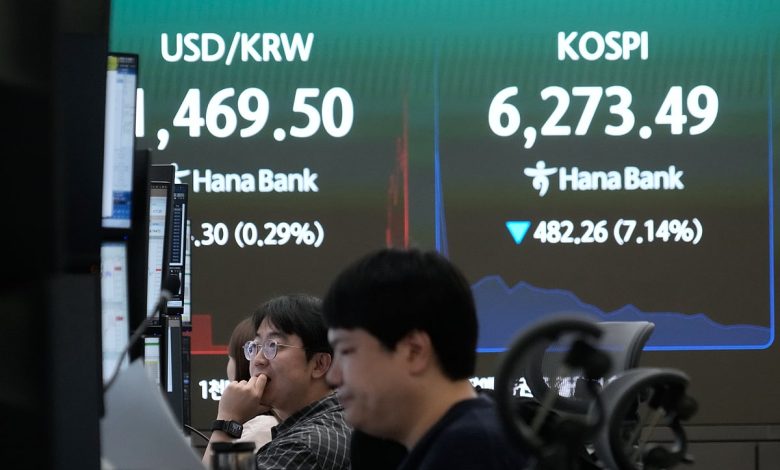
Indian equity markets ended higher ahead of the US Federal Reserve’s policy decision later today, with resilient domestic fundamentals outweighing weak global cues. Strong corporate earnings, sustained buying in information technology stocks, and a firmer rupee supported investor sentiment, even as Asian markets extended their AI-driven technology sell-off and renewed Middle East tensions kept crude oil prices near recent highs.
Across Asia, equities remained under pressure, with South Korean markets plunging nearly 16% over the past two sessions and Taiwan falling close to 4% amid continued weakness in semiconductor and AI-related stocks. Investors also remained cautious ahead of the US Federal Reserve’s policy decision, with interest rates widely expected to remain unchanged despite persistent inflation concerns.
BSE Sensex, which surged 1.16 percent or 889 points on Wednesday, settled at 77,654, while NSE Nifty50 closed at 24,250, up 1.1 percent.
“The Nifty opened with a gap-up and maintained buying interest throughout the session, with investors using intraday declines to accumulate quality stocks. Information Technology remained the standout performer, extending its weekly gain to more than 7.5% as investors continued to rotate into the sector,” said R Ponmudi, chief executive officer, Enrich Money, an online trading and wealth technology company.
He added that unlike Asian technology markets, which remained under pressure from concerns over semiconductor valuations and intensifying competition in the AI hardware space, Indian IT companies benefited from their services-led business models, resilient earnings outlook and attractive relative valuations.
“As valuations across the global semiconductor sector have become increasingly stretched, institutional investors have begun selectively increasing exposure to software and IT services companies expected to benefit from the next phase of AI adoption, a shift that is also supporting India’s IT sector,” says Ponmudi.
“Given India’s diversified market structure, the case for FII inflows is strengthening with the unwinding of crowded AI trades. Meanwhile, despite the intraday uptick in crude prices driven by renewed tensions in West Asia, the broader decline in oil prices over the week has eased inflation concerns and reinforced optimism around the growth outlook & reduction in operational costs,” said Vinod Nair, Head of Research, Geojit Investments.
FIIs bought (net purchase) shares worth Rs 2,879.93 crore on Wednesday after purchasing (net) shares worth Rs 755.33 crore on Tuesday. Meanwhile, the rupee appreciated for the fourth straight session, gaining 20 paise to close at 95.65, supported by a softer dollar index and the sharp rise in domestic equities.
Nair added that domestically, while stronger-than-expected IIP data provided the catalyst for a positive start, the renewed risk appetite helped sustain the gains throughout the session, with IT and metal stocks emerging as key beneficiaries. Industrial output rose by 7.3% in June compared to 5.1% in the preceding month, mainly on the back of improved manufacturing sector performance and strong growth of the electricity and gas supply sector.
The street’s attention has now shifted to the US Fed’s policy decision due later tonight, with the widely expected pause in rates unlikely to materially impact Indian markets, as it is mostly already priced in.
“A stronger rupee further supported sentiment, although participants remained cautious ahead of the US Federal Reserve’s policy decision. Meanwhile, geopolitical tensions in the Middle East and elevated crude oil prices continued to remain on investors’ radar,” said Ajit Mishra – SVP, Research, Religare Broking.
He added, “Technically, the Nifty has reclaimed the immediate resistance zone formed by the 20-day and 100-day DEMA, indicating an improvement in the near-term technical setup. The next crucial hurdle is placed around the 24,400 level, which coincides with the 200-day DEMA. A sustained move above this zone could pave the way for an extension towards the 24,600 mark.”
Earlier the day, Asian equities extended their sharp sell-off on Wednesday, with South Korean markets plunging nearly 16% over the past two sessions and Taiwan falling close to 4%, reflecting continued pressure on semiconductor and AI-related stocks. Adding to the cautious mood, renewed Middle East tensions following fresh military strikes pushed oil prices higher after the recent period of de-escalation, while investors also awaited the US Federal Reserve’s policy decision, with interest rates widely expected to remain unchanged despite persistent inflation concerns.
International crude oil prices rose more than 3.5% to trade near $82 per barrel, while domestic crude futures climbed to around Rs 7,850. The Indian rupee strengthened further, with the USD/INR pair falling to a one-week low near Rs 95.5 and extending its move below the Rs 96 mark. The rupee, however, remains vulnerable to a more hawkish-than-expected Fed outcome or any further escalation in the Middle East that could disrupt shipping through the Strait of Hormuz and revive safe-haven demand for the US dollar.
(Arshad Khan in New Delhi contributed to the story)