Maritime Chokepoints and Global Power Politics
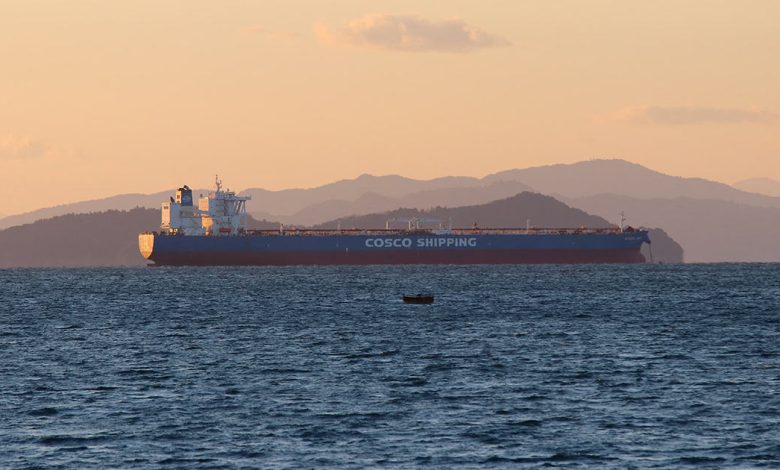
Renewed Houthi attacks in the Red Sea have once again demonstrated that geography is central to contemporary geopolitics. Despite rapid advances in technology and the emergence of new domains of warfare, control over maritime chokepoints provides states and even non-state actors with disproportionate strategic leverage. Simultaneous instability in the Bab el-Mandeb and the Strait of Hormuz represents far more than a regional security challenge; it threatens the foundations of global trade, energy security and the rules-based maritime order.
The broader regional conflict triggered by the US-Israeli military campaign against Iran in February has once again transformed Yemen into a theatre of proxy competition. Although the Bab el-Mandeb is formally open, it has become an increasingly high-risk transit corridor, particularly for vessels linked to Saudi Arabia or countries perceived as aligned with its regional policies.
The strategic importance of these developments extends well beyond Yemen. Maritime chokepoints have historically served as critical arteries of global commerce, but they are increasingly being weaponized as instruments of geopolitical coercion. The Strait of Hormuz carries nearly one-fifth of globally traded oil and substantial volumes of liquefied natural gas. The Bab el-Mandeb serves as the southern gateway to the Red Sea and then Suez Canal, facilitating roughly a tenth of global maritime trade and a significant share of Gulf energy exports destined for Europe. Together with the Strait of Malacca, Taiwan Strait, Suez Canal and Panama Canal, these narrow passages constitute the backbone of the global trading system.
The Bab el-Mandeb serves as the southern gateway to the Red Sea and then Suez Canal, facilitating roughly a tenth of global maritime trade and a significant share of Gulf energy exports destined for Europe.
Their disruption generates economic consequences far beyond their immediate geographic sphere.
What distinguishes the current moment is the growing ability of non-state actors to exploit these vulnerabilities. The Houthis have demonstrated that relatively modest military capabilities—combining drones, precision-guided missiles and small maritime platforms—can impose enormous costs on the global economy. Geography, when paired with inexpensive but effective technology, allows asymmetric actors to challenge superior naval powers and compel expensive military responses. This reflects a broader transformation in contemporary conflict, where strategic leverage increasingly derives from the ability to disrupt critical infrastructure rather than dominate conventional battlefields.
The concurrent pressure on both the Strait of Hormuz and Bab el-Mandeb has geopolitical consequences that extend beyond regional rivalries. Freight rates, insurance premiums and shipping costs have risen, extending transit times and adding inflationary pressures across global supply chains. Europe and Asia are particularly vulnerable because of their dependence on the Suez-Red Sea corridor, while developing economies face higher import costs for food, fertilizers, manufactured goods and energy. These disruptions reinforce the growing recognition that global supply chains optimized purely for efficiency are increasingly exposed to geopolitical shocks.
Consequently, governments and businesses are accelerating efforts to diversify trade routes and enhance supply chain resilience. The Cape of Good Hope is the principal alternative to the Red Sea, but it adds between one and two weeks to Asia-Europe voyages, significantly increasing costs, fuel consumption and emissions. Interest has also grown in the Northern Sea Route across the Arctic, although seasonal constraints, Russian regulatory control, insurance challenges and environmental concerns limit its viability. Overland corridors such as the China-Europe Railway Express, International North-South Transport Corridor (INSTC), Middle Corridor and the proposed India-Middle East-Europe Economic Corridor (IMEC) are receiving attention as complementary routes. While none can match the cost-advantage of the Suez-Red Sea route, together they represent a shift towards redundancy in global logistics.
India must accelerate connectivity initiatives such as the IMEC and INSTC to reduce dependence on single maritime routes while expanding engagement with key littoral states in the Western Indian Ocean and the Gulf.
For India, these developments carry strategic implications. Instability in the Red Sea directly affects India’s trade with Europe, raises freight costs and complicates energy imports from the Gulf. It also reinforces the need for India to move beyond a continental security mindset and deepen its role as a net security provider in the Indian Ocean Region. This requires sustained investments in naval modernization, maritime domain awareness, logistics agreements with like-minded partners and enhanced operational coordination through frameworks such as the Quad. At the same time, India must accelerate connectivity initiatives such as the IMEC and INSTC to reduce dependence on single maritime routes while expanding engagement with key littoral states in the Western Indian Ocean and the Gulf. As geopolitical competition shifts to the maritime domain, India’s ability to safeguard critical sea lanes and contribute to a stable Indo-Pacific will be key in its rise as a leading power.
Maritime chokepoints are no longer passive geographical features but active instruments of coercion. For policymakers, the challenge is not just to restore freedom of navigation but to adapt to a world in which geopolitical risk has become a permanent feature of world trade. The era of globalization defined by efficiency is giving way to one in which resilience, redundancy and maritime security shape the global order.
This commentary originally appeared in Mint.
The views expressed above belong to the author(s). ORF research and analyses now available on Telegram! Click here to access our curated content — blogs, longforms and interviews.
Credit: Source link