Scandals, splits, uncertain road to November mean midterms are still in flux
Washington feels less like a policy debate right now and more like a crisis hotline with two lines ringing at once.
President Donald Trump’s second term has been defined by sweeping unilateral action abroad and relentless intraparty battles at home.
His campaign-style purge of dissent and renewed claims about the 2020 election have become the floor of Republican messaging — even as just 37% of Americans approve of his job performance, according to AP-NORC polling.
Veteran Republican pollster Frank Luntz put it plainly.
“There is a sense of chaos and confusion,” Luntz said.
That chaos doesn’t stop at the Republican Party’s door.
Democrats are watching high-profile candidates collapse in competitive races — through scandal, outside spending wars and ideological fault lines that outside money has made impossible to paper over.
The truth is, nobody’s midterm plan survived contact with 2026.
Republicans arrived at the cycle with a simple argument: the border was tighter, the economy was recovering, and voters would reward results.
Democrats bet that anti-Trump energy would be enough to drive turnout and flip chambers.
Three months from Election Day, both strategies are in pieces — and both parties are improvising.
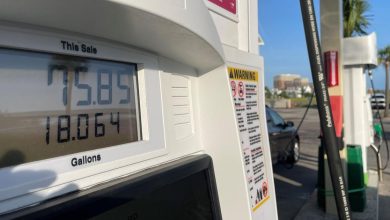
Trump’s escalating conflict with Iran has pushed gas prices higher and rattled global oil markets, pulling economic anxiety back into the headlines just as Republicans hoped to close that chapter.
Meanwhile, a wave of primary scandals — in Wisconsin, Maine and Michigan — has forced both parties into damage control at exactly the moment they should be building momentum.
The midterm map isn’t broken. It’s just nothing like how anyone drew it up.
Scandal reshapes battlegrounds
Three states that were supposed to be competitive-but-manageable have become something else entirely: unpredictable.
In Wisconsin, Lt. Gov. Sara Rodriguez’s exit following a campaign finance flap immediately reshuffled the Democratic primary, boosting state Rep. Francesca Hong’s standing in a race that was already drawing national attention.
In Maine, nominee Graham Platner’s withdrawal — amid sexual assault allegations and troubling past social media posts — didn’t just upend one race. It raised a harder question: How does a major party miss something that serious during vetting?
Michigan was a different kind of mess. Abdul El-Sayed’s primary campaign became the target of nearly $30 million in outside spending from AIPAC-affiliated groups backing incumbent Rep. Haley Stevens. That’s not a campaign finance footnote — that’s a redefinition of what a Democratic primary looks like in 2026.
Democratic pollster Celinda Lake watched all of it unfold and didn’t pull her punches.
“There is something in the air that has made these candidates incredibly reckless,” Lake said.
Trump’s Iran gambit
Republicans had a plan for the economy. Iran wasn’t in it.
Trump’s escalation with Iran has driven up global oil concerns and pushed gas prices higher — a tangible, fill-up-the-tank reminder that foreign policy and kitchen-table economics are rarely as separate as campaigns pretend.
For suburban voters who swung toward Republicans in 2024 on pocketbook concerns, that’s a hard number to talk around.
It also puts Republican candidates in competitive districts in an uncomfortable spot: defend the president’s foreign policy and risk alienating moderates or create distance from Trump and risk the base. Neither option is clean.
Adding to the pressure, Trump’s influence over Senate primaries — including his role in pushing out Sen. John Cornyn of Texas — has forced the GOP to spend resources defending seats that, in any other cycle, would have been banked and forgotten.
Democrats: Ahead in polls, divided on message
The numbers look decent for Democrats. The picture underneath them is more complicated.
New Pew Research Center polling conducted July 6–12, shows Democrats ahead on the generic congressional ballot, 43% to 37%, with higher voter engagement heading into the fall. In a normal cycle, that would be a strong position to be in.
But voters are essentially deadlocked on which party handles the economy better — 37% say Democrats, 36% say Republicans. That one-point gap is not a lead. It’s a warning.
The moderate-progressive divide is real, it’s loud, and the Michigan primary made it louder.
When AIPAC-aligned money mobilizes at that scale inside a Democratic primary, it doesn’t just pick a winner — it signals to every future progressive candidate exactly what kind of opposition is waiting.
Whether that chills the field or hardens it is one of the more consequential open questions of this cycle.
Outside money: The new party infrastructure
Here’s what the Michigan numbers mean: outside groups are no longer playing a supporting role in Democratic primaries. They’re writing the script.
Nearly $30 million spent in a single primary race isn’t an anomaly. It’s a preview.
Well-funded interest groups — on both sides of the aisle — are filling the vacuum left by weakened party committees and fractured ideological coalitions. In some races, they’re more organized, better funded and more strategically disciplined than the parties themselves.
The question heading into November isn’t just whether the candidates who survived those spending wars are electable. It’s whether the coalitions that got them through the primary bear any resemblance to the ones they’ll need in a general election.
What November looks like from here
So which party has the better hand to play? Honestly, neither has it locked up — and both know it.
Democrats hold an early engagement edge, but engagement advantages measured in July don’t always survive the long haul to October absentee voting and November turnout.
Candidate quality — now a genuine wild card in Wisconsin, Maine and Michigan — will matter enormously in states where margins are likely to be measured in the thousands.
For Republicans, the Senate path runs straight through primaries Trump shaped, in states where general electorates are measurably more moderate than the base that chose those nominees.
That’s a gap candidates will have to close on their own, without much help from a national party that is still managing its own internal contradictions.
For Democrats, the challenge is simpler to describe and harder to solve: bridge a moderate-progressive divide that outside money has made more visible than ever, and give swing voters a reason to believe the party has an economic argument — not just an anti-Trump argument — worth showing up for.
Three months is enough time to recover. It’s also enough time to finish falling apart. Both parties are in a race to figure out which one applies to them.
Key takeaways
-
Scandals and late withdrawals in Wisconsin, Maine and Michigan have turned expected battlegrounds into genuine toss-ups.
-
Trump’s Iran escalation handed Democrats an unexpected economic opening — and handed Republicans an unexpected headache.
-
Democrats lead on the generic ballot but are statistically tied with Republicans on economic leadership, per Pew (July 6–12).
-
Outside groups, particularly AIPAC-affiliated organizations, are functioning as de facto party infrastructure in key Democratic primaries.
-
Candidate quality and coalition-building — not just national trends — will likely decide control of Congress.
Our conversation
News4JAX Political Analyst Rick Mullaney, director of Jacksonville University’s Haskell Public Policy Institute, joins me on this week’s episode of “Politics & Power” to discuss:
-
Midterm game plans vs. current messes
-
Voter reactions to Iran conflict and gas prices
-
Candidate vetting and party discipline
-
The role of outside money (AIPAC, PACs) in primaries
-
November scenarios if fragile nominees prevail or fall
Watch live at 10:30 a.m. on News4JAX+ or catch our encore presentation at 9 p.m. Tuesday on News4JAX+. You can also catch up any time on demand on News4JAX+, News4JAX.com or our YouTube channel.
Copyright 2026 by WJXT News4JAX – All rights reserved.
Credit: Source link