The Hidden Cost of International ETFs: How Much Currency Risk Actually Ate Into Returns Over the Last Decade

Key Points
-
A currency-hedged EAFE ETF (HEFA) outperformed a non-hedged version (EFA) by 3% annually over the past decade.
-
A stronger dollar hurts the value of unhedged international stock funds relative to hedged versions.
-
Currency-hedged ETFs can reduce volatility by around 10%.
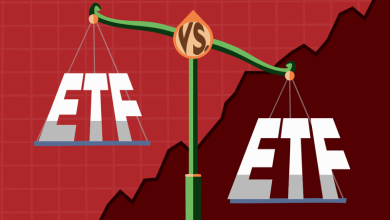
The iShares MSCI EAFE ETF(NYSEMKT: EFA) and the iShares Currency Hedged MSCI EAFE ETF(NYSEMKT: HEFA) are essentially the same portfolio and hold the same developed market stocks across Europe, Japan, and Australia. The only structural difference is their currency exposures. The first allows currency swings and accepts whatever effect they have on total returns. The latter strips out that currency risk.
Either one can work. It just depends on which risk exposure you prefer, and if you have a high conviction opinion as to whether the dollar will add to or reduce performance. Over the last decade, that difference between hedged and unhedged could have been worth thousands of dollars.
Missed Nvidia in 2009? This Rare Signal Is Flashing Again.In 2009, a “Double Down” signal flashed for a little-known chipmaker called Nvidia. For the first time in years, that same “Total Conviction” signal is flashing for a company 1/100th the size of Nvidia. Continue »
&&
Image source: Getty Images.
EFA vs. HEFA: How they’re constructed
The iShares MSCI EAFE ETF tracks the MSCI EAFE Index, which consists of more than 700 large- and mid-cap stocks across developed markets outside the United States and Canada. Returns reflect both changes in the values of the underlying stocks and fluctuations in the euro, yen, pound, and other currencies relative to the dollar.
The iShares Currency Hedged MSCI EAFE ETF actually holds the EAFE ETF as its only holding. It also layers on currency contracts that effectively neutralize any currency changes. It reduces overall volatility and removes a potential wild card from the risk/reward profile.
The currency market changes are what drive the difference in performance between the two funds.
For example, suppose that a basket of Japanese stocks was up 8%, but the yen fell by 10% relative to the U.S. dollar. An investment in a currency-hedged Japanese stock ETF would be up 8%. An investment in the unhedged Japanese stock ETF would be down 2%.
EFA vs. HEFA: A decade of performance data
|
Metric |
EFA |
HEFA |
|---|---|---|
|
Expense ratio |
0.32% |
0.35% |
|
Assets under management |
$79.3 billion |
$7.7 billion |
|
Dividend yield |
3.2% |
3.1% |
|
1-year total return |
25.5% |
29.3% |
|
5-year total return (annualized) |
9.4% |
14.1% |
|
10-year total return (annualized) |
9.6% |
12.6% |
Data source: iShares.
Over the past 10 years, the currency-hedged ETF outperformed the unhedged ETF by 3 percentage points annually. It did that with roughly 10% less volatility.
In dollar terms, that means a $10,000 investment in HEFA a decade ago would have turned into roughly $32,700. In EFA, the same investment would have become $25,000. That’s a rough difference of $7,700.
The general relationship here is that if the dollar is stronger, HEFA should outperform EFA. If the dollar becomes weaker, the opposite would occur. The dollar has generally done well globally over the past decade, but it’s been a volatile ride at times. The risk reduction from removing the currency fluctuations has been meaningful.
Currency-hedging international stocks are a better pure play
In many cases, using a currency-hedged international stock ETF makes a lot of sense for retail investors — not because it’s outperformed the unhedged version over the past decade, but because it’s a significant risk reduction.
Plus, your investment results are based solely on the performance of the underlying stocks. It’s a better option for direct exposure to foreign economies. That’s something that a lot of portfolios could benefit from.
Should you buy stock in iShares Trust – iShares Msci Eafe ETF right now?
Before you buy stock in iShares Trust – iShares Msci Eafe ETF, consider this:
The Motley Fool Stock Advisor analyst team just identified what they believe are the 10 best stocks for investors to buy now… and iShares Trust – iShares Msci Eafe ETF wasn’t one of them. The 10 stocks that made the cut could produce monster returns in the coming years.
Consider when Netflix made this list on December 17, 2004… if you invested $1,000 at the time of our recommendation, you’d have $399,724!* Or when Nvidia made this list on April 15, 2005… if you invested $1,000 at the time of our recommendation, you’d have $1,374,595!*
Now, it’s worth noting Stock Advisor’s total average return is 967% — a market-crushing outperformance compared to 215% for the S&P 500. Don’t miss the latest top 10 list, available with Stock Advisor, and join an investing community built by individual investors for individual investors.
*Stock Advisor returns as of August 9, 2026.
&&
David Dierking has no position in any of the stocks mentioned. The Motley Fool has no position in any of the stocks mentioned. The Motley Fool has a disclosure policy.