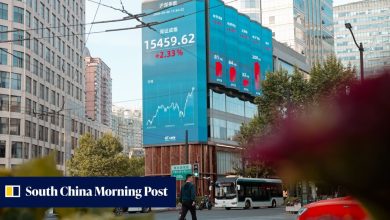
Tech leads losses as Asian stocks track Wall St selloff
Technology stocks were back in the crosshairs of investors Wednesday, taking another heavy blow from a spike in bond yields, rising oil prices, persistent inflation and dimming hopes for a deal to reopen the Strait of Hormuz.
The selloff tracked losses on Wall Street, where firms heavily invested in artificial intelligence and chips were sharply lower, staunching a recent recovery in the sector in recent weeks following a crushing July.
With the crisis in the Middle East showing few signs of ending — US and Iranian officials have dug in and appear prepared for an extended standoff — crude prices are pushing back higher as traders factor in the crucial strait staying closed.
That has stoked inflation expectations and sent US government debt costs soaring.
The yield on a 30-year US Treasury on Tuesday hit its highest level since June 2007, before the global financial crisis, while 10-year yields are higher than before the first US-Israel strikes on Iran in late February.
Higher government borrowing and a flood of corporate issuance has added to the upward pressure.
National Australia Bank’s Rodrigo Catril said: “AI-linked stocks that have increased their borrowing levels are now seemingly showing a greater deal of sensitivity to the move up in higher longer-dated yields.”
US tech and chip giants including Nvidia, Intel, Micron, and Broadcom took a battering, dragging the Nasdaq and S&P 500 lower.
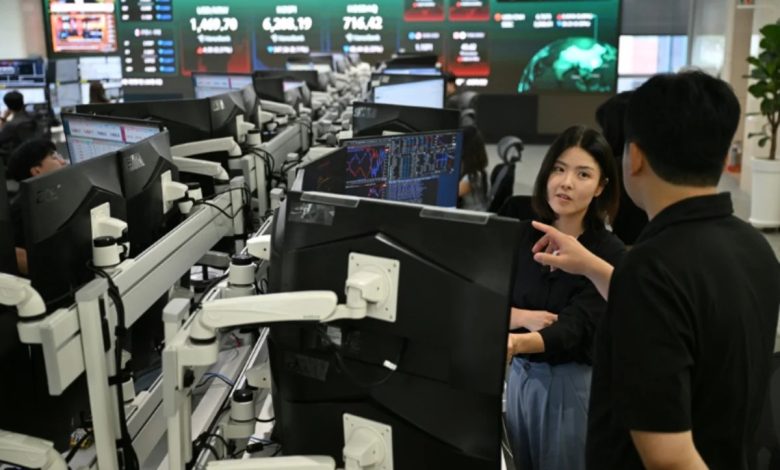
In Asia, Seoul’s Kospi, the poster child of the AI tech rally, lost 5.8 percent as chip titan SK hynix was clobbered 9.8 percent and Samsung nearly eight percent.
After the market closed, SK hynix announced it would buy back $29 billion of its shares in a bid to settle investor nerves.
Tokyo shed more than three percent, with Kioxia off 12.6 percent and investment giant SoftBank more than 10 percent off.
Shanghai was also sharply lower with Taipei, Sydney, Singapore, Manila, Mumbai, Bangkok and Jakarta. Hong Kong, however, rose.
London was flat as data showed UK inflation jumped last month owing to rising oil prices, while Paris edged up and Frankfurt dipped.
“Higher yields will increase borrowing costs for hyperscalers, raising questions about the outlook for capital spending and the potential impact on AI infrastructure companies,” said Kazunori Tatebe of Daiwa Asset Management.
Both main crude contracts rose Wednesday, with Brent hovering around $92 a barrel and West Texas Intermediate above $85, as the chances of any Middle East deal thin after US President Donald Trump said he would not extend a 60-day truce.