Investing Tips to Navigate the Treasury’s Bond Market ‘Gimmicks’

Treasury Secretary Scott Bessent has announced bond buyback plans in recent days in an effort to suppress long-term Treasury yields.
But in doing so, Bessent might actually be driving long-term borrowing costs higher, says Lisa Shalett, the chief investment officer at Morgan Stanley Wealth Management.
In a client note on Monday, Shalett said that the firm views “non-crisis market intervention and financial engineering attempts as short-lived gimmicks,” and said that employing them is helping to fuel policy uncertainty for investors. That uncertainty is leading to higher long-bond yields.
“Building policy uncertainty is evident in the normalizing term premiums that have accounted for two-thirds of the move in nominal longterm rates, underscoring declining future policy predictability,” Shalett said.
As 30-year Treasury yields reached a 19-year high last week, Bessent first said that the Treasury would double its bond buyback program. On Monday, CNBC reported that the Treasury could tap its $1 trillion General Account to fuel more bond buys.
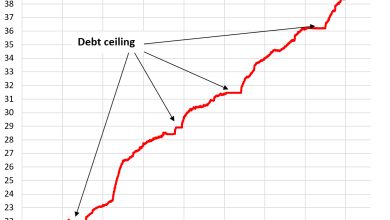
Long-term yields have been rising thanks to surging government debt levels — the US national debt hit $40 trillion last week — heightened demand for capital, and sticky inflation as oil prices remain elevated.
Shalett said bond yields will likely continue to rise despite Bessent’s efforts to quell them. That’s thanks to factors like rising government borrowing rates to fund defense and energy infrastructure spending, as well as borrowing from the private sector to fund the AI infrastructure buildout, she said.
Further policy uncertainty could also continue to lift rates, she said.
“At the end of the day, given global capital competition, there is fundamental upward pressure on rates that the Treasury secretary cannot engineer away,” Shalett said. She added: “Watch long-term yield composition, noting that an unpredictable policy agenda might only drive further term-premium normalization.”
Portfolio moves to make amid bond volatility
Shalett shared a few investing tips for navigating heightened uncertainty.
In bonds, she said to move exposure to “benchmark neutral,” meaning in the 3-year to 7-year duration range. This takes duration risk from long-term bonds off the table — when their yields rise, their prices fall.
In stocks, one step investors can take to reduce risk is to increase exposure to broad, equal-weighted indexes, she said.
This is because rising bond yields tend to hurt stock valuations, particularly in the growth theme, where valuations are higher. Since major market-cap-weighted indexes are highly concentrated in AI and tech companies, they could be more vulnerable to declines than equal-weighted indexes if bond yields continue their rise.
If you want to get more granular than a broad index, particular examples of some unloved areas of the market to boost positions in include healthcare and financials, she said.
Funds that offer exposure to these trades include the iShares 3-7 Year Treasury Bond ETF (IEI), the Invesco S&P 500 Equal Weight ETF (RSPA), the Vanguard Financials ETF (VFH), and the Health Care Select Sector SPDR ETF (XLV).