Bond Market
Macroscope | Bond market revolt signals fading confidence in US economic leadership
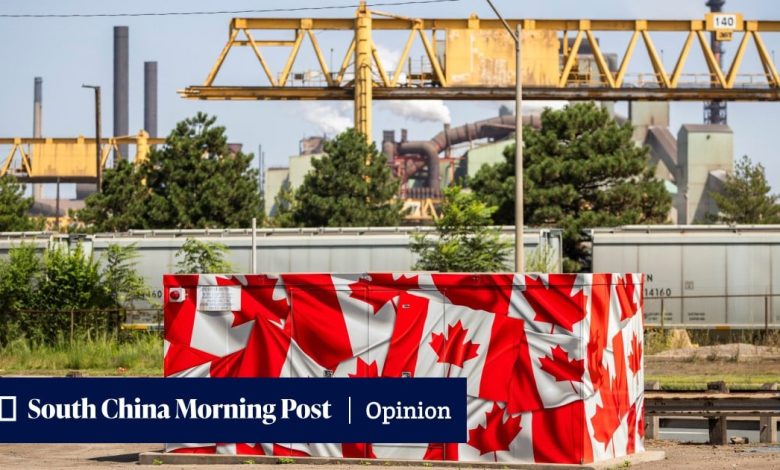
Two years ago, the prospect of a trade war between the United States and Canada, two of the world’s most closely integrated economies, would have been unthinkable. However, US President Donald Trump’s recklessness and capriciousness know no bounds.
Last week’s breakdown in negotiations between the North American neighbours, which triggered the imposition of US tariffs of 50 per cent on a wide range of Canadian goods, showed the degree to which Trump’s trade policies are vindictive, politicised and self-defeating.
According to Canada’s Prime Minister Mark Carney, who has responded in kind by announcing levies of up to 50 per cent on hundreds of US goods, the White House changed the terms of the deal at the eleventh hour. US negotiators insisted Ottawa renounce its promotion of French as a coequal language with English and agree to measures that would restrict its ability to strike trade deals with other countries.
Although Canada’s economy – which sends more than 70 per cent of its exports to the US – will bear the brunt of a full-blown trade war, the US will suffer, too. Canada is the second-largest US trading partner after Mexico, while the two nations’ automotive supply chains are deeply integrated. Trump’s threat to raise tariffs on Canadian cars and automotive parts to 50 per cent poses a huge risk to the US car industry and its supplier network.
Self-harm has been the main consequence of Trump’s protectionist and highly expansionary fiscal policies. While the entire world is contending with the geopolitical and economic fallout from Trump’s second presidency, the biggest casualty – and the one that matters most to global markets – is the management of the US economy.
Last year, the Taco acronym, which stands for “Trump always chickens out”, was popular among investors, many of whom believed Trump’s bark was worse than his bite. While equity investors continue to be dazzled by the boom in artificial intelligence, bond markets are in a less forgiving mood this year, partly because of the inflationary impact of the energy shock and the dramatic increase in debt issuance by the leading technology companies.