Global funds turn wary of Indian stocks as AI boom draws money elsewhere | Markets News
By Faseeh Mangi, Winnie Hsu and Abhishek Vishnoi
When Reed Capital Partners, a multifamily office, wanted to trim its equity exposure about a month ago, it chose to entirely exit its Indian portfolio.
For Gerald Gan, chief investment officer at the Singapore-based firm, it was an easy call. “There isn’t much going on for a good India story,” Gan said. “It is more the growth story that is withering away for India.”
The retreat marks a stark reversal for a market that was one of the world’s hottest investment destinations not long ago. India now ranks the least-favored market in Asia, according to a recent Bank of America investor survey. Money managers at Janus Henderson Investors and Vantage Point Asset Management said the funds have pared India exposure to zero in the past year or so.
Indian equities trade at about 17.6 times forward earnings — slightly below their historic average — but still remain significantly more expensive than their emerging market peers. The NSE Nifty 50 Index still commands a 77 per cent valuation premium to MSCI Inc.’s emerging-market benchmark, prompting foreign funds to pull about net $25 billion this year and deploy it elsewhere.
“Many wealth managers have taken India back to underweight or completely out as they are more concerned about covering the increased weighting of tech plays in Taiwan and South Korea,” said Dubai-based Global CIO Office Chief Executive Gary Dugan. “They don’t see the same kind of risk of missing out in India given the headwind of a high oil price and weak currency.”
About 30 per cent of Global CIO Office’s clients, which include family offices and wealth managers, have exited India entirely, Dugan said.
Still, local institutions have provided a floor for the market, with net stock purchases of about $60 billion this year, according to BSE Ltd. data. The buying has helped small-cap stocks in the country emerge as a bright spot, buoyed by companies benefiting from India’s data center build-out.
Morgan Stanley says India is in the midst of a multi-quarter growth upcycle, and given the supportive equity valuations, market performance should improve in the months ahead. The brokerage sees the BSE Sensex Index rising 19 per cent to 89,000 by June next year in its base-case scenario, and reaching 100,000 in a bull case.
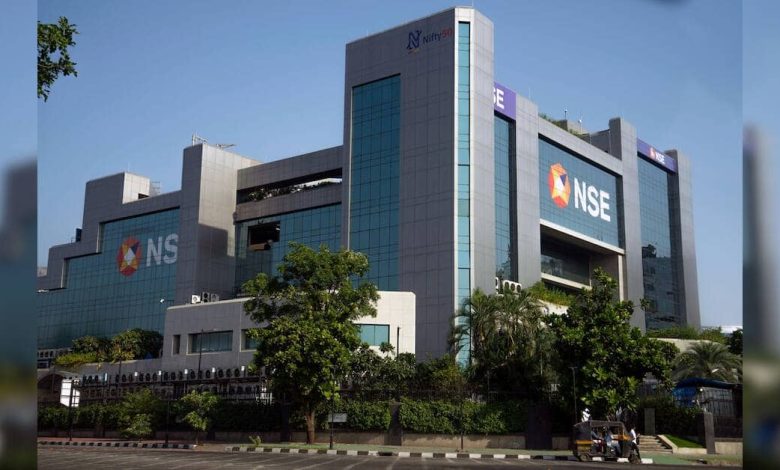
Yet investors are becoming more discerning. NSE — the poster child of India’s financialisation boom — was forced to downsize its long-awaited initial public offering this week after investors pushed back against valuations.
‘Real Issue’
After more than 12 years in power, Modi has struggled to translate India’s status as the world’s fastest-growing major economy into an attractive market for foreigners. The old structural bull case of a large consumer and services market is now being challenged by a lack of meaningful AI play and the high dependence on oil imports.
More than ever, India is in need of foreign capital, especially more durable foreign direct investments that can fuel Modi’s manufacturing ambitions and provide a buffer against fickle portfolio flows. Fund managers now say the leader needs to do more to lure back foreign investors.
Indian assets’ vulnerability to swings in oil prices came to the fore with the outbreak of the US-Iran war. Alongside the stock-market decline, the rupee slumped to a record low and continues to rank among Asia’s worst performers this year despite India raising $127 billion from its diaspora to bolster its currency defenses.
“The result has been pressure on the current account balance and a weaker rupee. Currency depreciation can compound foreign investors’ concerns as it erodes dollar returns, tightens local financial conditions at the margin, and raises questions about the durability of corporate margins,” said Carlos Casanova, senior economist for Asia at Union Bancaire Privee.
Complicating matters is India’s shrinking clout in emerging-market indexes, driven by its poor performance versus AI-focused North Asian markets. The South Asian nation now accounts for about 11 per cent of the MSCI Emerging Markets Index, down from 16 per cent a year ago, according to data compiled by Bloomberg.
“India’s relative underperformance reduces its index weight, which then gives benchmark-conscious managers less reason to own it, adding to the selling pressure,” Dugan said. “But it is also an indicator of the times. The dominant theme in emerging markets at the moment is tech, and that is where the money is going.”