Vanguard eyes $2.5 bln investment in Vietnam stocks after FTSE upgrade
Vanguard, the world’s second-largest asset manager behind BlackRock, is projected to invest $2.5 billion in Vietnam’s stock market over the next year following the upcoming upgrade to emerging-market status by FTSE Russell, a senior executive said.
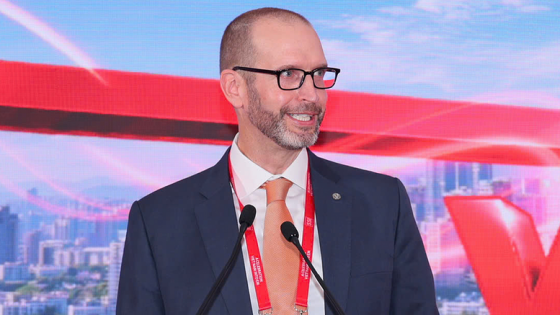
Duncan Burns, head of investment management and global equities for Asia-Pacific at Vanguard, made the comment at a conference marking Vietnam’s inclusion in the FTSE Russell Global Equity Index Series, held by the Ministry of Finance on Friday.
The planned investment is higher than previous estimates by some Vietnamese analysts, who had forecast inflows of around $1-2 billion following the upgrade.
Markets included in major benchmark indexes typically gain greater attention from global investors, helping improve access to international capital, Burns said.
Many investors might never have visited Vietnam, but through Vanguard, they could participate in the sustainable growth of this market, he added.
Duncan Burns, head of investment management and global equities for Asia-Pacific at Vanguard. Photo courtesy of SSI.
Vietnam’s stock market is set to be officially upgraded to secondary emerging market under FTSE Russell’s classification on September 21, a move expected to expand the market’s access to foreign capital inflows.
SSI Research estimates that Vanguard funds tracking the FTSE Global Equity Index Series could make net purchases of $240.5 million in 27 Vietnamese stocks included in the emerging-market index.
Vanguard, founded in 1975, manages about $13 trillion in assets for more than 60 million investors globally.
FTSE Russell added 27 Vietnamese stocks to its emerging-market index in its latest portfolio review released in late August.
Among the 27 stocks, three are classified as large-cap companies: Vietcombank (HoSE: VCB, Vingroup (HoSE: VIC), and Vinhomes (HoSE: VHM). Six mid-cap stocks include BIDV (HoSE: BID), Hoa Phat (HoSE: HPG), and VPBank (HoSE: VPB), while the remaining 21 stocks are classified as small-cap companies.
At the conference, Finance Minister Ngo Van Tuan said regulators would continue to strengthen corporate governance and market discipline while developing the legal framework for new market models and products in line with international trends.
The ministry will also continue reforms aimed at building a more transparent, secure, and attractive capital market, thus facilitating market access, particularly for foreign investors, and pushing Vietnam’s capital markets closer to international standards, Tuan added.