3 Stocks Retail Investors Are Watching As Rising Bond Yields Reshape Wall Street

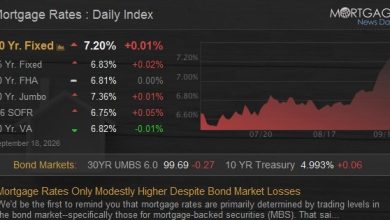
When U.S. Treasury borrowing runs into the trillions and 10 year yields press toward 5%, the bond market starts to rewrite the playbook for almost every stock on your screen. Higher funding costs, heavier corporate bond issuance, and debt fueled AI build outs are quietly reshaping who gains and who struggles. This piece unpacks that story and highlights 3 stocks directly exposed to these forces, all identified as potential beneficiaries of this bond market shake up.
The three businesses covered below are just a starting sample, and the full screen surfaced 25 more U.S. bond market intermediaries and underwriters with equally compelling narratives that are not included in this article. To go deeper into this theme, head straight into the U.S. Bond Market Intermediaries and Underwriters screener to identify, compare, and analyze the highest conviction opportunities across the full list.
Moody’s (MCO)
Moody’s is one of the clearest pure plays on the bond issuance cycle in this screener, since it sells the ratings and risk tools that issuers, banks, and underwriters rely on every time fresh debt hits the market.
Moody’s is a US$79.99b integrated risk assessment firm. Its Moody’s Investors Service segment generated about US$4.66b, and Moody’s Analytics brought in roughly US$3.72b. This means investors are looking at a business built on credit ratings and data rather than balance sheet risk.
“The core Ratings business, Moody’s Investors Service (MIS), functions almost like a toll booth on the global debt market. Whenever a company issues bonds, refinances debt, launches securitized products, or governments raise capital, Moody’s gets paid.”
What happens to Moody’s earnings power if a single, less visible shift in global debt issuance patterns tilts that toll booth’s traffic for years?
If that traffic shift is on your radar, read the full narrative for Moody’s to see how Moody’s earnings engine could accelerate or stall under different issuance patterns.
Lincoln International (LCLN)
Lincoln International is a US$2.65b independent investment banking advisory firm that helps clients raise and restructure capital, which ties it into the bond issuance and refinancing cycle even without being a major bond underwriter. Investment Banking Advisory generated about US$697 million and Valuations and Opinions about US$188 million in revenue, giving investors sizeable fee-based exposure to corporate financing flows.
Lincoln International gives you exposure to the corporate financing and refinancing cycle through advisory work rather than balance sheet risk, with Investment Banking Advisory and fund solutions closely linked to deal and debt activity. The stock trades on a P/E of 5.8x with a 31% ROE, so a shift in how fee pools move between banks and independent advisers could significantly influence where its margins ultimately settle.
Those shifting fee pools deserve a closer look through the 2 key rewards and 2 important warning signs (1 is major!), before margins or deal volumes decouple from what headline valuation alone might suggest.

Houlihan Lokey (HLI)
Houlihan Lokey ties into the bond intermediation theme through its capital markets and liability management advisory work, while still being primarily an M&A and restructuring house. The business generated about US$1.65b from Corporate Finance, US$520 million from Financial Restructuring, and US$354 million from Financial and Valuation Advisory, with a market value around US$9.3b.
For investors tracking how higher yields are reordering deal and refinancing activity, Houlihan Lokey offers a pure advisory angle on bond-linked liability management without taking trading or lending risk.
“Ongoing global expansion, sector diversification, and talent recruitment position Houlihan Lokey for sustained revenue growth and increased market share.”
What matters next is how one pressure point in its fee mix shapes where margins and deal volumes eventually settle.
Those margin pressure points are only the start. The full narrative for Houlihan Lokey shows how Houlihan Lokey’s fee mix could be quietly building leverage to an accelerating refinancing cycle.

Seeking Fresh Alternatives Before They Fly
Fresh ideas move first, and the strongest themes often break out before most investors even notice. Do not wait until the data goes stale. Consider acting while the information is current.
This article by Simply Wall St is general in nature. We provide commentary based on historical data
and analyst forecasts only using an unbiased methodology and our articles are not intended to be financial advice. It does not constitute a recommendation to buy or sell any stock, and does not take account of your objectives, or your
financial situation. We aim to bring you long-term focused analysis driven by fundamental data.
Note that our analysis may not factor in the latest price-sensitive company announcements or qualitative material.
Simply Wall St has no position in any stocks mentioned.
New: Manage All Your Stock Portfolios in One Place
We’ve created the ultimate portfolio companion for stock investors, and it’s free.
• Connect an unlimited number of Portfolios and see your total in one currency
• Be alerted to new Warning Signs or Risks via email or mobile
• Track the Fair Value of your stocks
Have feedback on this article? Concerned about the content? Get in touch with us directly. Alternatively, email editorial-team@simplywallst.com