What Takaichi’s win means for global markets
This is an audio transcript of the Unhedged podcast episode: ‘What Takaichi’s win means for global markets’
[MUSIC PLAYING]Katie Martin
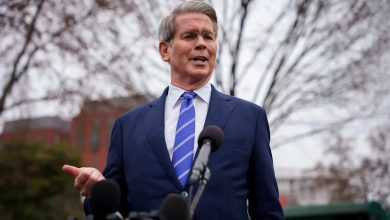
Election fever in Japan delivered a very clear result at the weekend and Japanese stocks rushed to an all-time high in response. Prime minister Sanae Takaichi called a snap election just a few weeks ago. And her party, the Liberal Democratic Party, won a massive majority, a super majority in fact, in the country’s lower house of parliament with more than two-thirds of the seats in the ability to override the less powerful upper house of parliament. Takaichi can now do, well, pretty much whatever she likes.
Today on the show, we’re gonna talk about why this matters to investors both in Japan and around the world. This is Unhedged, the markets and finance podcast from the Financial Times and Pushkin. I’m Katie Martin, a markets economist at FT towers in London, where it is raining all the time, and I’m joined by the team in New York, his excellency, Mr Robert Armstrong from the Unhedged newsletter and his trusty sidekick, Hakyung Kim.
Hakyung, you kept Rob in his place on the podcast the other day when I was not around, I like this.
Hakyung Kim
I was told I mogged him. So I’ll take that one.
Robert Armstrong
That’s another young people word that I don’t know what it means. I’m gonna assume it means showed great respect.
Katie Martin
Great deference. So what I like, one of the things I like about the elections in Japan is that just like bish bosh done over. You call an election, you do an election, it’s done, it’s finished. Not like the US is like in a permanent state of some sort of election cycle, whereas Japan and the UK get this stuff just done nice and quick.
Robert Armstrong
But you do it over and over again. You do it efficiently . . .
Katie Martin
That is true.
Robert Armstrong
. . . but constantly.
Katie Martin
That is also true. But yeah a very . . .
Robert Armstrong
But this is momentous financially. I mean for people like us, it’s like Japan is one of the big centres of gravity in the world of finance and Sanae Takaichi, whose name I hope I’m getting correct, has a different view of how that country ought to be run financially. I think this is a big deal. I’m not quite sure what it means, but it sure means something.
Katie Martin
So Hakyung, talk to us a bit about what markets have done after this, because there was a reasonable chance that, you know, you would’ve said on paper, right? Takaichi wins a massive majority. She’s gonna go ahead with like massive spending plans and this should on paper spooked the Japanese government bond market. But like, not at all and stocks have loved it, like, tell us what’s kind of happened here.
Hakyung Kim
Yeah, so Takaichi originally took office in October and stocks have basically hit record after record since then and that’s what they did after the snap election on Sunday.
But in the bond market, which had a bit of a freak out in January after she said that she would scrap the food tax or suspend it for two years. The bond market reaction was surprisingly muted, I would say, given the gravity of her win and likewise with the end, the reaction was relatively muted compared to the scale of her win and previous reactions it had to like statements that she’s made on fiscal policy.
Katie Martin
But yes, stocks love it. So stocks are up something like 7 per cent depending on which index you’re looking at. They’ve had a massive push higher since this re-election. Like why do we think that is?
Hakyung Kim
I think it’s the growth prospects that her fiscal expansionary plans are promising, and she’s promised a lot of investment in the defence sectors and also in the tech sectors too. So to kind of make Japan into this defence powerhouse and such. Stocks have really cheered that and there’s always been that kind of Japan discount that’s been healing for the past few years. But after her election, investors have become even more optimistic. But I think it’s really important to note that a lot of domestic investors aren’t quite buying it yet. They’re still opting into the US stock market more so than their domestic market.
Robert Armstrong
Yeah, I’m very interested. I mean, I think global investors, and we’ve talked about this at great length on the show, global investors. Have been moving their chips around a little bit. Everybody was massively overweight the US and I wonder if part of what we’re seeing is global, the big money, real money, global investors are taking a harder look at international markets.
And of course there’s just the basic fact that Sanaenomics, are we allowed to use that term Sanaenomics? Am I saying it correctly?
Katie Martin
The Takaichi trade.
Robert Armstrong
Takaichi trade is what we wanna call it. That is inflationary broadly, right? An inflation world, you know, bonds down, stocks up.
Katie Martin
Yeah.
Robert Armstrong
Ish. You know in relative terms at least, stocks don’t love inflation, but they hate it less than bonds do.
Katie Martin
Yeah. And the, I think the backdrop here is quite important to bear in mind, right?
So there was like, back in the day, like very, very early ‘90s, though there was like Japanese stocks went completely bananas, and there was just this massive crash. Like a huge crash, like a sort of, you know a generation defining crash in the Japanese stock market. And it took literally 30 years to get back to base, you know? Japan was absolutely in the doghouse for the longest time. International investors were just not interested. They were like, no, no, no. We lost our shirt on this thing and we are not going back into it.
It took a really long time and a set of like really quite punchy reforms, kind of, it sounds slightly ridiculous, but sort of forcing Japanese companies to make a profit and treat their shareholders nicely, that this, all these big sort of corporate governance reforms and that’s been a really slow burner.
Robert Armstrong
But people buy the story now.
Katie Martin
People buy the story and as you, like even you were admitting Rob, people are looking for opportunities outside the US now, and Japan is a pretty good bet, you know. If you like AI and tech, but you don’t like the US. For some reason then, Japan is a good place to go, you know, same story with Korea, which has had an incredible run in its stock market too.
So it just feels like a lot of stars are aligning, you know, I take Hakyung’s point that there are still some investors both in Japan and elsewhere that are a little bit nervous about it. But I feel like this could be a bit of a moment for the long term in Japanese markets.
Robert Armstrong
I guess we should also talk about the incredible change in the yield environment in Japan. I mean, just like the stocks were dead for 30 years. Japanese bonds yielded plus or minus nothing.
Katie Martin
Yeah.
Robert Armstrong
Forever.
Katie Martin
Yeah.
Robert Armstrong
Until about four years ago.
Katie Martin
Yeah. The Japanese bond market was the place where fun went to die for the longest time, (Robert laughs) like bonds simply did not move in price which meant that yields didn’t move around at all. And a big reason for that is that the Bank of Japan, the central bank, just like owns a massive chunk of all the outstanding Japanese government bonds. So even though you’ve got a debt-to-GDP ratio of last time I checked something in . . .
Robert Armstrong
227 per cent.
Katie Martin
Yeah, something in excess of 200 per cent.
The reason why that does not like spill over into a huge bond market crisis, which it would in the US or the UK, you better believe it if you tried to borrow that much money relative to GDP, is that like the central bank owns a lot of the bonds, a lot of like big, serious domestic investors own a lot of the bonds, they’re not gonna torch their own bond market but we have seen it move in the past few years as you say, Rob, like partly because like we’ve just finally got a bit of inflation and some of that is like the long tail of Covid and some of it is the long tail of, you know, these efforts to make companies more profitable.
But there is an idea out there that the Bank of Japan has been a little bit too slow to raise rates to deal with this. So you have got like really like for Japan, pretty high bond yields at the moment and that I think it over and above the move in stocks. That’s the thing to really watch here, I reckon.
Robert Armstrong
Just to give listeners a sense of the scale of what has happened here, as recently as 2022, the five-year Japanese bond yielded a round zero. Now, it’s 1.7 per cent you earn. The 30 has gone from like a bit over half a per cent, 30-year, half a per cent to 3.5 per cent. And in bond market terms, these are massive epic generational moves.
Katie Martin
They are and a lot of the pressure is at what you call the long end, right? It is in the sort of 30-year segment of the market and I think like 10-year Japanese government bonds is now yielding about 2.3 per cent, which again doesn’t sound like a huge amount but for Japan, that is huge.
So I was talking to a European asset manager just earlier today actually and he was saying, look at those sorts of yields for Japan, like this is a European asset manager, he was like, even we might have a bit of that. That sounds OK, like you get decent money out of Japanese government bonds now.
But more importantly for domestic investors, and there were some really huge kind of pension and life insurer kind of investors in Japan, they look at the yields that they can get on their domestic government bonds now and they think, why would I bother going to the US? Why would I bother buying US government bonds when I can get this much at home? Why would and even maybe, why would I bother buying European government bonds if I can get these rates at home? So here’s a plausible path forward that this investor was sketching out to me earlier, which is OK, stocks are doing well but the Japanese yen has been like quite, quite rubbish for quite a long time.
But there is a world in which that repatriation thing happens, right? Japanese investors stay at home in their bond market and overseas investors stop buying Japanese government bonds for some of them for the first time ever. That pushes up the yen. And so if you are buying Japanese stocks, if they keep performing as they have been doing recently, which is very nicely, you get a double whammy, you get good stock market performance and potentially, you get a pick-up in the Japanese currency catching happy days. Why would you take on all the kind of US risks when you’ve got what looks like a much cleaner picture over here?
Robert Armstrong
And the worry, there’s a kind of generalised worry among bears about the American stock and bond markets, that there will be an enormous sucking sound as capital, both Japanese and possibly American or European moves from west to east.
Listeners will remember a few weeks ago that Scott Bessent, the US Treasury secretary, made a kind of performance of maybe considering intervening in the yen-dollar market. And part of the reason for that may have been, he’s worried that the big spike in Japanese yields will make US yields follow, which is the last thing he wants. He wants yields down, mortgage prices down, whatever. So there is this general worry that all this money will rush east and that will have implications for US and European assets.
However, I would just note and I should know this number but I don’t, the size of the Japanese bond market is quite small, a fraction of the US bond market. I mean, it’s a bit like an elephant trying to go through a mouse hole for all the money that’s in the American bond market or even a good portion of it to try to get into the Japanese bond market. It just only so much of that can happen because there’s not enough of the Japanese bonds around.
Katie Martin
It’s certainly true that the Japanese bond market is less of a kind of, it’s not in the driving seat of the global market in the way that the US is. But here’s another thing if you are looking for reasons to be worried about this whole situation. Do you guys, Rob and Hakyung, remember where you were at the beginning of August 2024?
Hakyung Kim
I had just come back from Japan, actually.
Robert Armstrong
Very good, very good.
Katie Martin
Well, maybe it was Hakyung’s fault. I was lying on a sun lounger in Turkey and the markets, do you remember just very, very briefly and kind of out of nowhere, just absolutely lost it?
Like there was a big move higher in the yen, there was a bit of a disappointment on like a sort of on a US economic data release and lots of like Japanese money came out of the US stock market and came back home and the yen went screaming higher and everything just went terrible for a little world to the point where there I am on my sun lounger in Turkey with people texting me saying, people are talking about an emergency rate cut in the States. What the hell is going on? And Japanese stocks fell like 12 per cent in a day. So there is this possibility that I think we need to be aware of that there are kind of global flows of money, that when they get like quite rapid, that can get really destabilising really quickly.
I’m not saying this is gonna happen this time around but I am saying like, this is why we bother talking about the Japanese stock market and about, you know, the effects of Japanese elections on markets is because all these things are connected and this is one of the little jenga pieces that you can take out and things can fall over really quickly.
Robert Armstrong
It’s kind of what you just described, it’s kind of been in the theme of the show in a way or like one of the long arc plots of the Unhedged podcast over the last year or so has been, you know, since Trump’s election.
Some big geopolitical, and if I may, geofinancial pieces are being moved around and Japan is one of them. Europe fiscal is one of them. US policy, monetary and fiscal is another, and we’re all kind of groping for what the implications are, but it’s a genuinely new world. I mean, we don’t know. We don’t know how to price this stuff right now, is what I would say.
Katie Martin
No, no.
Hakyung Kim
But I think to Rob’s point earlier about the JGB market just being so much smaller than the treasury market. I think the much smaller scale of the JGB market is also what makes it more vulnerable to any sort of fiscal concerns, like what we saw in January. I think the sum of trading that kind of destabilised the market . . .
Katie Martin
Mm-hmm.
Hakyung Kim
. . . back in January, it was a much smaller sum than what would kind of trigger volatility in the US Treasury market.
Robert Armstrong
Yes, that’s actually an excellent point. That is the flip side. That’s a good point.
Katie Martin
Yeah. What do we think? How does this pan out from here? Does this become some sort of macro disaster? Or actually, is there a kind of long, slow process of money flooding into Japanese government bonds from at home and overseas? That’s kind of what I think. I think this is a positive result for stocks and I don’t see the Japanese government bond market blowing up.
It’s notable that the number of people who’ve said for the past 20 years that the Japanese government bond market is gonna blow up is very large and they have always been wrong. And I don’t really see how that’s different this time. Obviously I could be wrong, but like what do you reckon, Hakyung? Like do the stocks, for example, just like keep on pushing higher as like more people get convinced to jump in?
Hakyung Kim
I think the stock market certainly could say so just because the discount has been so severe for decades. And then you have the corporate governments reforms like we were talking about.
That’s certainly bullish or just to even get on a level playing field, right? With so many other global markets. I do think with the bond market, something that we haven’t talked about yet is BOJ Independence. That’s been another concern.
Since Takaichi got elected in October, because she’s spoken up before about how she thinks rate hikes are stupid and that’s not really confidence-inspiring, right? So I think that’s a really big part on investors’ minds.
Robert Armstrong
So familiar. For some reason I can’t quite put my finger on it.
Katie Martin
That reminds me, I gather, Trump says that his nomination for the next head of the Fed, Kevin Warsh, is going to take US economic growth to 15 per cent which . . .
Robert Armstrong
Awesome. It’s gonna be awesome. I mean, we joke about this stuff, but to answer your question, Katie, which is I think is a good one. You know, there’s nothing per se about what Sanae Takaichi represents that should throw a monkey wrench into a recovering Japanese stock market, or create significant instability in the currency of the bond market.
Although the currency seems likely to weaken more and the bond market, the yields tend to go up. But the problem with what we have going on right now is there’s so many things globally going on at once.
Katie Martin
Fighting against each other.
Robert Armstrong
And it’s the overlap between these things makes the result really unpredictable. So to use your jenga metaphor, we’re pulling a lot of the little blocks out all at the same time. So good luck to all of us.
Katie Martin
And we just don’t want one of those summertime blow-ups like we had a couple of years ago. Because we’ve already had too much news. So if the people in charge can make sure that doesn’t happen, that would be great.
Listeners, we are going to be back in just one second with Long/Short.
[MUSIC PLAYING]Okie dokie. It is time for Long/Short, that part of the show where we go long a thing we love, or short a thing we hate. Rob, what you saying?
Robert Armstrong
I’m gonna go short Google’s 100-year bond, which they plan to sell. By the way, I think they’re gonna sell it just fine. I think there’ll be a market for it, especially if they don’t try to size it too large. I just think taking a lot of duration risk, you know, this is gonna be a very rate and inflation-sensitive instrument at a time of great uncertainty, not only in tech, but in rate policy. And like, I’m just a boring person who’s frightened by markets and I’m not touching that thing with you.
Katie Martin
Fair. Hakyung. What you saying?
Hakyung Kim
I am going to go short on streaming services, I think with the Olympics going on, you have streaming services in every country just kind of cannibalising the coverage of it. I think they’re shooting themselves in the foot and they’re creating a situation where they’re overestimating, I think, viewership demand.
And it’s already an industry that has so much M&A that I think it is just going to reach a point where they all just start eating each other all over again.
Katie Martin
Yeah.
Hakyung Kim
So short streaming services.
Robert Armstrong
Wow. Bold.
Katie Martin
I’m gonna go short, like I don’t want to be mean, but some of the Winter Olympic sports are very boring like . . .
Robert Armstrong
Come on.
Katie Martin
But . . .
Robert Armstrong
I’ll take the other side of this trade. I love the Winter Olympics.
Katie Martin
Yeah. But like the luge, I don’t get it like the, like you win or lose this thing by like a few 100th of a second, and it’s just like a bunch of people barrelling down. Like, you watch a couple and you’re like, oh look, they’re barrelling down this ice tube at a million miles an hour. I hope they’re OK. And like there’s lots of peril. But when you get on to like the 20th one, you’re like, OK, I think I get the idea. They’re going down a tube.
Robert Armstrong
Katie hates fun. That’s the moral of this story.
Katie Martin
I liked the snowboarding, the big air, the women’s big air yesterday was very good, but the luge, the greatest of respects to all of our luge listeners was just not my cup of tea. Sorry.
[MUSIC PLAYING]
So that is it for today. We are gonna be back in your ears on Thursday, so listen up then.
Unhedged is produced by Jake Harper and edited by Brian Urstadt. Our executive producer is Jacob Goldstein. We had additional help from Topher Forhecz. Cheryl Brumley is the FT’s global head of audio. Special thanks to Laura Clarke, Alistair Mackie, Gretta Cohn and Natalie Sadler. FT premium subscribers can get the Unhedged newsletter for free, and a 30-day free trial is available to everyone else. Just go to ft.com/unhedgedoffer.
I’m Katie Martin. Thanks for listening.
[MUSIC PLAYING]