U.S. Stock Market Close | Tariff Turmoil and AI ‘Ghost Stories’ Weigh on Sentiment, Major Indices End Lower; NVIDIA, Apple Post Gains; Software Sector Sell-Off Triggered by New Feature Rollout, IBM Plummets 13%; Gold and Silver Surge, Gold Reclaims $5,200
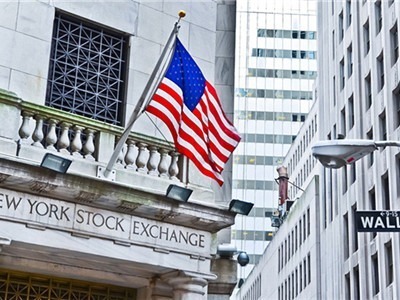
All three major U.S. stock indexes closed down at least 1%, with IBM plunging 13% to lead the Dow’s decline; the financial sector fell more than 3% to lead the S&P decline, with asset management firm KKR dropping nearly 9%; tariff-sensitive retail stock Wayfair fell nearly 10%; cybersecurity stock CrowdStrike fell nearly 10%; Novo-Nordisk A/S shares in Europe dropped over 16%. U.S. Treasury bonds rebounded. The offshore Renminbi rose above 6.89 at one point during trading, nearing a three-year high; Bitcoin fell below $64,000 intraday, down more than 5% from its daily high. Gold futures surged over 3% intraday. Crude oil reversed earlier losses to rise over 1% and hit a six-month high before turning negative.
Overnight and this morning, against the backdrop of renewed concerns over U.S. tariffs, the latest version of an AI ‘ghost story’ emerged, with all three major U.S. stock indexes closing down more than 1%, while gold and silver performed notably well.
At the close, the S&P 500 Index fell 1.04% to 6837.75 points; the Nasdaq Composite Index dropped 1.13% to 22627.27 points; and the Dow Jones Industrial Average declined 1.66% to 48804.06 points.
First, following the U.S. Supreme Court’s ruling that Trump’s invocation of the International Emergency Economic Powers Act to impose large-scale tariffs was illegal, global markets are still watching for potential changes from the newly introduced ‘global import tariffs’.
Overall, as the policy based on Section 122 of the U.S. Trade Act of 1974 sets a 15% cap on tariff rates, the market generally believes the latest development benefits countries and regions previously subjected to higher rates. Estimates suggest Brazil’s trade-weighted average tariff rate could drop by 13.6%, while India’s average rate may decline by more than 5%.
The next focal point regarding U.S. policy risks will be Trump’s annual State of the Union address to Congress on Tuesday evening local time (tomorrow morning Beijing time).

The negative factors disturbing the U.S. stock market on Monday were not limited to the tariff issue but also included a fictional AI ‘ghost story’.
Over the past weekend, an article titled ‘The 2028 Intelligence Crisis’, authored by Citrini Research, went viral among investors. The author, presenting it as a ‘macro research report published in June 2028’, traced back the impacts of AI technological advancements and agent proliferation on human society and the economy.
The report detailed the potential risks posed by AI technology to employment and its possible impact on various sectors of the global economy, hypothesizing that by 2028, AI would lead to widespread white-collar unemployment, reduced consumer spending, loan defaults related to software, and economic contraction. Following the report, shares in delivery, payment, and software sectors fell collectively, with the financial sector leading the declines in the S&P 500.
Orlando Gemes, Chief Investment Officer of Fourier Asset Management, warned: “The warning signs we see today in private credit bear an alarming resemblance to the situation in 2007.” He pointed out that the deterioration of lender protections and complex liquidity provisions “mask the mismatch between what investors believe they hold and what they can actually exit.”
Software stocks were hit hard, $iShares Expanded Tech-Software Sector ETF (IGV.US)$ closing down nearly 4.8%, continuing to mark a more than two-year low, and on track for its worst monthly performance since 2008. IBM has become the latest victim of AI panic. Anthropic announced new programming capabilities for its Claude Code product, automating a significant portion of research and analysis tasks for the commercial programming language COBOL. $IBM Corp (IBM.US)$ Its shares fell about 13%, marking the largest single-day drop in nearly six years.

According to CCTV News, after the U.S. Supreme Court ruled last Friday that Trump’s imposition of large-scale tariffs was “beyond authority,” Trump announced a 10% increase in import tariffs on the same day and the next day raised the rate of this new global tariff to 15%. Trump also warned on Monday that any country attempting to exploit the Supreme Court ruling to “manipulate” would face higher tariffs and more severe consequences. Despite this, the EU decided to suspend the approval of the EU-U.S. trade agreement, adding uncertainty to the economic and trade relations between the U.S. and the EU.
Democratic senators in the U.S. Senate also introduced a bill seeking to push the Trump administration to refund over $100 billion in collected tariffs, further increasing uncertainty. Retail stocks sensitive to tariffs fell across the board. Gold, which had resumed its upward trend after the Supreme Court ruling was announced last Friday, accelerated its rise, with futures gold once surging over 3%, and silver performing even stronger, with futures silver rising nearly 8% at one point.
The dollar fell for consecutive days following the announcement of the Supreme Court ruling. Thierry Wizman, Global FX and Rates Strategist at Macquarie, pointed out that, additionally, the trade war itself is a source of uncertainty originating from the U.S., and U.S.-centric uncertainty is unfavorable for the dollar. The Supreme Court ruling increased uncertainty because Trump might restart the trade war using undisclosed but legally justifiable tools.
International crude oil failed to rebound on Monday. Investors weighed the prospects of the third round of talks between the U.S. and Iran scheduled for this week and the impact of uncertainties in U.S. trade policy.
U.S. Equity Benchmark Indices:
The S&P 500 Index fell by 1.04%, closing at 6,837.75 points.
The Dow Jones Industrial Average dropped by 821.91 points, or 1.66%, to close at 48,804.06 points.
The Nasdaq Composite Index declined by 1.13%, closing at 22,627.273 points.
The Nasdaq 100 Index fell by 1.21%, closing at 24,708.942 points.
The Russell 2000 Index dropped by 1.61%, closing at 2,620.99 points.
Performance of Key Stocks
According to market capitalization rankings, the companies that will release their financial reports this week are$NVIDIA (NVDA.US)$Up 0.91%, about to launch the spring new products.$Apple (AAPL.US)$By market capitalization ranking, shares of CrowdStrike gained 0.91% and those of Apple, which is about to release its spring lineup, rose 0.60%. Alphabet Class A shares fell 1.11%, Microsoft declined 3.21%, Amazon dropped 2.3%, Taiwan Semiconductor Manufacturing Co. edged down 0.13%, Meta Platforms slid 2.81%, Broadcom decreased 0.69%, Tesla fell 2.91%, and Berkshire Hathaway Class A shares retreated 0.84%, while Walmart increased by 2.29%.
With spot gold breaking through $5,200 per ounce on Monday and silver briefly reaching $89 per ounce, the precious metals sector performed strongly overall. Both Barrick Gold and First Majestic Silver surged more than 3%.
Chinese stocks also weakened due to the drag from the broader market, with the Nasdaq Golden Dragon China Index falling by 0.95%.
At the close of trading, $Alibaba (BABA.US)$ Alibaba fell by 1.08%, PDD Holdings rose by 0.78%, NetEase dropped by 1.76%, JD.com fell by 0.66%, Baidu declined by 1.42%, Ctrip dipped by 3.01%, Li Auto gained by 0.82%, Futu Holdings Ltd plummeted by 5.55%, Bilibili slipped by 1.55%, and Nio surged by 4.73%.
The pan-European index and UK stocks retreated from record highs; trials showed that Novo-Nordisk A/S’s drug had less weight loss efficacy compared to Eli Lilly and Co, $Novo-Nordisk A/S (NVO.US)$ causing its shares to drop more than 16% and dragging the Danish stock index down by over 7%.
Pan-European Indices:
STOXX 600 Sectors:
The healthcare sector fell nearly 1.4%, with Novo-Nordisk A/S, the largest pharmaceutical company in Europe listed in Denmark, plunging nearly 16.5%. The sharp decline was attributed to the results of Phase III clinical trial REDEFINE 4, where Novo-Nordisk’s combination drug CagriSema demonstrated a 20.2% weight loss effect after 48 weeks of use, compared to 23.6% for rival Eli Lilly and Co’s tirzepatide.
The basic resources sector, which includes mining stocks, rose about 1%, with component stock KGHM Polska Miedź SA gaining over 3.3%; the oil and gas sector climbed more than 0.7%, benefiting from the U.S. Supreme Court agreeing to hear an appeal by Exxon Mobil and Suncor Energy.
Major European National Indices:
The OMX Copenhagen 20 Index, dragged down by Novo-Nordisk A/S, closed down 7.2%, leading the declines. German, French, and British stocks, which rebounded last Friday, all retreated, with UK stocks falling from the record high set last Friday, while Italian and Spanish stocks extended gains for a second consecutive session.
London copper and aluminum prices fell from their highest levels in over a week, while tin prices rose more than 2% for a second consecutive day.
London Base Metals Futures:
Zinc, the worst performer, fell less than 0.9%, along with copper, aluminum, nickel, and lead, all retreating from the rebound highs reached last Friday. However, tin prices surged more than 2%, marking a second consecutive daily gain to reach the highest level in over a week.
LME zinc futures fell more than 0.8%, closing at $3,354 per ton. LME copper futures dropped over 0.7%, settling at $12,868 per ton. LME aluminum futures declined approximately 0.4%, ending at $3,090 per ton. LME tin futures rose about 2.5%, finishing at $47,718 per ton.
Looking to pick stocks or analyze them? Want to know the opportunities and risks in your portfolio? For all investment-related questions,just ask Futubull AI!

Editor/Stephen