Gold vs silver ETF: Which metal should investors prefer amid US-Israel strike on Iran?
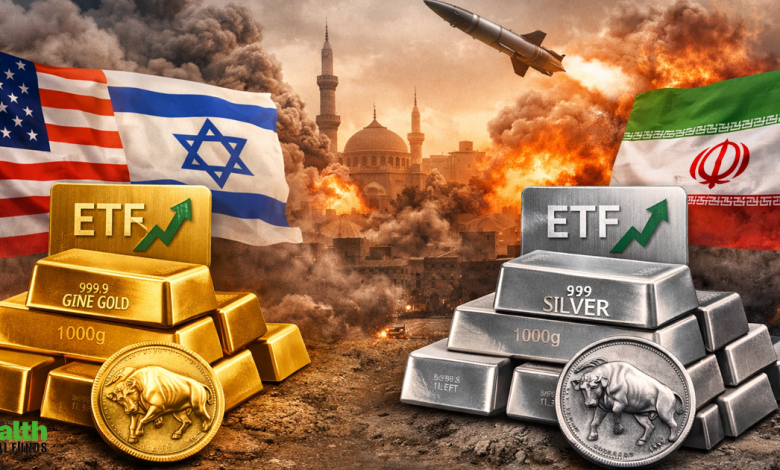
Market experts said that amid the ongoing geopolitical tensions, investing in gold ETFs makes sense, as silver ETFs participate in risk-off moves but are influenced more by the industrial demand.
Also Read | NFO Insight: Will TRUSTMF Mid Cap Fund’s GARV and LIM strategy help identify quality mid-cap opportunities?
Siddharth Srivastava, Head – ETF Product & Fund Manager, Mirae Asset Investment Managers (India) shared with ETMutualFunds that in periods of heightened geopolitical stress, gold ETFs typically acts as the primary safe-haven, while silver ETFs participates in risk-off moves but is influenced more by industrial demand so holding both can offer balance of stability and tactical upside, however one should have relatively higher allocation towards Gold ETFs.
Shivam Pathak, CFP and Founder of Asset Elixir, also said that in a geopolitical conflict like the US-Israel-Iran situation, gold ETFs are the safer option as it is a pure safe-haven asset and reacts quickly to uncertainty. Silver ETFs may also rise, but its industrial exposure makes it more volatile, so holding both is fine, but gold ETFs should have a higher allocation.
According to a report by ETMarkets, Gold prices surged up to 4%, or Rs 6,700, to trade at Rs 1.68 lakh per 10 grams on the MCX on Monday after the United States and Israel carried out major strikes on Iran, killing its Supreme Leader Ali Khamenei.
The report further said that after witnessing a steep correction last month due to multiple factors, the latest rally leaves the yellow metal just 12% below its record high of Rs 1,93,096.MCX gold futures due April 2026 were up over Rs 5,811, or 3.5%, at Rs 1,67,915 per 10 grams. Meanwhile, silver futures for March 5, 2026 delivery soared Rs 9,492, or 3.5%, to Rs 2,84,490 per kg.
What allocation to have in these precious metals ETFs?
Both the experts said that investors can maintain an allocation of 10-15% in precious metal ETFs in their overall portfolio with a higher allocation to gold ETFs for stability.
Rising geopolitical tensions have made investors more cautious, prompting them to move money out of equities and into safer assets like gold and silver. The precious metals had seen a record bull run in the beginning of this year, strongly rallying amid Trump’s tariff flip flops and other uncertainties, before seeing some correction.
According to another report by ETMarkets, more than 20% of the world’s oil passes through the Strait of Hormuz, which connects the Persian Gulf with the Gulf of Oman and the Arabian Sea and the heavy missile strikes around the area have raised worries about supply constraints, leading to a spike in oil prices.
So how do such global factors affect gold and silver differently? Pathak said that a stronger US dollar usually puts pressure on both gold and silver and gold is more sensitive to interest rates and currency movement.
When crude oil rises, inflation concerns increase, which generally supports gold and silver is affected by these factors too, but it also depends on global economic growth, making it more volatile, Pathak further said.
Srivastava said that gold has a strong inverse relationship with the US dollar and real yields and it acts as a long-term hedge against inflation, which gets affected by crude whereas silver is affected by these factors as well, but global growth expectations influence it more due to its industrial usage.
On the performance front, in the last one month, gold ETFs gave a negative average return of 0.50%, silver ETFs gave a negative average return of 23.43%. In the last one year, gold ETFs gave an average return of 83.39% whereas silver ETFs gave an average return of 175.38%.
So which of these two are likely to remain volatile in the near term? Srivastava said that while globally situation is fluid, typically silver ETFs are more volatile given its smaller market size and relatively higher participation from derivatives and speculative flows.
He further said that near term, gold ETFs seem attractive from a risk reward point of view, amid geopolitical uncertainty, while silver ETFs could see sharper swings depending on risk sentiments, speculative flows and industrial demand signals.
To this Pathak said, silver ETFs are likely to remain more volatile in the near term due to their dual nature whereas gold ETFs outlook stays supportive amid geopolitical and macro uncertainty so metals should be held with a five year horizon as portfolio hedges, not short-term trades.
One should always consider their risk appetite, investment horizon and goals before making any investment decision.
(Disclaimer: Recommendations, suggestions, views and opinions given by the experts are their own. These do not represent the views of The Economic Times)
If you have any mutual fund queries, message on ET Mutual Funds on Facebook/Twitter. We will get it answered by our panel of experts. Do share your questions on ETMFqueries@timesinternet.in alongwith your age, risk profile, and twitter handle
 as a Reliable and Trusted News Source