Retirees: Here’s Why I’d Own SCHD Over Bonds in a Volatile Market
Following the reset of interest rates in 2022, fixed income again became worth considering as an income-producing option. Prior to this, near-zero interest rates offered little income or upside potential for share prices. Today, people can capture 3.5% yields on risk-free Treasury bills and more than 5% yields on longer-term investment-grade corporate bonds.
But better doesn’t necessarily equate to good. Rate-cut actions by the Fed have leveled off and are becoming increasingly unlikely. Soaring inflation could send interest rates higher, not lower, from here. That creates serious headwinds for bonds, potentially increasing their risk.
That’s why it may be time to consider dividend equities instead of bonds for income. The risk profile changes, but the Schwab U.S. Dividend Equity ETF (SCHD 0.16%) could replace most of that income while offering the potential for share price appreciation as a bonus.
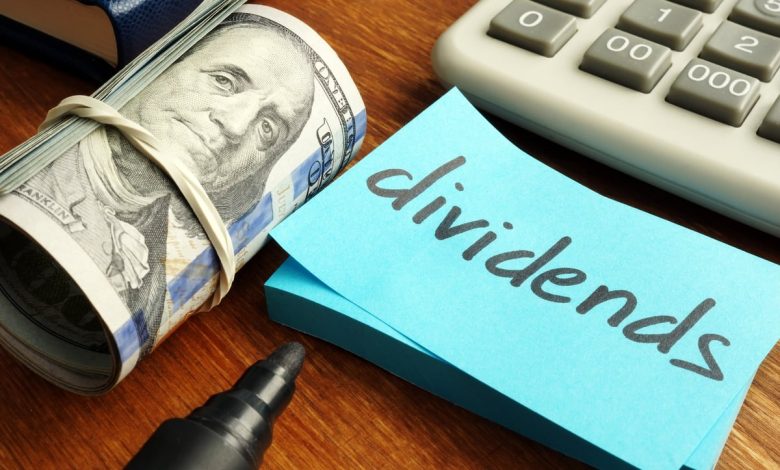
Image source: Getty Images.
Why SCHD deserves a spot in a retirement portfolio
Investors looking at today’s market environment need to take into account that geopolitical risk and higher inflation are making it tough for bonds. Bond yields are generating acceptable income, but dividend equities can offer comparable income with stock market upside. Retirees may want to consider reducing interest rate risk in their income portfolios right now.
Schwab’s dividend ETF currently yields around 3.4%, enough to consider moving from fixed income to equities. This particular ETF considers a company’s dividend growth, financial health, and dividend yield when building its portfolio. These are reasons why the Schwab U.S. Dividend Equity ETF deserves consideration in virtually every retirement portfolio. It’s got one of the most robust and well-constructed investing strategies you’ll find in the ETF marketplace. Its methodology, which focuses on balance sheet fundamentals, yield, and dividend history, helps it select the best dividend stocks.
But using dividend stocks as an income replacement for bonds comes with trade-offs. This Schwab ETF is about twice as volatile as the Vanguard Total Bond Market ETF (BND 0.31%) and is prone to deeper drawdowns depending on market conditions.
Whereas income is the primary component of total returns for bond funds, it’s a secondary component for equities, even for conservative stock funds like the Schwab U.S. Dividend Equity ETF. If you’re looking strictly at a fund’s yield, the Schwab ETF can replace a large percentage of a bond fund’s income. But there’s more risk to the principal should the stock market experience another downturn.

Schwab U.S. Dividend Equity ETF
Today’s Change
(-0.16%) $-0.05
Current Price
$30.98
Key Data Points
Day’s Range
$30.94 – $31.23
52wk Range
$25.28 – $31.95
Volume
114K
The “why” for choosing stocks over bonds for income comes down to interest rate and inflation risk.
The biggest side effect of the Iran war has been soaring oil prices. That’s brought the annualized inflation rate from 2.4% in February to a forecasted 3.6% in April. Inflation is likely to remain elevated for some time, even if we do get a resolution to the conflict soon. Higher inflation tends to push bond yields higher and bond prices lower. Bond investors can still get a good yield, but total returns could be much lower in that scenario.
Switching a portion of your retirement portfolio from bonds to dividend equities may protect against some of that downside risk.
The importance of diversifying retirement income streams
Having income-producing assets in your portfolio that operate on different cycles can be a big plus.
Given current bond market volatility and inflationary pressures, retirees may want to consider pivoting at least partially to something with less interest rate risk. The Schwab U.S. Dividend Equity ETF is one of my favorite stock income funds and could provide a nice complement to bonds in this environment.