A Major Oil Executive Warns That the Global Oil Supply Disruption Could Last Into 2027. Here’s What That Means for Oil Stocks.
The war with Iran has caused a massive upheaval in the global oil market. The closure of the Strait of Hormuz by Iran and the U.S. Navy’s blockade in the Gulf of Oman have led to a 57% drop in Persian Gulf oil production due to disruptions to oil exports.
The production curtailment will have a lasting impact. The CEO of oil major Shell (SHEL +1.51%) recently warned that oil and LNG shortages stemming from the closure of the Strait of Hormuz could last months and possibly drag into next year. Here’s a look at how this could impact oil stocks.
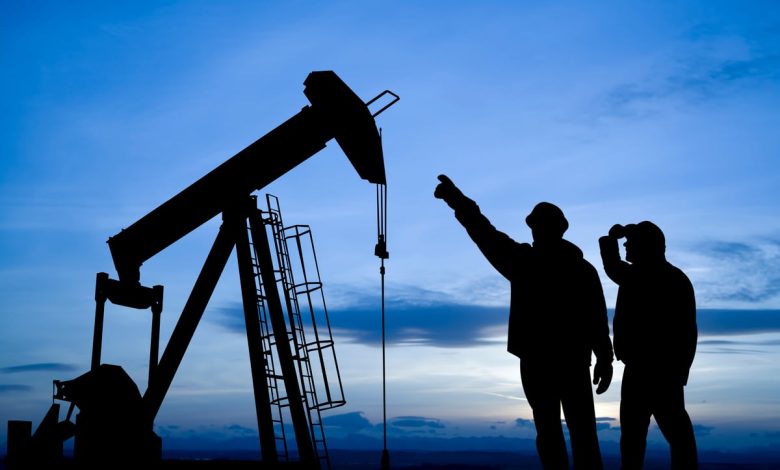
Image source: Getty Images.
The 900-million-barrel shortfall
The Strait of Hormuz closure has already had a significant impact on the oil market. Shell CEO Wael Sawan stated in an interview with Bloomberg, “We are talking about roughly 900 million barrels that have not been produced in the last couple of months and that has been replaced essentially by stock drawdown.” Instead of producing enough oil supply to meet global demand, the world has been relying on emergency stockpiles. According to Goldman Sachs, global inventories are draining at a record pace of 11 million to 12 million barrels per day.
Even when the Strait of Hormuz reopens, the oil market won’t go back to normal overnight. It will take several months to restart some of the oil wells shut in due to the war. Additionally, the world will need to restock oil inventories. These issues drive Shell’s view that the oil market will remain “tight for the coming months, if not the next year-plus.”
This outlook is driving a growing consensus that oil prices will be higher for longer. Goldman Sachs recently laid out several oil price scenarios based on how quickly the Strait reopens and supplies recover. Its base case is that oil will end the year around $90 a barrel, while a more adverse case likely puts crude at $100 by year-end. Meanwhile, the U.S. Energy Information Administration’s (EIA) latest forecast doesn’t call for oil to fall below $90 a barrel until the fourth quarter.

Today’s Change
(1.51%) $1.32
Current Price
$88.91
Key Data Points
Market Cap
$245B
Day’s Range
$87.97 – $88.97
52wk Range
$64.02 – $94.90
Volume
13M
Avg Vol
7.7M
Gross Margin
16.66%
Dividend Yield
3.30%
Higher for longer
Brent oil, the global benchmark price, averaged $69 a barrel last year. JP Morgan initially expected it to average around $60 a barrel this year. However, the supply disruptions caused by the war will likely keep oil prices higher for longer. JP Morgan recently warned that Brent could spike to $120-$130 a barrel in the near term, with the potential to surge above $150 if the Strait remains closed through mid-May, before falling below $100 later this year as conditions normalize. Meanwhile, the EIA now expects Brent to average $96 this year and be in the mid-$70s next year.
These forecasts suggest that oil companies will make even more money in the coming months. Most oil companies expected lower crude prices this year, leading them to keep a tight lid on spending. For example, ConocoPhillips (COP +3.16%) initially expected to generate an additional $1 billion in free cash flow this year at $70 oil, — it produced $7.3 billion in 2025 — driven by cost and capital savings. ConocoPhillips will produce much more cash now that oil is likely to stay above $90 for the rest of the year. Every $1 increase in the average oil price boosts annualized cash flows by over $200 million. The oil company will likely return most of that windfall to investors through share repurchases. Most of its peers will also likely return a meaningful portion of their windfall profits to shareholders through dividends (special and variable) and buybacks this year.
The oil market won’t return to normal anytime soon
The longer the Strait of Hormuz remains closed, the longer it will take for the oil market to normalize. That means oil prices could remain high into 2027, enabling oil companies to generate more cash, most of which they’ll return to shareholders. That makes investing in oil stocks or an oil ETF look like a smart move through at least the end of this year, since they should have plenty of fuel to continue moving higher.
JPMorgan Chase is an advertising partner of Motley Fool Money. Matt DiLallo has positions in ConocoPhillips and JPMorgan Chase. The Motley Fool has positions in and recommends Goldman Sachs Group and JPMorgan Chase. The Motley Fool recommends ConocoPhillips. The Motley Fool has a disclosure policy.