A millionaire and an investing CEO discuss money, power and success
Vivian Tu: It makes people feel really crazy when they feel like they are trying to stretch their dollar further and further every week at the grocery store, but the all the headlines are like, “The economy is better than it’s ever been.”
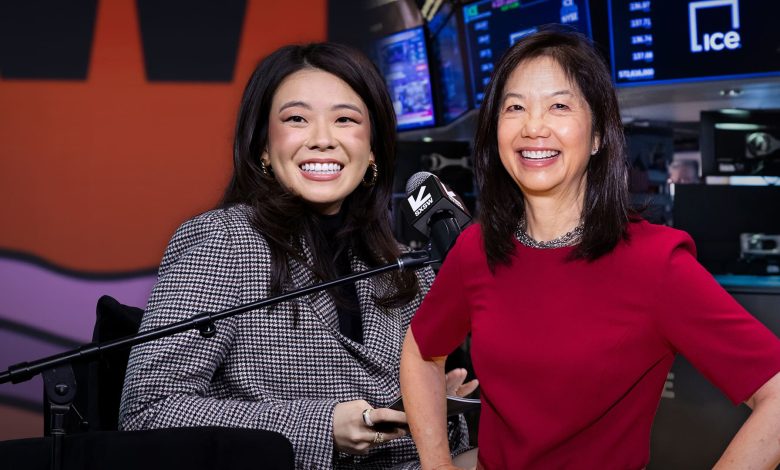
Vivian Tu: I’m Vivian Tu, otherwise known as Your Rich BFF and your favorite Wall Street girlie. I’m a financial educator and I teach the next generation how to better budget, save, spend and invest their money.
Sylvia Kwan: I’m Sylvia Kwan, CEO of Ellevest, a financial services firm that helps women, families and the next generation build and manage wealth with intention.
Sylvia Kwan: So what do you hope the state of women’s economic opportunity looks like 50 years from now?
Vivian Tu: I mean, I think wanting gender pay parity is small thinking, if I’m honest with you. We for so long have accepted less. But I think what’s really making me hopeful for the future is that the stats tell us a very interesting story: More single women than single men in all 50 states own homes. Women have less debt across every single category except student loan debt, because we’re getting more and more educated. I think, in 50 years, I want women to have a level of richness similar to our male peers, but I want that money to then end up being opportunity, accessibility, freedom. I want us to be able to buy our time back. I want us to be able to buy our way into rooms that we weren’t previously allowed into. Finances and money is one of the most surefire ways to make our voices heard. Because at the end of the day, when you have money, you have power.
Sylvia Kwan: Exactly. A hundred percent, money is power. Absolutely. And I think we’re really at a pivotal moment in time where more and more women are coming into economic power. I know you know the statistics on [how] 2% of venture funding goes to women founders. And when women have more capital, I think women want to invest in other women. And so I think that landscape can change. Two percent of philanthropic dollars go to organizations for women and girls — that could change. [Same for] political contributions. And so I think there’s this new wave where when capital shifts into the hands of women, more capital, that represents power. And it’s really like, how do we help women kind of claim that power and use it intentionally? So I think there’s some changes coming. And that’s that’s what I’m hopeful for.
Vivian Tu: Women have made huge strides since they entered the workforce en masse through the 20th century, but there are still major gender gaps in terms of wages, job opportunities and representation in leadership. And since you are a woman CEO, how do you reconcile what seems like slow progress to close these gender gaps? And what gives you hope about the work being done to reach parity?
Sylvia Kwan: It can definitely feel discouraging when you feel like there’s progress being made, and then it’s kind of like two steps forward, one step back. And so I think with more women coming into economic power, that’s how that change is going to come about.
Vivian Tu: I think the change will also come from seeing people like you. I think so many companies right now do an incredible job hiring diverse talent. The problem is actually fostering it and keeping it. When you look up the food chain and you don’t see anybody who looks like you, you don’t see anybody that you can pull aside for a private chat to real talk for a second, I think it becomes harder and harder to stay somewhere. I think having people like yourself in positions of power in the C-suite, so that young women in the workforce can look up the ladder and see someone who has a face like yours — it makes it feel like it’s possible for the rest of us.
Sylvia Kwan: I couldn’t agree more, Vivian. And same goes to you. I think so many people respect and look up to you. And I do think representation, whether you’re conscious of it or not, plays a huge role. And if you don’t kind of see yourself reflected in certain leadership positions, you wonder whether this isn’t really for me. Even when I think about women sitting on the sidelines of investing for so long. Our industry is predominantly male. [Women] walk into an office and they don’t even see clients or advisors that look like them. They don’t feel welcome in the industry. And I think that’s one of the things that has driven and been responsible for the lack of women investing and hence, the growing gender wealth gap. And so I do think representation is so powerful.
Vivian Tu: What is your definition of the American Dream?
Sylvia Kwan: For me, the American Dream isn’t really about reaching a certain number or fame or some kind of status, and it’s definitely not about stuff or becoming a tech billionaire. For me, the American Dream is really about agency and freedom. Having the financial independence to build the life that you want to live.
Sylvia Kwan: What do you think? What’s your definition of the American Dream?
Vivian Tu: The American Dream is just the ability to make your life whatever you want it to be, and that you aren’t stuck somewhere. You have the ability to change. I’d also say that the American Dream, especially for people in my generation, has changed a lot. I know a lot of my peers would rather live in a smaller apartment, pay more, but still have their backyard be a major city so that they feel like they can have access to experiences or dining or adventure. Maybe some of that is because they don’t feel like they can necessarily get this old-school dream. But I think a lot of it is also just a changing desire and a change of what people actually want.
Vivian Tu: Can I take it personal? Do you feel like you’ve reached your American Dream?
Sylvia Kwan: Well, based on the definition that we created, I would say absolutely yes. I feel like I have created my American Dream and I love what I do at Ellevest. I’m at the age where so many of my peers have already retired or are thinking about retiring, and they’re like, “Sylvia, you know, you should just walk away. Why are you working so hard? You should just retire.” And I’m like, yeah, I could, I have that choice. But I think the difference is: I have chosen to do this. When we talk about choices and agency, I’ve chosen to stay here, but I could also choose to walk away or choose a different path or choose to travel the world or what have you. But it’s really having that agency that I feel like is the objective of achieving the American Dream.
Sylvia Kwan: Turning to you, Vivian. I look at you and everything that you’ve achieved. You’ve got the Wall Street cred. Congratulations on [being a] Forbes Top Creator. I mean, [it’s] incredible. And I would look at you and say, “Oh, my gosh, Vivian is living the American Dream,” but do you feel that way?
Vivian Tu: Thank you for saying all of that. If I can be really candid, I think I’m living my parents’ American Dream. So much of the life that I have is because my parents came to this country where they did not know the language, where they knew that they were going to face hardship, and they fought day in and day out so that I could have the future that I now feel so entitled to. I think that is the greatest gift that they could have possibly given to me. And when I succeed, I want it to essentially feel like, to them, my inheritance repaid.
Sylvia Kwan: Absolutely. Yeah. I think I come from a similar background. My parents immigrated here to the U.S. as well. In that generation, there’s this kind of notion, I think this is part of their American Dream: Just study hard, work hard, keep your head down, don’t draw attention to yourself and success will come. That’s not necessarily true, I would say — anymore, at least. I think for me, growing up in that kind of framework and receiving those messages, I ended up writing a script for myself in the sense of, “I’m this type of person” or “I’m capable of this, but not that.” I never dreamed to be a CEO. That was never, ever my dream. And here I am. And part of that is just really becoming somebody that your old scripts didn’t think you could become.
Vivian Tu: I feel like your capabilities filled the room as the capacity became bigger and bigger. You rose to the occasion, and I think that is part of the American Dream, of the dream changing.
Vivian Tu: Do you think the American Dream is realistic for other people? Obviously, we sit from two positions of immense privilege right now, but can the average person get there now?
Sylvia Kwan: That’s a tough one, Vivian. That’s a really, really tough one. I think especially for people in your generation, the cost of housing is so high, the cost of education is so high. And we have people graduating with tons of student debt and just feel like, “I’m never, ever going to be able to buy a home or move out of my parents home.” And it just feels very unachievable. And I think those are real realities. The numbers are there.
Vivian Tu: I love that you say that out loud and so unapologetically. Because sometimes it makes people feel really crazy when they feel like they are trying to stretch their dollar further and further every week at the grocery store, but the all the headlines are like, “The economy is better than it’s ever been.” I think that we as a society, one, need to do a better job of financial literacy education, showing people what the options are out there. But two, building out programs and policy that really actually bring that K-shaped economy back together, because it’s getting hard for many people, and we aren’t seeing as robust of a middle class that can afford to eventually buy a home and help their kids with school and still go on vacations. Because what’s the point? We’re making all this money — it’s not for our health. It’s so that we can actually enjoy it.
Sylvia Kwan: What is your message to Americans who feel disillusioned about the state of America today?
Vivian Tu: So I think there’s a really appropriate quote from former president Bill Clinton here. [It goes] something along the lines of, “Everything wrong about this country can be fixed by everything that’s right about this country.” And I think that’s a really adept way of putting how so many people are currently feeling. Financial success in this country has gotten harder. But that’s not to say that with our current systems, we can’t improve that, we can’t fix it, we can’t make it easier for the next generation. And I hope we do.
Sylvia Kwan: Access to financial education online and on social media, as you’ve been doing, totally has exploded in recent years. So what do you hope the future of financial education looks like for young people in five to 10 years? Is it going to be in schools? Is it going to be on social platforms? What do you think?
Vivian Tu: My hope is that over time, there will be more stringent regulation about financial literacy social media — we’ll call it financial education social media. What I always tell everyone at home watching is: Your responsibility is to double check everything you hear online. Whether it’s from some finance guru, whether it’s from me. Just make sure that you can find three reputable pieces of literature that kind of back up what this person is saying. There are [Federal Trade Commission] laws about what people can say on a TV broadcast. Why aren’t there FTC and potentially [U.S. Securities and Exchange Commission] laws around the way people should be talking about finances online?
Sylvia Kwan: I think that’s exactly right. I love [social media] because I think it’s a great way to engage and it’s a lot more fun. And so you’ve got to meet people where they are in order to help them become more informed and more knowledgeable. But there is so much stuff out there. I’m also a little bit worried, because I’ve actually seen some deepfakes from [artificial intelligence], and so someone who’s taken someone who’s very credentialed and given their likeness and their voice, and then they’re delivering this advice that is like, “Oh my god, it can’t be this person, but it looks just like them.” And I really worry about that.
Vivian Tu: Sylvia, since we are both girl’s girls, I thought I’d ask the question: You’ve often mentioned that financial planning typically defaults to a man’s life, a man’s timeline. But financial planning for women, especially knowing that we have different career trajectories, different lifespans, all of these things, looks very different. What exactly did you mean by that? And why is that difference so important?
Sylvia Kwan: So [in] the finance industry, our industry, the traditional models have really been built around linear lives. And what I mean by linear lives is: You save, you invest, you accumulate wealth, you grow wealth, you retire, you draw down wealth. And if there’s anything left, you give it away. When I think about women, we have very non-linear careers. I look at yours, for example. You started kind of more traditionally on Wall Street as a trader.
Vivian Tu: I’m on my third do-over.
Sylvia Kwan: Exactly, exactly. And you’re not even in the middle of your career. When we’re in our 20s, our priorities are very different than when we’re in our 30s and 40s and 50s and maybe having families. I think the models that traditional Wall Street have just are not reflective of the realities of women’s lives. And so I think we need to do better and create models that are more personalized to how women’s lived realities are.
Sylvia Kwan: How has your personal definition of success, whether it’s in your career or life, however you want to define it? How has that changed since you started out?
Vivian Tu: Yeah, the definition has definitely changed a lot. I think especially at the beginning of my Your Rich BFF journey, my definition of success was very quantifiable. How many of these lists can I be on? I love a list. My mom loves a list. And you know, on top of that, what can I do to be so conventionally successful to maybe spite a hater or spite someone who didn’t believe in me. But I think that all came from a place of deep insecurity. Now, though not to say that I’m self-actualized, but I do feel like I am a more confident, wiser version of younger Viv. And because of that, I think my personal definition of success now is: Do I get to wake up every single morning and feel like I’m actually doing something meaningful? Is it something I want to be doing? Is it something that benefits the world? Is it something that I’m good at, and is it something that I can make money and build a life that I want to build? It’s a little bit more holistic, it’s less measurable, but I want to wake up every single morning and be like jumping out of bed. And I think I’ve gotten to a point in my career where I get to do that. And I feel really, really grateful. I think 20-something-year old Viv would look at me and not even recognize who this woman is.
Sylvia Kwan: I love that.
Vivian Tu: Sylvia, it was so nice to meet you.
Sylvia Kwan: So nice to meet you, Vivian. Have a great rest of you day. I hope to meet you in person.
This transcript has been lightly edited for clarity.