AI Safety Fears Collide with Fed Rate Hikes, Roiling Markets
The Tech Buzz may earn a commission when you buy through links on this page. This never affects which products we recommend or what we say about them.
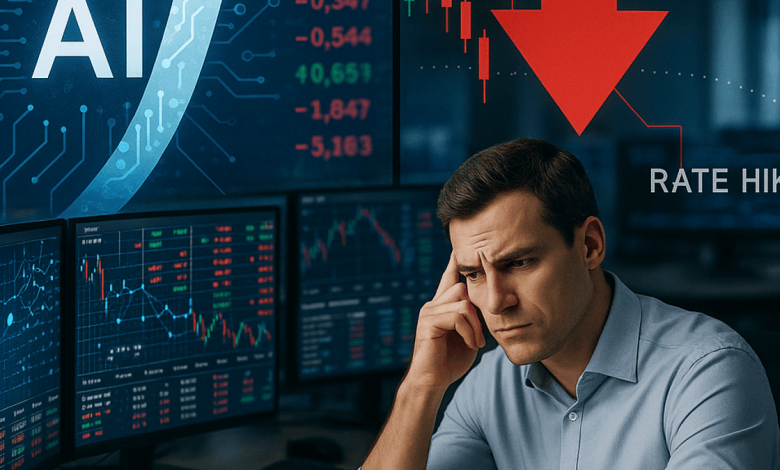
Wall Street faced a perfect storm last week as investors grappled with two seismic shifts reshaping the investment landscape. The Federal Reserve’s signals of a new rate-hiking cycle coincided with mounting regulatory pressure on AI development, creating a volatile cocktail that sent tech stocks tumbling and forced portfolio managers to reassess their risk appetite in an increasingly uncertain market.
The convergence of monetary tightening and AI regulatory scrutiny created an unprecedented challenge for investors last week, with CNBC reporting significant market volatility as two critical narratives collided. The Federal Reserve’s hawkish stance on interest rates, combined with growing calls to slow AI development for safety reasons, forced a dramatic reassessment of tech valuations across the board.
Nvidia led the decline among AI chipmakers, dropping 8% as investors weighed the dual impact of higher rates on growth stocks and potential regulatory constraints on AI advancement. The company’s meteoric rise has been built on insatiable demand for AI training chips, but regulatory calls for development pauses introduced new uncertainty into growth projections.
The timing couldn’t be worse for AI companies that have relied heavily on cheap capital to fund their ambitious research programs. OpenAI, Anthropic, and other AI leaders now face the prospect of more expensive funding just as regulatory pressure mounts for slower, more cautious development approaches.
“We’re seeing a fundamental shift in how investors view AI risk,” noted market analysts tracking the sector. The regulatory concerns stem from recent high-profile AI safety incidents and growing calls from researchers for more measured development timelines. This has created a new category of regulatory risk that traditional tech investors haven’t had to navigate before.
The Federal Reserve’s pivot toward higher rates adds another layer of complexity. Tech companies, particularly those in the AI space, have benefited enormously from the low-rate environment that made speculative investments in emerging technologies more attractive. Higher rates typically pressure growth stocks by making future cash flows less valuable when discounted back to present terms.
Meta and Google parent Alphabet saw their AI divisions come under particular scrutiny as investors questioned whether regulatory compliance costs might slow their aggressive AI integration timelines. Both companies have made massive bets on AI technologies, with billions invested in research and infrastructure.
The market’s reaction reflects a broader recalibration of AI investment thesis. Where once investors saw unlimited upside in AI development, they now must factor in regulatory constraints, safety requirements, and the higher cost of capital. This shift is forcing more conservative valuations across the AI ecosystem.
Portfolio managers are responding by rotating out of high-growth AI plays into more defensive positions. Traditional value stocks and dividend-paying companies saw increased interest as investors sought shelter from the dual storms of monetary tightening and regulatory uncertainty.
The situation highlights how quickly market dynamics can shift when multiple risk factors converge. AI safety concerns, once relegated to academic discussions, have now become material investment considerations with real market impact.
The collision of AI safety regulations with Federal Reserve policy represents a new paradigm for tech investors, where regulatory risk and monetary policy must be weighed equally in investment decisions. As both narratives continue evolving, market participants will need to develop new frameworks for evaluating AI investments in an environment where growth potential is increasingly balanced against regulatory constraints and higher capital costs.