Analysis: How Trump’s Iran blockade could decide the war
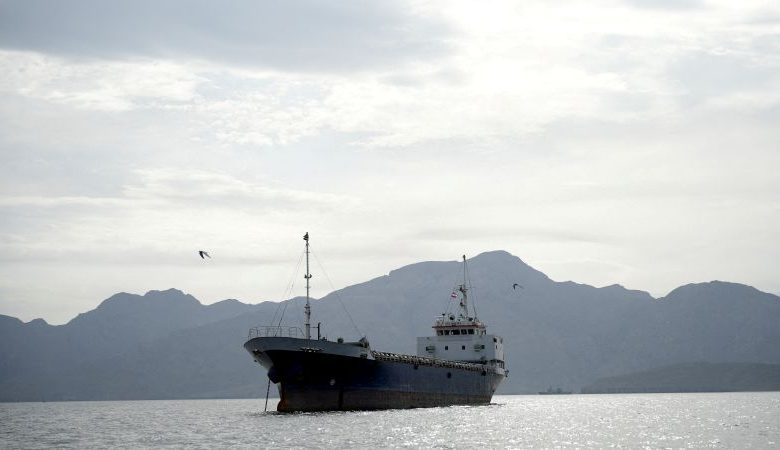
President Donald Trump’s switch from kinetic to economic warfare with his blockade of Iran’s ships and ports is an attempt to end the conflict without a new US-Israeli onslaught.
The operation’s rationale is that if Iran can’t export its oil and import vital commodities, it will suffer such ruinous financial and humanitarian consequences that it will have no choice but to accept US terms to end the war.
This may be a sound bet. An economy already shattered by sanctions could quickly suffer critical food shortages, hyperinflation and a banking crisis. It would be a neat solution if Trump matched Iran’s bid to strangle the global economy by partially closing the Strait of Hormuz with his own decisive maritime maneuver.
But growing hopes of US officials, conservative editorial pages and analysts that the blockade could bring Iran to its knees rest on an assumption that has repeatedly led the US astray in the Middle East.
The strategy assumes that Iran will respond to the pressure in a way that Washington perceives as logical. Recent history, however, suggests that US adversaries – such as Iraq, Afghanistan, Russia and Libya – often do not act according to Western calculations of their own national interests.
The hope is that Iran’s leaders offer concessions to alleviate the blockade’s eventual extreme repercussions. The plan also hints at an unspoken hope that deteriorating economic conditions could set off new internal political dissent and test the regime’s grip. And in the long term, it plays into the obvious need of Iranian leaders to create economic growth to rebuild after a relentless US-Israeli bombing campaign.
But the idea that Iranian leaders will view the stakes in this way may be a leap.
Revolutionary authorities have already shown indifference to the suffering of their people with successive political crackdowns that have killed thousands, according to human rights groups and outside estimates. The regime’s survival despite the killing of many top leaders during the war has already shown its high tolerance for pain.
It’s possible that the US is underestimating its endurance again in what Iran’s leaders perceive as an existential battle. Reporting by CNN and other outlets suggests Trump believed the US-Israeli onslaught would end the war quickly – long before Iran was able to take actions such as closing down the strait.
The outcome of the US blockade may therefore come down to timing.
Will the pressure build on Iran and change its behavior before the US blockade worsens the global economic damage already imposed by Iran’s closure of the Strait, which has wiped out a significant chunk of global oil and natural gas supplies?
If it doesn’t, Trump’s new approach could turn into another political trap and deepen the blowback of a war already threatening GOP midterm election hopes.
Like much of Trump’s wartime leadership, the blockade seemed impromptu and poorly explained to the American people. But it is a realistic military venture. The US Navy has sufficient assets in the region. And it has long experience in enforcing US and international blockades, including in the former Yugoslavia, Haiti, and more recently against sanctioned oil tankers in Venezuela before the ouster of President Nicolás Maduro.
A Foundation for Defense of Democracies analysis that has been widely cited in Washington in recent days argues that the blockade – maintained by US ships outside the Strait of Hormuz, backed by aircraft and troops – can be effective.

FDD Senior Fellow Miad Maleki argues the blockade could rapidly damage Iran’s economy, cut off most of its trade, halt its oil exports, and trigger inflation and currency pressure within days. Iran is especially vulnerable to such a plan because more than 90% of its $109.7 billion annual trade passes through the strait, the analysis says. And the Iranians may be forced to shut down oil production within weeks because they will have nowhere to store product if it can’t be sent to sea.
So there’s a chance the plan could begin to narrow Iran’s options in a way that the military onslaught from the air was unable to do.
“They’ve been effectively pounded in the face with a two-by-four in a military sense, but we haven’t really choked off their economy. And that’s why I think they believe they still have some cards to play,” retired Adm. James Stavridis, a former NATO Supreme Allied Commander, told CNN’s Kasie Hunt on Wednesday.
The blockade presents Iran with a new strategic puzzle. Its options for escalation are risky since they could trigger a resumption of fighting and a rupture of the ceasefire with the US and Israel. Islamic Revolutionary Guard Corps forces could respond to the blockading of their ports by renewing attacks on US Gulf allies.
Another option would be for Iran-backed Houthi rebels in Yemen to shut down an alternative oil trafficking route through the Red Sea. Such a move would be a hammer blow to the world economy and would surely heap political pressure on Trump as the war would threaten to careen out of control.

The blockade is also risky for the US. One implied goal of the operation is to create pressure on outside nations that buy Iranian oil, such as China and India, to try to force Tehran back to the negotiating table. But if US forces interdicted a Chinese ship bound from Iran, they’d also risk kicking off a diplomatic incident weeks before Trump is due to meet with Chinese President Xi Jinping in Beijing, which the president has long been looking forward to.
But the White House is bullish that the blockade could lead to a new round of talks with Iran, following the failure of a first session last week in Pakistan.
“Nothing is official until you hear it from us here at the White House,” press secretary Karoline Leavitt told reporters on Wednesday. “But we feel good about the prospects of a deal.”
Many Americans will hope for peace. But it’s also true that the administration has for weeks portrayed Iran as desperate for a deal, against the weight of all available evidence. So far, the president’s art of the deal mythology, which assumes every crisis is a deal waiting to happen, has looked superficial in the face of the world’s most intractable geopolitical problems.
In dealings with Ukraine, North Korea and Iran, the administration has often dangled the carrot of economic enrichment and failed to appreciate the cultural, historical and nationalistic motivations of its adversaries.
It was clear in Pakistan last weekend that the US and Iranian positions were irreconcilable. Washington wants to prevent Iran from ever having a nuclear bomb; to restrict its missile capacity; and to end its support for proxies like Hezbollah and Hamas. Iran is demanding compensation for the war and will fight to hang on to its missile stocks and at least the theoretical right to enrich uranium.

But possible contours of a deal are visible in the fog of war. A US official told CNN that Washington offered a deal that would suspend uranium enrichment for 20 years. Iran wanted five. Perhaps there’s a middle ground.
Successful peacemaking requires each side to work to create an area of common opportunity where interests and goals can be satisfied and presented to various audiences in each country as a win. This would likely be the work of many months, including intense discussion on intricate matters such as nuclear physics and the science of uranium enrichment. It will require the administration to display depth, subtly and patience that its diplomacy has so far lacked.
So the biggest question therefore about Trump’s new Iran blockade may not be what will happen if it fails. It will be what comes next if it works.
Credit: Source link