As Crypto “Wrench Attacks” Rise, Insurers Now Offer Kidnap-And-Ransom Coverage – Grayscale Bitcoin Mini T
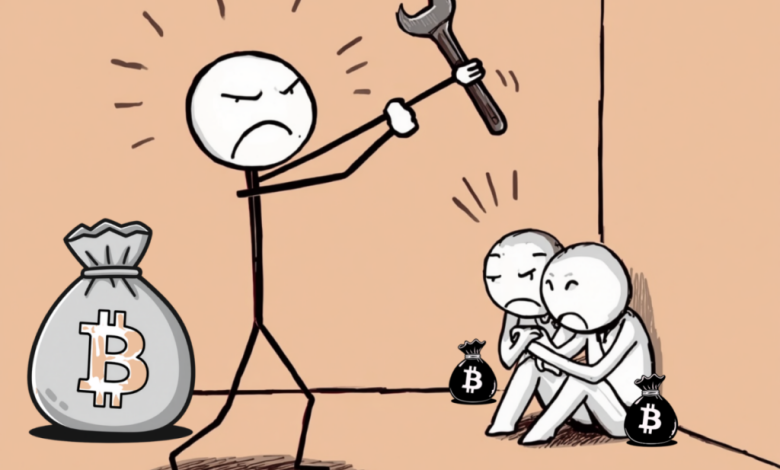
Wrench attacks are a global phenomenon. French crypto holders witnessed at least five in January – one per week. Jameson Lopp, CTO at Casa, a digital assets security company, compiled a list on GitHub of known Bitcoin ransom activity worldwide.
“There are signs that international organizations are using crypto leaks and other sources to identify targets, and then hiring local criminals to execute the actual attacks,” said Hugh Karp, founder of Nexus Mutual, an insurance firm that provides crypto risk coverage. “The first reported kidnappings or attacks were back in 2015, but it has accelerated dramatically over the last few years.”
In January 2026, Waltio, a company specializing in crypto accounting, issued a warning about a data breach. Multiple sources established an operational link between these leaks and the wave of kidnappings observed in France shortly afterwards.
Crypto risk managers and insurers like Nexus Mutual call them “wrench attacks.” The term comes from the web comic site XKCD: two comic strip characters surmised that instead of spending months hacking someone’s encryption, you simply hit them with a wrench until they give you the password.
What started as a niche concern among early Bitcoin millionaires in the mid 2000s has become a genuine security category for insurance firms to cover. Nexus now does kidnap and ransom insurance.
Premiums are between 0.75% to 2% of the covered amount per year. Around $250,000 worth of protection would cost up to $5,000 a year.
“Some products you buy and hope you never have to use,” said Karp. “With the recent increase in crypto-targeted kidnappings, we felt it was important to provide the crypto community access to specialized protection and crisis-response capabilities.”
A Global Crypto Crime Spree
TRM Labs frames wrench attacks as a global violent-crime trend driven by crypto’s hackability, visible wealth, and easy online profiling of victims.
The public visibility of wealth has amplified risk, TRM Labs said in a report last year. Individuals who flaunt their crypto success on social media or in public crypto events become obvious targets. Moreover, personal information can be easily obtained online – from addresses to family details – from even the most computer illiterate criminal.
Nexus says its new Crypto Kidnap & Ransom Cover is aimed at crypto executives, founders, investors, and “doxxed whales.”
Other crypto currency insurance firms include Probably the closest direct competitor.
InsurAce expanded aggressively across the decentralized InsurAce platform a few years bag. They focused on portfolio coverage across many protocols. Their token collapsed and now they are no longer a player in the crypto insurance market. Industry surveys frequently place Nexus as the dominant decentralized insurance name today.
Ten years ago, crypto was building exchanges but now founders are coming from traditional financial services backgrounds and building blockchain based companies to be cryptocurrency custodians, compliance providers, and now risk managers and insurance providers and joining the fray. Crypto is both maturing and getting more risky.
The launch of a kidnap-and-ransom product underscores how security concerns in the crypto industry are evolving. As digital wealth becomes more visible and, in some cases, easier to trace, some investors are treating personal safety as a growing component of risk management.
Whether specialist protection becomes a standard part of the crypto wealth ecosystem remains to be seen. But the emergence of such products suggests that for some holders, the greatest threat is no longer confined to the blockchain itself.
The writer holds Bitcoin, Ethereum and Solana. Image created by the author using Canva.
Benzinga Disclaimer: This article is from an unpaid external contributor. It does not represent Benzinga’s reporting and has not been edited for content or accuracy.