Barron’s Editor Warns Space ETF Investors Despite 190% Gains
Quick Read
-
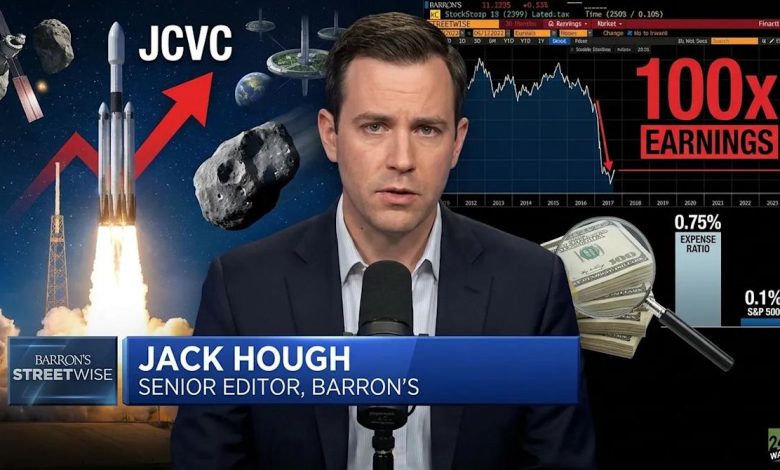
Jack Hough, senior editor at Barron’s, warns that the Procure Space ETF (UFO) trades at more than 100x earnings, even as many companies are pre-profit or only thinly profitable.
-
The analyst who called NVIDIA in 2010 just named his top 10 AI stocks. Get them here FREE.
The Procure Space ETF (NYSEARCA:UFO) has delivered over 120% returns in the past year, significantly outpacing the S&P 500’s 18% return. Yet Jack Hough, senior editor at Barron’s, is telling listeners of the Streetwise podcast to look past this extraordinary performance and take a closer look at what they’re paying.
The 100x Earnings Problem
The headline number Hough says investors should check for space ETFs is the forward P/E multiple. “It’s trading at more than 100 times earnings,” he said of the space ETF on the episode titled Space, Freedom, and Physics Envy. That is the kind of valuation that prices in years of growth and flawless execution across a basket of companies, many of which are still pre-profit or thinly profitable. Additionally, the Procure Space ETF charges a 0.75% expense ratio, compared with less than 0.1% for typical S&P 500 index funds. Fees can create a significant drag over a multi-decade compounding horizon, so the expense ratio is a big deal.
The analyst who called NVIDIA in 2010 just named his top 10 stocks. Get them here FREE.
Exciting Technology, Distant Cash Flows
Hough’s skepticism kicks in when he separates the engineering story from the investment case. “When I think about a company like SpaceX, it’s very exciting what they have done with launching rockets and bringing down the cost of getting satellites up into space. It’s really marvelous,” he said. “There are other things that companies like this talk about, like setting up colonies in space or mining in space. Those are interesting to read about.”
“But the cash flows, I have a hard time imagining those hitting right away,” Hough said. That led him to give a quick refresher on how to value future cash flows that are a decade into the future: “As you get out past year 8, 10, 12, even if we’re talking about large sums of money, they’re less relevant today for investors,” he said. A dollar of asteroid-mining revenue in 2040 is worth a small fraction of a dollar today once a reasonable discount rate is applied.
A More Grounded Way to Own the Space Economy
Hough recommends owning a broadly diversified portfolio, but he suggests investors shift their target from space companies to companies making revenue and cash flow today. “I’d be more comfortable looking for companies like aerospace and defense companies that already do real and viable things that are producing plenty of money and that also has a hand in our future space economy,” he said. The logic is that these companies already generate cash from government contracts and commercial aerospace, and they participate in launch, satellite, and defense-space programs without requiring investors to underwrite Mars colonies. They’ll probably participate in upside from the emerging space industry while shielding investors from some of the risk. The bigger philosophical takeaway is Hough’s wariness of thematic ETFs as a structure. “I’m more of a broad stock market index guy. Let the stock market figure out what the most important themes will be, and the weightings of those stocks should increase automatically in the index,” he said. Investors curious about Hough’s broader market commentary can find his work at Barron’s Streetwise.