Gen Zers Will Spend Anything on Their Pets, and They Plan Ahead to Do It
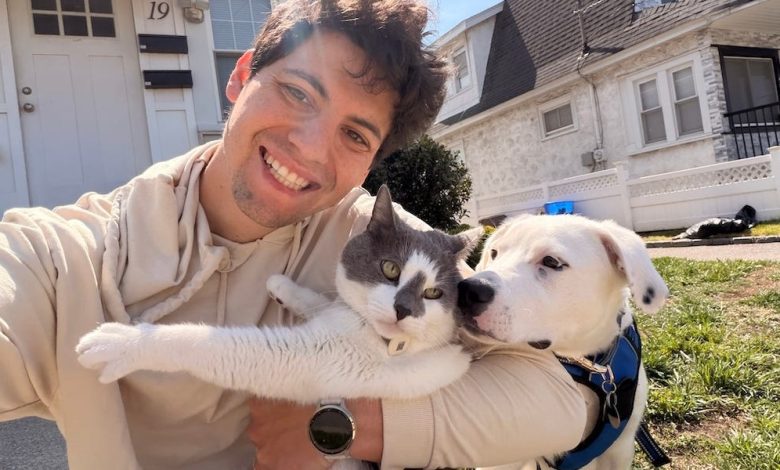
When Harry Tanen’s cat, Bubba, started twitching and having stomach issues, Tanen didn’t hesitate to do medical testing, including an X-ray and CT scan.
“People might think I’m crazy, but he’s my world,” says Tanen, 27. “He’s my best friend.”
The registered nurse from Long Island, New York, is one of many Gen Z pet owners who say they’re working to balance their deep love for their animals with the financial responsibility of caring for them. A recent survey from Healthy Paws Pet Insurance and Money.com found that the average pet owner now spends over $4,000 annually on just one cat or dog.
When it comes to spending on Bubba or his three-legged puppy, Bo, Tanen is guided by his love more than practical budget constraints. He sees the same from his 2.4 million followers on TikTok, where he posts about his own pets and animal rescues.
“People will step in immediately to help an animal, even if it’s not their own,” he says.
That may explain why more than half of the Healthy Paws survey respondents say they’re willing to use up their savings or go into debt to cover vet bills.
“It comes down to emotional attachment,” Tanen says, “rather than a strict number.”
How Gen Z plans for high pet costs
Bubba’s medical testing led to an as-needed medication regimen that’s helped the cat, who is now 11. But it left Tanen holding a $3,800 vet bill. Because he had pet insurance, however, he was reimbursed for all but $600. Insurance has also covered Bubba’s ongoing prescriptions.
“It was incredible,” Tanen says.
Pet insurance is one tool that Gen Z pet owners are using to plan for costs around pet ownership. Insurance can not only help financially, but also provide a sense of security: 87% of respondents to the Healthy Paws survey who have pet insurance say it gives them peace of mind in emergencies, and 75% say it results in lower vet bills.
For Jackson Hood, 28, hearing friends talk about their pets’ expensive surgeries changed how he thought about expenses for his two 6-year-old cats, Chip and Taco. If an emergency hit, he knew he and his wife would be willing to spend almost anything on their furbabies.
“We know that honestly it probably wouldn’t even matter what it costs; we would pay it,” says Hood, an engineer who lives in Kansas City, Missouri. “They’re an extension of our family.”
Rather than fighting that, Hood and his wife decided to prepare. They have a dedicated savings account for cat expenses, and contribute about $200 per month as a way of self-insuring.
Saving for pets in the same way that many people save for down payments on property makes sense: Over 12 years, a single pet can cost $50,000 or more, according to Healthy Paws — the same amount you could spend on a down payment for a house.
For Hood, an automatic transfer into his savings is the easiest way to plan for pet expenses.
“That account is hidden,” he says, “so I don’t even really think about it.”
Courtesy of Lily Scammon
Vet bills aren’t the only major pet expenses
While vet bills are a major concern, they’re not the only large expense pet owners face. New Hampshire health care advocate Lily Scammon has spent thousands on training for her 3-year-old pit bull-boxer mixes.
Scammon, 28, adopted Loki at eight weeks. Nearly a year later, a puppy from the same litter was returned to the shelter. Scammon and her fiancé volunteered to foster that puppy, and quickly fell in love.
“We did not mean to have two dogs,” Scammon says.
The second pup, Sylvie, had experienced trauma in the year before Scammon adopted her. She was reactive toward men and dogs, so Scammon signed her up for “really expensive” training. She also put Sylvie on anti-anxiety medications and a specialized food to treat urinary tract infections that costs about $90 per bag.
Having a pet with higher needs can compound costs and financial stressors. About a quarter of respondents to the Healthy Paws survey whose animals have chronic conditions report spending $5,000 to $10,000 annually on care and keeping.
Despite spending big on critical items like food, medication, and training, some Gen Z pet owners also budget for more frivolous items.
Scammon’s pups have “extra comfy dog beds” and heating pads — items her parents would never buy for a dog, she says. And yet, with no kids, she’s comfortable splurging on her pets.
“People get married later and have kids later, so their pets are their children for a while,” she says. “That’s just how it is.”
Created by the Commerce Team in partnership with Healthy Paws Pet Insurance.