Germany’s pension plans draw praise and outrage
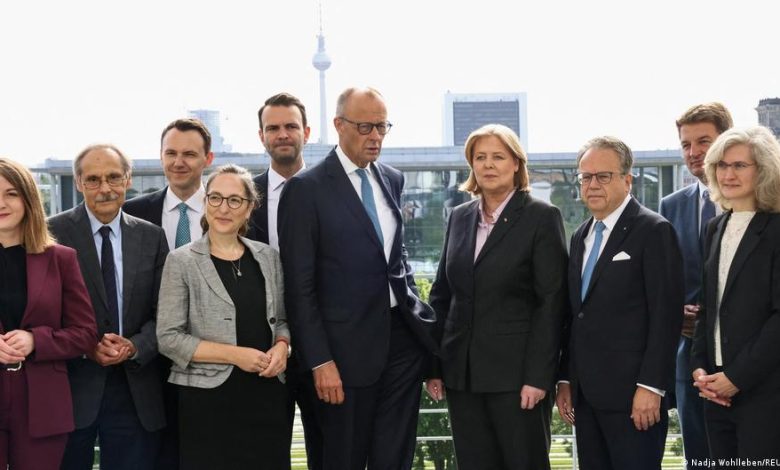
The 33 pension reform proposals put forward by a specially-convened commission of experts and politicians have met with praise from conservative political groups and outcry from opposition parties and trade unionsin Germany.
The 13-person commission’s detailed report was officially released on Tuesday.
Presenting the plan in Berlin on Tuesday, Chancellor Friedrich Merz said that all of the recommendations would be implemented, and expressed confidence that his coalition partners in the Social Democratic Party (SPD) would agree to pass the reforms soon. “All elements of this reform package must now be implemented quickly,” the chancellor said. “They form a complete concept that only works as a whole.”
Labor Minister Bärbel Bas, of the SPD, was equally confident, saying that the reform package was a “total work of art” that could not be picked apart.
Yasmin Fahimi, president of the German Trade Union Confederation (DGB) — an umbrella organization that represents eight of Germany’s biggest trade unions — welcomed some of the commission’s intentions, but also condemned key recommendations. Speaking on the Ronzheimer podcast on Tuesday, Fahimi described the idea that Germans would have to work longer to keep pensions affordable as “a myth designed to scare people.”
Key pension reform proposals
The proposals — which were published earlier than initially planned, partly due to pressure from the government to get the reforms passed quickly — contain a mix of long-expected ideas and some compromises. These are the key recommendations.
- Legal pension age hitched to life expectancy
Germany’s legal retirement age is to be made dependent on life expectancy, which would mean that, according to the commission’s calculations, based on government prognoses, retirement age would reach 67.5 in 2041. Beyond that, the commission recommends that life expectancy prognoses would be checked at regular intervals. Theoretically, this would mean that the retirement age would reach 70 by 2091.
This has drawn criticism from left-wing voices. Philipp Türmer, head of the Jusos, youth organization of the Social Democratic Party (SPD), told public broadcaster DLF that it would have been fairer to hitch the retirement age to the number of years one contributes to the system.
Jan Scharpenberg, pensions expert at the financial advice company Finanztip, said that this idea made sense, although given current life expectancy prognoses it wouldn’t make that much difference in the near term.
- Early retirement benefits canceled
Older Germans who have paid into the pension system for 45 years currently have the option of retiring two years earlier than the legal retirement age without any reductions. The commission wants to see this plan scrapped entirely, arguing that the data suggests that high-earning, healthy men are more likely to profit from it, and that it leads to expensive pensions paid for by the rest of the working community. The report also said the plan represented an incentive to retire as early as possible.
This idea to scrap early retirement was criticized by the industrial trade unions, who say that their workers are particularly affected by physical and psychological stress. Christiane Benner, head of the IG Metall union, told DLF that this proposal “completely ignored” the life and work situations of industrial workers.
The commission did say that “in cases of hardship” people should still be able to retire early. Scharpenberg said that this would indeed be felt as a “bitter cut” by some. “It is probably necessary, but it is certainly a tough cut,” said Scharpenberg.
Another of the commission’s proposals would see increased benefit deductions for people taking early retirement. “That, too, can be criticized, but the current situation is that the deductions are too low, making it more worthwhile for many Germans to retire early,” he said.
The change is likely to affect many German workers: A recent Forsa institute poll carried out for the public health insurer DAK found that 44% of Germans would like to take early retirement, and that the longer people work, the more likely they are to take sick leave.
- Pensions invested in capital markets
The commission wants to invest more of Germany’s pensions contributions into the capital markets. Up until now, this has only been an optional element of state pensions or something Germans have done privately.
Under the commission’s proposals, explicitly inspired by similar systems in other countries, especially Sweden, each pension contributor would get their own individual investment account, into which employer and employee would each contribute half. The amount would gradually rise to 2% of workers’ pension contributions.
“That’s a good idea, but it definitely depends on the details,” he said. “One of the most important thing that the Swedes did, in my opinion, was to found a special pension commission, where every party is represented, whether it is in the government not.” That would make the Swedish model more independent of changing governments and plans.
- More contributors, fewer civil servants
Another one of the commission’s recommendations is an attempt to close the gap between the civil servants’ pension scheme and that of the general population. In Germany, civil servants pay into their own, often more lucrative, state pension scheme, independent of the general pension system.
Labor Minister Bas had wanted this special system to be scrapped entirely, in order to force civil servants to pay into the same system as everyone else, but the commission found that this would be difficult to implement, as the civil servants’ pension scheme is constitutionally protected.
Not only that, many decisions about who can be designated a civil servant are under state-level authority: In some states, for example, high school teachers are civil servants, while in others they are not.
As a compromise, the commission proposed that all of its recommendations be imposed on the civil servant pension system too, putting it in line with the general pension system. The commission also recommends that both the federal government and the states reduce the number of people allowed to be civil servants, by limiting it to people whose work requires that they exercise public authority.
Edited by Rina Goldenberg
This article was first published before the reform proposals were officially presented, and was updated and republished thereafter.
Credit: Source link