Global Market: Warning signals flash red as oil, AI concerns and debt risks rattle investors

A temporary pause in Gulf-region hostilities has eased some pressure on energy markets, with crude prices retreating from the $100-per-barrel mark. However, oil remains high enough to fuel inflation concerns, keeping long-term government bond yields elevated at levels that have historically created headwinds for risk assets.
At the same time, the powerful rally in artificial intelligence-related stocks is facing increasing scrutiny as investors question the profitability of massive AI investments, rising cash requirements and the possibility that a previous shortage of critical components such as semiconductor chips could turn into an oversupply situation.
AI Rally Faces Profitability Test
Technology companies have continued to deliver strong earnings, but investors are increasingly focused on whether future revenue growth and profits will justify the enormous spending required to build AI infrastructure.
Reuters reported that markets are pricing in the possibility of higher US interest rates this year, pushing yields on bonds issued by major AI-focused technology companies higher at a faster pace than US Treasury yields. Credit protection costs have also increased as concerns grow around the sustainability of the semiconductor rally.However, positioning in the technology sector suggests some investors have already turned cautious. The ratio of bullish to bearish positions in Nasdaq futures has fallen to its lowest level in 17 years, indicating that a large-scale exit from technology stocks could leave room for fresh buying if sentiment improves.
Despite this, the broader equity rally has been supported by record levels of borrowing. Margin debt, or money borrowed by investors to purchase securities, reached a record $1.5 trillion in June, according to the Financial Industry Regulatory Authority. Investors’ net balances with brokers moved into a $1 trillion deficit for the first time, highlighting rising leverage in the market.
High leverage can amplify market declines, as investors with borrowed positions are more likely to sell during sharp downturns rather than provide buying support.
Bond Market’s 5% Warning Signal
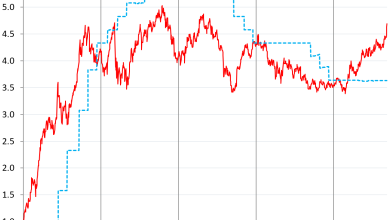
The US 30-year Treasury yield has remained above the 5% mark for the longest period since the early stages of the 2007 financial crisis, Reuters noted.
While the level itself does not automatically signal a market sell-off, persistently high long-term interest rates can increase borrowing costs across the economy. Higher mortgage rates and loan costs could pressure consumers and create challenges for efforts aimed at improving affordability ahead of the US midterm elections.
Rising government borrowing costs could also spill over into corporate credit markets by making it more expensive for companies to raise funds.
According to Reuters, Raymond James Chief Investment Officer Larry Adam highlighted that spreads on some of the riskiest corporate bonds had widened to a 15-month high, indicating that investors are demanding greater compensation for lending to weaker borrowers amid expectations of tighter monetary policy and a more difficult credit environment.
Oil Prices Remain a Major Inflation Risk
Although crude prices have moved away from their recent highs near $100 a barrel, oil remains significantly elevated compared with last year. Reuters reported that oil prices are up around 27% in dollar terms on an annual basis, benefiting producers but increasing costs for major importers.
Euro zone and UK consumers are paying nearly 30% more for imported oil compared with a year ago, with countries facing additional pressure when their currencies weaken. Japan, where import costs have reached record levels, remains particularly vulnerable to the energy shock.
Indian refiners are also facing higher costs, with Brent-linked crude prices around 40% higher, although domestic companies have benefited from discounted Russian oil purchases over recent years.
Refiners in countries such as Argentina and Turkey are seeing even sharper increases, with costs rising close to 50%. Shipping expenses have also surged due to security risks in key trade routes. Reuters reported that tanker rates on major Middle East-to-Asia routes have jumped nearly 600% year-on-year due to concerns around navigating the Strait of Hormuz and the Red Sea.
Yen Weakness Raises Carry Trade Concerns
Another market warning sign is emerging from currency markets, where the Japanese yen has weakened to around 164 per dollar, approaching four-decade lows.
Reuters reported that investors remain cautious about possible intervention by Japanese authorities to support the currency. Signals from the Bank of Japan about a potentially faster pace of interest rate increases, along with warnings from Japanese officials, have done little to reverse the yen’s decline.
The currency has been pressured by Japan’s relatively low interest rates, higher energy costs and expectations of expansionary fiscal policies under Prime Minister Sanae Takaichi’s government.
The yen’s long-standing role as a funding currency has added to market risks. Investors have frequently borrowed cheaply in yen to invest in higher-yielding assets such as US equities and bonds.
A sharp rise in the yen triggered by official intervention could force investors to unwind these carry trades rapidly, similar to the market disruption seen in August 2024.
With elevated oil prices, rising bond yields, stretched valuations in AI-related stocks and high levels of market leverage, investors are closely monitoring these warning signals for signs of broader financial stress.