gold price today: Why is gold price rising by 1.9% and silver by 2.7%, and will gold touch $5,500 and silver reach $100 soon? Precious metals rise, analysts insights and market outlook explained. Here’s what should investors do now
Why is gold price rising by 1.9% and silver by 2.7%, and will gold touch $5,500 and silver reach $100 soon?
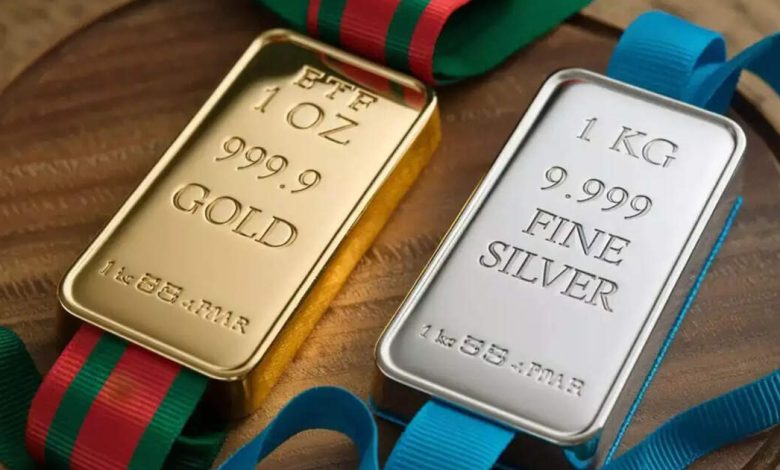
Gold and silver prices moved higher in global markets as investors reacted to currency and commodity movements. Spot gold increased by 1.9% and reached about $5,231.79 per ounce, while U.S. gold futures settled near $5,242.10. Silver also climbed by 2.7% and traded close to $89.39 per ounce. The main drivers behind this movement were a weaker dollar index, falling oil prices, and expectations around inflation data in the United States. These factors supported demand for precious metals. Market participants are now asking whether the current trend can push gold toward $5,500 and silver toward $100 in the coming period.
Why is gold price rising by 1.9% and silver by 2.7%?
Gold and silver prices rose because the U.S. dollar index weakened. When the dollar declines, gold priced in dollars becomes cheaper for investors using other currencies. This often increases buying interest in global markets. Another factor was the decline in oil prices after they had reached a three-year high. Lower oil prices eased some inflation concerns but still kept inflation levels high enough to support gold demand. At the same time, investors are waiting for United States consumer price index and Personal Consumption Expenditures data. These reports can influence expectations about interest rates and economic conditions, which often move precious metal prices.
Precious metals rise explained
Spot gold rose 1.9% to $5,231.79 per ounce during afternoon trading. U.S. gold futures for April delivery settled 2.7% higher at $5,242.10. The rise in gold prices came as the dollar index declined.
A weaker dollar supports gold prices because bullion priced in dollars becomes cheaper for investors who use other currencies. This usually increases demand in global markets.
At the same time, oil prices dropped on Tuesday after rising to a three-year high in the previous session. Oil prices had increased earlier due to concerns about supply disruption linked to the conflict in the Middle East.
However, oil prices moved lower after United States President Donald Trump predicted the conflict could end soon. Lower oil prices eased some inflation concerns and supported buying interest in gold.Despite the statement about a possible end to the conflict, reports from Tehran described overnight bombardment in the capital as the strongest of the conflict so far. This situation kept geopolitical risk in focus for investors.
Commodity strategy analysts say that oil prices above $100 still support inflation expectations, which can increase demand for gold as a store of value.
However, gold tends to lose demand when interest rates rise because the metal does not provide yield. Investors are therefore watching central bank signals closely.
Inflation data and Federal Reserve policy signals
Another factor in why is gold price rising by 1.9% and silver by 2.7% is the release of economic data expected later this week.
Investors are waiting for the United States consumer price index data and Personal Consumption Expenditures data. These reports provide signals about inflation levels in the economy.
The Federal Reserve is expected to keep interest rates unchanged at its meeting scheduled for March 17–18. Rate decisions influence gold demand because lower rates reduce the opportunity cost of holding gold.
If inflation data shows slower price increases, it may support expectations of rate cuts later, which could increase demand for bullion.
Dubai gold market trading below London prices
Physical gold markets also showed an unusual price gap. Gold in Dubai traded at a discount compared with London prices.
Flight restrictions linked to the conflict reduced transportation of bullion. This kept more gold in the Dubai market. At the same time, demand remained limited, which caused prices to trade below London levels.
Such regional price differences can appear when supply movement between trading hubs faces disruption.
Silver and other precious metals movement
Precious metals across the market moved during the session. Spot silver rose 2.7% to $89.39 per ounce. Platinum gained 2.2% and reached $2,229.15 per ounce. Palladium moved in the opposite direction and declined 0.9% to $1,675.50 per ounce.
The movement in these metals often follows trends in gold prices, currency strength, industrial demand, and investor sentiment.
Investors continue to monitor global economic signals, geopolitical developments, and central bank policies to understand whether gold could move toward $5,500 and silver could approach $100 in future trading sessions.
Will gold touch $5,500 and silver reach $100 soon?
Whether gold touches $5,500 and silver reaches $100 will depend on several global factors. Interest rate decisions by the Federal Reserve play a major role. Gold usually gains when interest rates stay stable or decline because the metal does not offer yield. Inflation data can also affect prices. If inflation remains elevated, investors may continue to buy gold and silver as a store of value. Currency movements and geopolitical tensions can also influence the direction of prices. Strong demand and global uncertainty could push prices higher, but market conditions will determine the pace of the move.
Analysts insights and market outlook
Market analysts say that oil prices above $100 still support inflation concerns, which can help maintain demand for gold. However, lower oil prices also allow the Federal Reserve more flexibility to adjust interest rates if needed. Analysts also point to currency movements as a key factor in gold and silver performance. A weaker dollar tends to support precious metals. At the same time, geopolitical developments such as the Middle East conflict continue to influence investor sentiment. Because of these factors, analysts expect gold and silver prices to remain sensitive to economic data and central bank decisions in the coming weeks.
What should investors do now?
Investors are closely monitoring inflation data, central bank policy signals, and geopolitical developments. Many market participants prefer to wait for the release of U.S. consumer price index and Personal Consumption Expenditures data before making large trading decisions. The Federal Reserve meeting scheduled for March 17–18 is also important for price direction. Investors often diversify portfolios by holding precious metals during uncertain economic periods. Careful monitoring of currency trends, oil prices, and global events can help investors understand whether gold and silver will continue their upward movement.
FAQs
Q1: Why are gold and silver prices rising now?
Gold and silver prices are rising due to a weaker U.S. dollar, falling oil prices, and investor focus on inflation data and Federal Reserve policy signals. These factors increased demand for precious metals in global markets.
Q2: Can gold touch $5,500 and silver reach $100 soon?
Gold touching $5,500 and silver reaching $100 will depend on inflation trends, Federal Reserve interest rate decisions, currency movement, and geopolitical developments that influence investor demand for precious metals.