Humanist Congressman Says Secularism Gaining Ground
Secularism is making headway in the U.S., according to Rep. Jared Huffman (D-Calif.), while data from Pew Research Center paint a mixed picture.
Huffman, a humanist, became the second member of Congress in modern times to publicly identify himself as a “nonbeliever.” In Huffman’s book, “No Prophets: The Fight to Save Democracy from Christian Nationalism,” published Aug. 18, Huffman calls “Christian nationalism” the most dangerous political movement in the U.S. and claims that it is actively trying to “destroy democracy.” He also accuses religious nationalists of being a “scorched earth insurgency.” His book cites laws mandating the Ten Commandment displays in public schools, as well as the Trump administration and government officials’ participation and initiation of Christian prayer services within federal agencies.
The Freethought Caucus, a member organization in the U.S. House founded by Huffman in 2018, promotes a strict view of separation of church and state under the perspective that government and public policy should be “based on facts, science, and reason.” The group now has 37 members, which is more than the Congressional Prayer Caucus. The Prayer Caucus’ 34 members representing both the House and Senate gather to pray and advocate for protecting public expressions of faith and religious freedoms.
In the past decade, elected lawmakers on Capitol Hill who said they were not affiliated with a religion or said they had an unspecific “other affiliation” has increased from 16 to 40.
Huffman says he wants fellow Democrats to act, calling them his “greatest frustration” on the topic because they have done little to stop “Christian nationalism” ideas.
The larger pattern: Is the U.S. becoming more secular?
The Pew Research Center found in a May 2026 study that 66% of responders said houses of worship should “keep out of political matters” while 79% said houses of worship should not endorse political candidates. Those percentages have grown since a decade ago, when 49% said churches should stay away from political topics, and 66% opposed churches endorsing candidates.
But Pew also discovered that the highest percentage of Americans in 24 years (37%) say religion’s influence in the country is increasing. About 22% see the increase as a negative thing, but 55% see the increase as positive.
Christians are represented in Congress at a significantly higher rate than the general population, as about 62% of American adults claim to be Christian, but 87% of Congress claims to be Christian. And about 28% of the U.S. population say they do not have a religion, yet only 0.6% of congressional members identify as not having a religion.
Do politics and Biblical principles go hand in hand?
A Gallup study found that 60% of Americans in 2024 said they would vote for an atheist, showing an increasing favorability toward nonreligious figures in politics. In 1999, about 49% of people said they would vote for an atheist.
With data showing many Americans opposed to mixing religion and politics, Huffman believes that the tides have shifted.
“I think the game has changed,” Huffman said. “Republicans have made a losing bet. Democrats need to understand that and be ready to connect.”
Penny Nance, CEO and president of Concerned Women for America, recently told Decision that politics affect every aspect of citizens’ everyday life. Warning against the idea of political apathy in the Christian sphere, Nance said Christians’ responsibility in public policy is to elect good leadership.
“The truth is there are people sitting in the pew that think that politics doesn’t matter and it doesn’t touch them,” Nance said. “But I would say it touches them in almost every way. Every time they look at their paycheck, it touches them. When their children go to public school, it touches them. Many areas of life are impacted by having good government or bad government.”
Nance says that one way for Bible-believing Christians to follow Jesus’ command to “render to Caesar the things that are Caesar’s, and to God the things that are God’s,” is by fulfilling the civic duty of voting (See Matthew 22:21).
“Because to be good citizens, we need to participate in our constitutional republic,” Nance said. “Our form of government requires us to elect good leadership.”
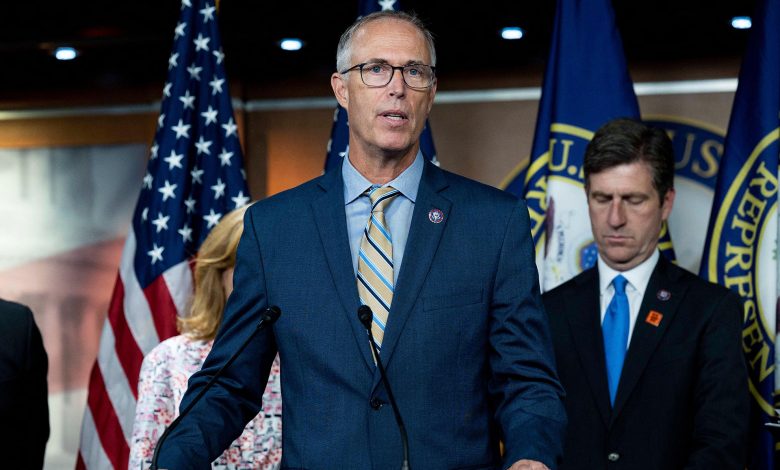
Photo above: U.S. Rep. Jared Huffman
Credit: Source link