Inside MetLife’s Plan To Build More Confident Futures For All
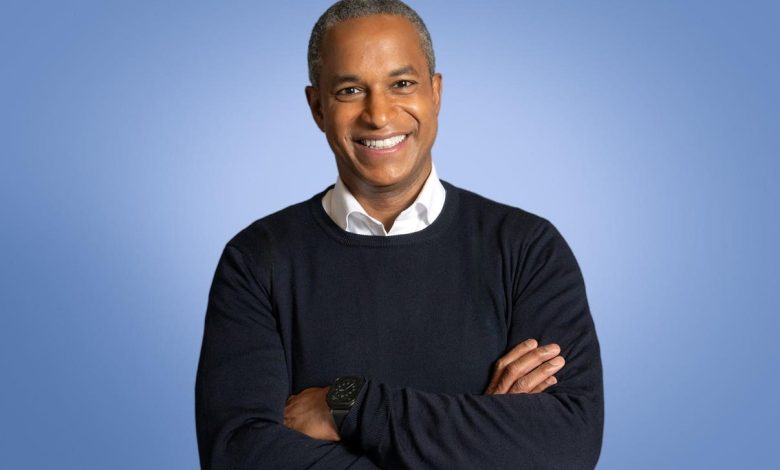
Michael Roberts, Executive Vice President, Chief Marketing and Communications Officer
MetLife
This summer, the world’s eyes turn to soccer. The FIFA World Cup final will be played at MetLife Stadium, and for most brands, that kind of cultural gravity is a marketing opportunity — a chance to slap a logo on a jersey and ride the wave. For Michael Roberts, Executive Vice President and Chief Marketing and Communications Officer of MetLife, it was something else entirely: a moment to ask what the company actually stands for, and to make sure the answer could outlast the final whistle.
That answer is confidence. Specifically, MetLife’s purpose — ‘always with you, building a more confident future’ — and the increasingly precise science the company has built around what actually creates it.
The Solutionary Leader
Roberts didn’t arrive at MetLife by accident. Before this chapter, he spent time at TIAA and Vanguard, two organizations built around a member-first, purpose-anchored model. When he made the move to MetLife four and a half years ago, purpose was the deciding factor. What he’s found since complicates a common assumption in the impact world: that public companies are structurally less capable of purpose-driven leadership than their private, mission-locked counterparts. “There’s not this meaningful difference,” Roberts told me, between how purpose shows up in a public company versus a private one. In his experience, that gap is smaller than people think — and in some ways, growth as a public company has let MetLife scale its impact rather than dilute it.
That’s the foundation for everything else Roberts and his team have built. And what makes him a purpose-driven leader in the truest sense isn’t just that he holds a marketing title with a research mandate attached — it’s that he’s spent his career, on stage and in the boardroom, learning how to bring disparate elements into alignment around a single, meaningful outcome.
Confidence as a Discipline, Not a Slogan
Every organization claims to care about its stakeholders. Few build an evidentiary base to prove it. MetLife commissioned original research, the Confident Pathways Report, specifically to understand the mechanics of confidence — what actually drives it, not just what the company assumed drove it. The findings validated some long-held instincts, Roberts said, but more importantly, they brought precision to MetLife’s understanding of the social support structures and resilience factors that underpin a confident life.
One finding stood out in our conversation: the tight, almost inseparable link between financial wellness and mental wellness. Roberts described MetLife’s view of holistic health as resting on four pillars — financial, social, physical, and mental. “Financial wellness and mental wellness are inextricably linked,” he said, and a weakness in one reliably shows up as a weakness in the other, undermining a person’s sense of confidence about the future. It’s a reminder that insurance and financial protection products aren’t abstract instruments; for the people holding them, they’re a load-bearing wall in their psychological architecture.
Crucially, Roberts was careful to draw a boundary around MetLife’s role. The company isn’t claiming to own confidence, or to be the sole source of it. Instead, the research was designed to catalyze a broader conversation — an invitation for other organizations and individuals to participate in building confident futures, rather than a proprietary claim staked on the concept.
Confidence Pathway Report
MetLife
Purpose as Decision Architecture
What struck me most was how operational MetLife’s purpose has become. Roberts described a simple two-part rubric the marketing organization uses to evaluate opportunities: “It’s alignment and impact,” he said — alignment to the purpose of building a more confident future, and impact on that purpose. It’s a deceptively simple filter, but it’s consistent — Roberts noted that the same criteria apply whether you’re talking about an employee’s volunteer hours or a CMO’s strategic partnership decisions. Purpose, in other words, isn’t a tagline bolted onto a strategy. It’s the strategy’s decision engine.
That discipline shows up vividly in MetLife’s partnership with Global Citizen. Roberts emphasized that the structure deliberately layers a commercial partnership between MetLife and Global Citizen on top of a philanthropic one — between the MetLife Foundation and the FIFA Global Citizen Education Fund. The combination, he said, creates a multiplier effect that neither relationship could generate alone. The Education Fund, supported by MetLife alongside partners including Bank of America, has helped catalyze more than $100 million toward education and sport for youth — and critically, it’s let MetLife’s foundation extend philanthropic dollars to smaller, hyper-local organizations that a corporate foundation’s limited staff and large-grant model typically can’t reach.
The youth focus isn’t incidental. Roberts laid out a clear theory of change: “resilient communities are created by youth who are confident,” and confident youth become the foundation of resilient communities down the line. It’s a longer-duration bet than most quarterly marketing strategies tolerate, but it’s consistent with the idea that purpose work is generational, not promotional.
That generational thinking also explains an unexpected partnership: Highlights, the children’s magazine many readers will remember from pediatrician waiting rooms. Roberts chose Highlights specifically because of its multi-generational resonance — a brand that connected with his own childhood and now connects with his children’s. In a World Cup moment built for short-term hype, MetLife instead chose an asset designed to outlast the tournament, using the cultural occasion as an entry point rather than the whole campaign.
MetLife Highlights
MetLife
The Orchestrator
Roberts’ view of the modern CMO role ties all of this together. He sees the position less as a brand-management function and more as “the orchestrator of outcomes for our stakeholders” — pulling together internal capabilities and external partners to deliver results across every group a company touches: investors, communities, customers, employees.
It’s not a coincidence that the metaphor is musical. Roberts trained as an opera singer before his marketing career, and he draws a direct line between that discipline and his current role: the work of bringing together people who speak different languages, coordinating with an unfamiliar conductor, and producing something that moves an audience — that, he said, is the same fundamental skill as mobilizing a global financial services company around a shared purpose. The other lesson he carried from singing wasn’t the performance itself, but the practice — the recursive, often unglamorous work of refining a craft so that what you intend to express actually gets expressed.
As the World Cup final approaches at MetLife Stadium, that’s the real story behind the sponsorship. It’s not a logo moment. It’s a test of whether a company can take a cultural spotlight and use it to reinforce something built to last well beyond the final whistle — confidence, conducted at scale.