Insurance ETFs Top Defensive Sector Chart In July As Investors Look To Pivot Slightly From Chips And AI
Insurance ETFs are garnering attention as a defensive play as investors look to hedge against tech and AI.
- Growing anxiety over sprawling artificial intelligence capital spending prompted investors to rotate out of big-tech stocks and into defensive havens in July.
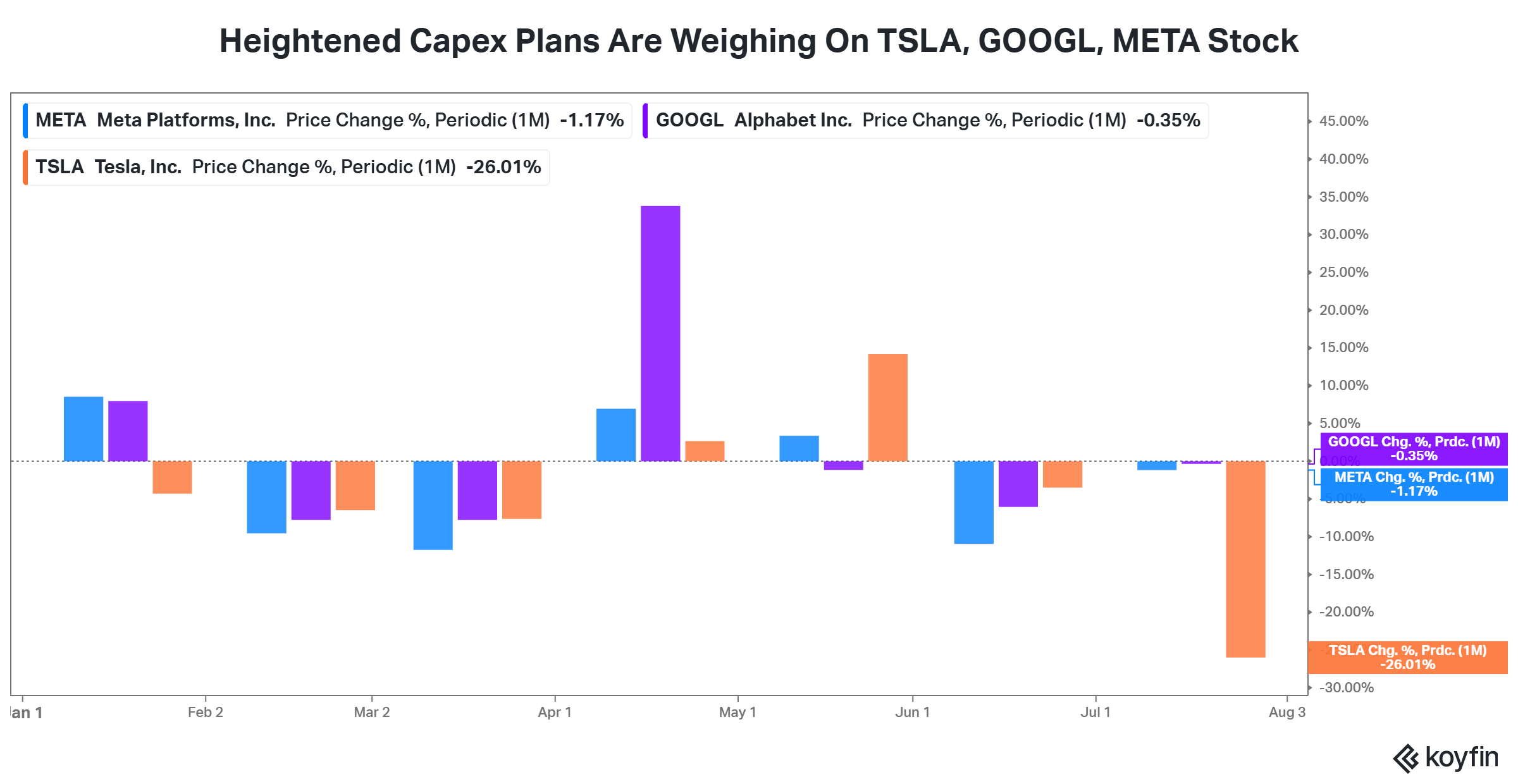
- Escalating 2026 capital outlay forecasts from technology giants—including Tesla, Meta Platforms, and Alphabet—have squeezed free cash flow and rattled market sentiment.
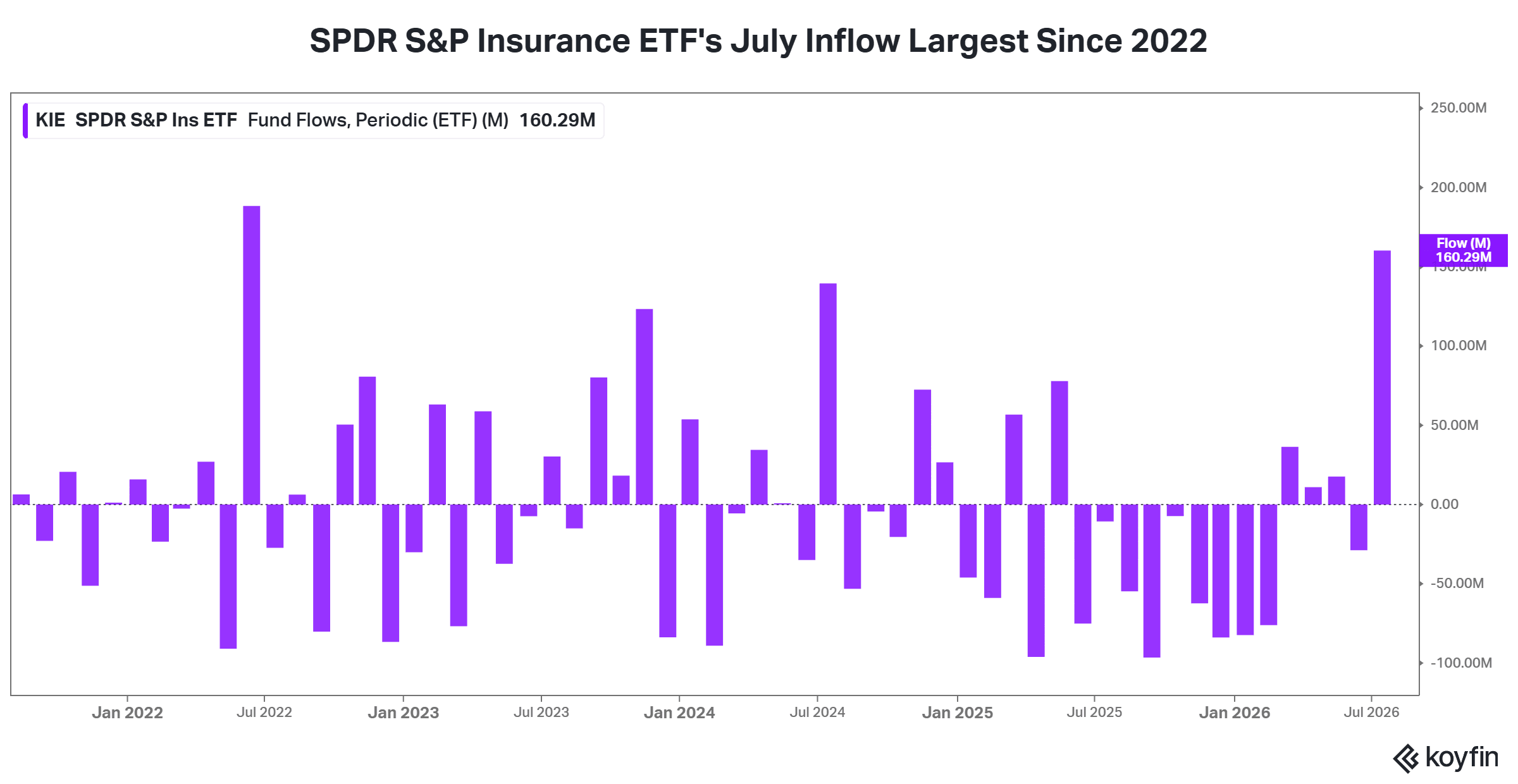
- The SPDR Insurance ETF outperformed other defensive sector ETFs in July.
Wall Street saw a distinct tactical shift in July as institutional capital pivoted away from high-momentum AI and mega-cap technology stocks into defensive sectors.
Broader equity market volatility, fueled by mounting geopolitical friction and disappointing earnings reactions to massive technology infrastructure budgets, sent traders scrambling for companies with steady cash flows, strong pricing power, and insulated operating models.
Insurance carriers and brokerages have rapidly emerged as favored sanctuaries in this rotation. The S&P 500 Insurance Industry Index hit a record high earlier this week, with constituents including Erie Indemnity Co. (ERIE), Brown & Brown Inc. (BRO) and Willis Towers Watson Plc (WTW) reaching fresh highs. Insurance brokers reached their highest levels since late October.
Defensive ETFs Gain Traction As Tech Benchmark Funds Suffer Pullbacks
The rotation toward low-volatility sectors is clearly reflected in exchange-traded fund flows across the U.S. market. Specialized insurance funds, such as the SPDR S&P Insurance ETF (KIE) and the iShares U.S. Insurance ETF (IAK), have drawn steady inflows as investors capitalized on solid property and casualty earnings and elevated investment yields.
This influx into insurance has outperformed or matched returns in traditional defensive funds over the past month, including the Health Care Select Sector SPDR Fund (XLV), the Utilities Select Sector SPDR Fund (XLU), and the Consumer Staples Select Sector SPDR Fund (XLP).
In stark contrast, broad technology and semiconductor ETFs have endured sharp monthly drawdowns as investors reassess valuations. The Vanguard Information Technology ETF (VGT) and the VanEck Semiconductor ETF (SMH) faced aggressive selling pressure as semiconductor stocks declined. The PHLX Semiconductor Index has plummeted more than 24% from its peak in late June, with roughly 14% of that slump taking place over a three-week span.
AI Capex Avalanche Squeezes Margins And Triggers Tech Sell-Off
The catalyst behind this market rotation centers on growing Wall Street skepticism regarding the timeline and ultimate return on investment for multi-billion-dollar artificial intelligence buildouts.
Tesla Inc.’s (TSLA) executive management confirmed that capital expenditures are expected to exceed $25 billion in 2026 and will continue growing for the next two to three years. In its second-quarter 2026 financial report, Meta Platforms (META) narrowed and raised its full-year capital expenditure guidance to $130 billion-$145 billion, up from an earlier forecast of $125 billion to $145 billion to build out global AI infrastructure. Alphabet Inc. (GOOG, GOOGL) raised its full-year 2026 capital expenditure guidance to a range of $195 billion to $205 billion, up from its prior forecast of $180 billion to $190 billion.
Alphabet, Meta, and Tesla stocks have ended July lower in their second consecutive month of decline.
While executives like Alphabet CEO Sundar Pichai and Meta CEO Mark Zuckerberg emphasized that aggressive compute infrastructure investment is vital to securing long-term leadership in generative AI, short-term investors have reacted by pulling back capital until clear monetization materializes.
Some Strategists Think Defensive Play Is Short-Lived
While defensive sectors have enjoyed strong summer momentum, market strategists warn that the rally in non-tech groups could face its own near-term hurdles. In an analysis published by Barron’s, Jonathan Krinsky, managing director and chief market technician at BTIG, cautioned that recent gains in healthcare, real estate, and insurance may be vulnerable to a swift reversal.
“We have been constructive on areas like healthcare, real estate, and insurance, which have all made nice moves of late, but we think a big part of their strength was due to positioning unwinds on the opposite side of the semi/AI trade,” Krinsky said.
“This is different from a fundamental rotation because if it was ‘forced’ buying on the way up, it’s liable to a swift reversal when the unwind has run its course,” he added. “It’s been a nice run for equal-weight, but likely needs some consolidation.”
Krinsky said much of the strength in defensive sectors reflects mechanical unwinding of crowded semiconductor and AI positions, rather than a lasting shift in fundamentals. He added that if the recent buying was forced by risk managers unwinding tech exposure, defensive sectors are susceptible to a “catch down” move or consolidation once the tech unwind runs its course.
For updates and corrections, email newsroom[at]stocktwits[dot]com.