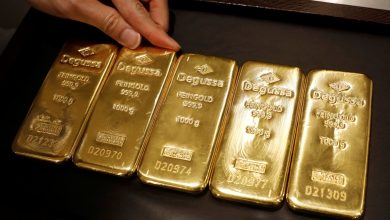
Jewellery stocks slide after Modi urges Indians to buy less gold
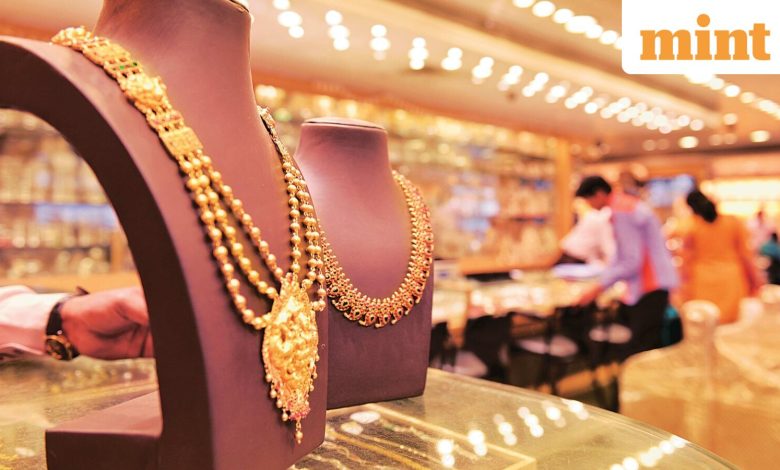
MUMBAI/ BANGALORE: Shares of Indian jewellery retailers tumbled on Monday as investors and industry executives weighed the fallout of Prime Minister Narendra Modi’s appeal to curb gold purchases to ease pressure on India’s foreign exchange reserves.
PM Modi on Sunday urged citizens to reduce gold purchases to help conserve foreign exchange reserves, triggering fears of weaker demand, tighter financing conditions and potentially higher import duties for the sector.
The remarks triggered a sharp selloff in jewellery stocks, with Kalyan Jewellers India falling 9.27%, Senco Gold slipping 8.18% and Titan Company declining 6.73%, significantly underperforming the broader market. The benchmark Nifty50 closed 1.49% lower today.
People also ask
AI powered insights from this story
•5 QUESTIONS
Prime Minister Modi urged citizens to reduce gold purchases to help conserve India’s foreign exchange reserves. This measure aims to ease pressure on the dollar and support the country’s current account deficit position, especially amidst rising crude oil prices.
Reducing gold imports helps India’s economy by decreasing the demand for dollars, which in turn strengthens the rupee and eases pressure on foreign exchange reserves. Gold imports constitute a significant portion of India’s total import bill.
Following Prime Minister Modi’s appeal to reduce gold purchases, shares of Indian jewellery retailers experienced a significant decline. Stocks like Kalyan Jewellers India, Senco Gold, and Titan Company saw substantial drops in their market value.
Yes, industry executives suggest that gold exchange programs, where consumers trade old jewelry for new purchases, can help sustain demand without materially increasing gold imports. This allows consumers to acquire new items while not adding to the country’s import bill.
If gold imports are reduced, the jewellery sector may face implications such as weaker demand and potentially tighter financing conditions. Industry executives also warn that banks might be hesitant to fund jewellery companies due to the sector’s reliance on working capital for inventory.
Industry executives warn that the pressure may extend beyond stock prices because, with rising gold prices, jewellers may need more working capital to maintain inventory, said chartered accountant Surendra Mehta and spokesperson of India Bullion and Jewellers Association Ltd.
“Banks may prefer to keep themselves away from funding any jewellery company,” Mehta added. IBJA is the apex body representing India’s bullion and jewellery industry.
The industry’s concern is significant given the gems and jewellery sector employs more than 5 million people directly and indirectly, according to industry estimates, while organized retailers account for roughly 37-42% of the market.
Meanwhile, the government’s concerns are rooted in India’s widening import burden. India usually runs a current account deficit because it imports far more crude oil and gold than it exports. Crude oil and petroleum imports stood at about $174.9 billion in FY26, accounting for roughly 22% of total imports, according to the commerce and industry ministry data.
Gold imports were estimated at nearly $72 billion during the year, accounting for 9.3% of the total import bill.
“PM Modi’s call for economic patriotism, by urging the public to defer gold purchases for a year, if responded positively, could help moderate gold imports and ease pressure on dollar demand, offering some support to India’s CAD position,” V.R.C. Reddy, treasury head at Karur Vysya Bank, earlier told Mint.
Some retailers argued that demand can be sustained without materially increasing imports.
Jos Alukkas, chairman of Kerala-based Jos Alukkas, said the industry could rely more heavily on gold exchange programmes, where consumers trade old jewellery for new purchases. “Families can exchange their old gold for new designs, celebrate every occasion, and not add a single dollar to the country’s import bill,” Alukkas said.
That transition is already visible among organised retailers. In its third-quarter earnings commentary, Titan said more than half of its jewellery sales now come from gold exchange programmes. Retailers have also increasingly pushed lightweight jewellery, lower-carat products, silver jewellery and gemstone offerings as record gold prices dampen demand for traditional purchases.
The price for 10 grams of 24-karat gold is approximately ₹152,000– ₹152,300, sharply increasing inventory costs for retailers. India is the world’s second-largest gold consumer after China.
“If these trends continue, India’s annual gold imports could potentially decline to nearly 550 tonnes, compared to the historical average of around 700 tonnes,” said Suvankar Sen managing director and chief executive officer, Senco Gold & Diamonds.
Analysts also say reducing India’s dependence on physical gold will remain difficult. “Investors using gold for portfolio diversification have gradually shifted toward financial products such as gold ETFs, sovereign gold bonds and gold mutual funds,” said Abhishek Kumar, founder of financial advisory firm SahajMoney.
But people buying gold as a store of value or emergency asset have not shifted meaningfully away from physical gold, he said, particularly in rural India where gold continues to serve as collateral and a household safety net.
Retailers are also bracing for the possibility of higher import duties. “Given the Prime Minister’s commentary, there is a possibility of an increase in gold import duty going forward,” Sen of Senco Gold said.
India currently imposes an effective 6% import duty on gold, in addition to 3% goods and services tax at the point of sale. Before July 2024, import duties were close to 15%.