Korea’s stock market boom drives bank bond issuance to record $73bn
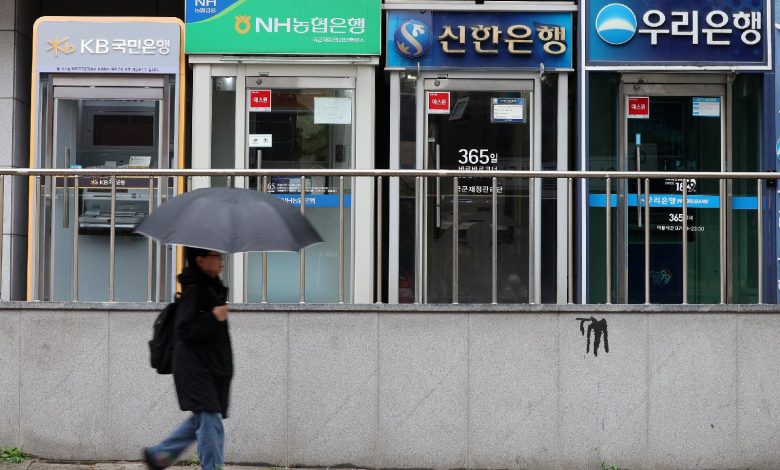
South Korean banks have issued a record 110.8 trillion won ($72.7 billion) in bonds this year as investors shift money from deposits into the booming stock market, according to the Korea Financial Investment Association on Wednesday.
The issuance represents a 44 percent increase compared with the same period last year and marks the highest level ever recorded.
The surge reflects a growing movement of funds from bank deposits into equities. As investors pour money into the stock market, banks are increasingly tapping bond markets to secure funding.
“Banks are issuing bonds to lock in funding before financing costs rise further, as deposit growth alone is no longer enough to meet funding needs,” said a commercial bank official.
Market participants expect the increase in bond issuance to add upward pressure on interest rates. Greater supply typically pushes bank bond yields higher, raising banks‘ funding costs. Banks are then likely to pass those costs on through higher lending rates, increasing borrowing burdens for households and businesses.
Analysts also note that the Bank of Korea has signaled the possibility of future policy rate hikes, which could intensify upward pressure on market interest rates.
Loan rates have already begun rising noticeably.
Unsecured loan rates at major commercial banks have climbed above 6 percent. As of Wednesday, rates at five major lenders—KB Kookmin Bank, Shinhan Bank, Hana Bank, Woori Bank and NH Nonghyup Bank—ranged from 4.59 percent to 6.18 percent for one-year loans, up from 4.36 percent to 5.89 percent at the end of last month.
The upper end of mortgage rates at major banks has already surpassed 7 percent. After crossing that threshold in late March, the top rate reached 7.39 percent on Monday, its highest level since October 2022, before rising further to 7.5 percent on Wednesday.
Long-term lease loan rates stood at 4.11 percent to 6.71 percent on Wednesday. The lower end exceeded 4 percent this month, while the upper end approached 7 percent.
The rise in household borrowing costs has been driven by higher benchmark funding rates, including bond yields used to price loans.
The one-year bank bond yield, a benchmark for unsecured loans, rose to 3.619 percent on Monday, its highest level since May 2024. The five-year bank bond yield, the benchmark for fixed-rate mortgages, climbed to 4.473 percent, its highest level since November 2023.
The six-month bank bond yield, used to price long-term lease loans, exceeded 3 percent in May for the first time in 16 months and rose to 3.094 percent as of Wednesday.
The outlook for monetary policy in the second half of the year is adding to concerns over borrowing costs. Markets increasingly expect the central bank to raise interest rates in response to inflation and financial stability concerns, with expectations of tighter policy already putting upward pressure on market rates.
By Yon Q-uk and Chang Iou-chung
[ⓒ Pulse by Maeil Business News Korea & mk.co.kr, All rights reserved]