Markets Await US Jobs Data as Treasury Yields and Dollar Consolidate Ahead of Q1

Treasury yields and market expectations for monetary policy
U.S. Treasury yields have edged lower this week, with the 10-year yield trading near 4.1–4.2%, extending a controlled decline that has unfolded since late December. This move reflects growing confidence that the Federal Reserve has completed its tightening phase, rather than an abrupt shift toward growth pessimism. Investors continue to demand a meaningful term premium, reflecting heavy Treasury issuance and lingering inflation uncertainty, which explains why yields have not fallen more sharply.
From a forward-looking perspective, the bond market is pricing a gradual easing cycle rather than aggressive or front-loaded cuts. The most likely Q1 outcome is continued range trading, with yields biased modestly lower if labor data soften further. A sustained move below 4% would likely require clear evidence of slowing wage growth and rising unemployment, while a return toward recent highs would require stronger-than-expected labor or inflation data. At this stage, risks appear asymmetrically tilted toward slightly lower yields, but with volatility expected to rise around key data releases.
Source: Tradingeconomics
The U.S. Dollar and relative growth dynamics
The U.S. dollar has mirrored the Treasury market’s behavior, trading in a narrow range against major currencies. This reflects a convergence in expectations around U.S. monetary policy, rather than a decisive shift in global risk sentiment. While the Fed is no longer expected to tighten further, U.S. yields remain high relative to peers, preserving the dollar’s carry advantage and preventing a sharp selloff.
Looking ahead, the dollar’s trajectory in Q1 will largely depend on whether U.S. data confirm a gradual slowdown or reassert economic resilience. If labor market data continue to soften, rate differentials are likely to compress further, putting mild downward pressure on the dollar. However, absent a clear deterioration in growth, any dollar weakness is likely to be orderly and incremental rather than structural. A stronger labor print would quickly restore dollar support by pushing back expectations for rate cuts.
Labor market signals and defining data for Q1
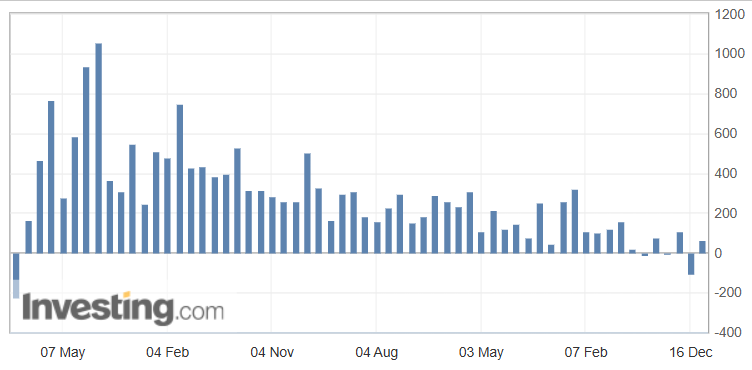
Tomorrow’s Non-Farm Payrolls report is the key test for both markets and the Federal Reserve. The previous print of 64k jobs already signaled a clear cooling in labor demand, and the current 57k forecast points to further moderation rather than contraction. At these low levels, even a modest surprise will carry outsized policy implications.
A result near or slightly below 57k, especially with softer wage growth, would reinforce the Fed’s view that restrictive policy is working as intended. This would support the soft-landing narrative, keep the Fed on hold in the near term, and strengthen expectations for rate cuts later in 2026, likely pushing yields slightly lower and the dollar modestly weaker.
A stronger-than-expected print, particularly above the prior 64k with firm wages, would challenge current market pricing. It would suggest labor conditions remain tighter than desired, prompting the Fed to maintain a more restrictive stance for longer. In this case, yields and the dollar would move higher as rate-cut expectations are pushed back.
Overall, the report is less about whether the labor market is cooling and more about how fast it is cooling—an assessment that will directly shape the Fed’s policy outlook in the months ahead.
Source: Investing.com