Navy to shoot and kill any boat laying mines in Hormuz Strait
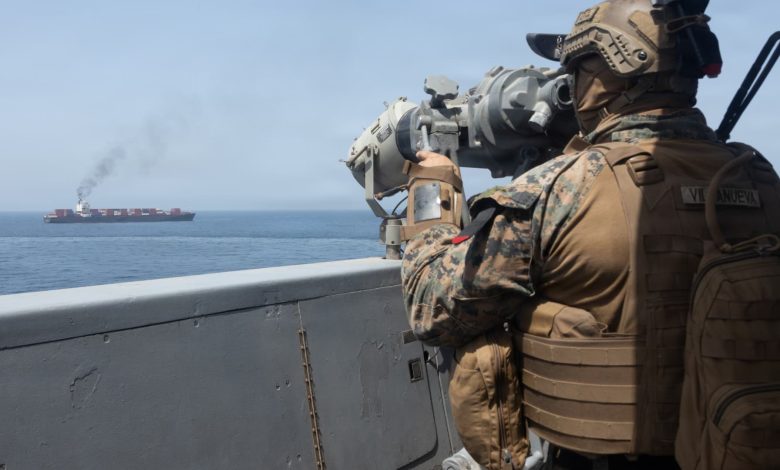
In this handout photo provided by U.S. Central Command, U.S. forces patrol the Arabian Sea near M/V Touska on April 20, 2026, after firing upon the Iranian-flagged vessel that the U.S. accused of attempting to violate the U.S. naval blockade of Iranian ports near the Strait of Hormuz.
U.S. Navy | Getty Images
President Donald Trump on Thursday said he has ordered the U.S. Navy “to shoot and kill any boat” that is laying mines in the Strait of Hormuz.
“There is to be no hesitation,” Trump wrote in a Truth Social post.
The president added that he is ordering U.S. minesweepers to continue clearing the strait “at a tripled up level!”
The post shows the U.S. ratcheting up tensions with Iran over the vital oil-shipping route, which has been largely choked off since the war began in late February.
Trump has aggressively pushed Tehran to fully reopen the strait as part of a shaky ceasefire, which was set to expire this week before being unilaterally extended by the president.
The U.S. has imposed a retaliatory naval blockade on Iranian ports in the region, in an effort to force Tehran to loosen its grip on the waterway and come to the negotiating table.
At the same time, Trump insists that America, not Iran, is calling the shots in the strait.
“We have total control over the Strait of Hormuz,” he wrote in another Truth Social post later Thursday morning.
“No ship can enter or leave without the approval of the United States Navy. It is ‘Sealed up Tight,’ until such time as Iran is able to make a DEAL!!!” he wrote.
U.S. Central Command said overnight that it has so far directed 31 ships to turn around or return to port as part of the blockade.
But tanker traffic remains far below pre-war levels in the strait, which normally serves as the pathway for 20% of the world’s oil.
More than 100 ships, including dozens of tankers, would transit the strait each day in peace times. But that number has fallen to single digits on most days after Iran imposed its de facto closure.
At least eight ships transited the strait on Wednesday, including three oil tankers, according to tracking data from LSEG.
Iran’s parliamentary speaker Mohammad Bagher Ghalibaf said Wednesday that “reopening the Strait of Hormuz is impossible” as long as the U.S. blockade is in place.
This is breaking news. Please refresh for updates.