OPINION: Politics, AI, and human dignity
As a political consultant, I used to say, “Campaigns are about the candidate, but politics is about people.”
That’s partially correct. Campaigns naturally focus on getting a candidate elected. They require strategy and messaging that elevate a candidate and separate him or her from the pack. What my younger self missed was that while promoting a candidate is necessary, it’s equally important to keep the people he or she wants to represent top of mind.
So what does this have to do with AI and human dignity? I’m so glad you asked.
Ronald Reagan famously said, “The nine most terrifying words in the English language are: I’m from the government and I’m here to help.” Conservatives have long understood that institutions, whether government, corporations, or political parties, can lose sight of the people they were created to serve. When that happens, individuals become means to an end rather than ends in themselves.
That concern is at the heart of Pope Leo XIV’s recent encyclical Magnifica Humanitas. Writing about artificial intelligence, Leo warns against reducing human beings to data points, algorithms, productivity metrics, or tools for achieving someone else’s objectives. Technology, he argues, should serve people; not the other way around.
My interest in these ideas deepened after a recent tour of the Vatican. Although I’m not Catholic, walking through the history of the Catholic Church and seeing the legacy of its leaders firsthand prompted me to learn more about the visions of the modern popes and how they have addressed the challenges of their times. What I found was a remarkably consistent emphasis on the dignity of the human person.
It’s a modern application of a principle championed by Pope John Paul II throughout his papacy. John Paul taught that every person possesses inherent dignity because they are created in the image of God. A person’s value is not determined by intelligence, wealth, productivity, popularity, or political usefulness. Human dignity is not earned; it is inherent — a natural and permanent part of who a person is.
While neither pope was writing specifically about party politics, their message has important implications for those of us who participate in it: Political parties exist to advance ideas and elect candidates, but they should never lose sight of the people they represent. When parties begin viewing voters, volunteers, precinct committeemen, donors, or even political opponents as obstacles to be managed, numbers to be counted, or tools to be deployed, they have lost something essential and missed the point.
The temptation is hardly new. Every political organization, regardless of ideology, risks becoming more focused on winning than serving. Success becomes the goal rather than a means to achieve good governance. Loyalty becomes more important than character. Power becomes more important than principle.
The irony is that movements built around freedom become less free when they stop valuing the people within them and the people they claim to serve.
Artificial intelligence presents a similar challenge. AI can be an extraordinary tool. It can help us communicate, organize information, and solve problems more efficiently. But it cannot replace conscience, compassion, wisdom, or the relationships that bring us together. It cannot love its neighbor. It cannot recognize the inherent worth of another human being.
Neither can political institutions. That responsibility belongs to us.
Whether we are building technology, running campaigns, serving in government, or participating in our local political party, the measure of success is not simply whether we win. It is whether we remember that every person has dignity and value independent of their usefulness to our cause.
Campaigns may be about candidates. Politics may be about ideas. But good government and healthy communities begin when we remember that both are ultimately about people. And that, my friends, is the Idaho way.
• • •
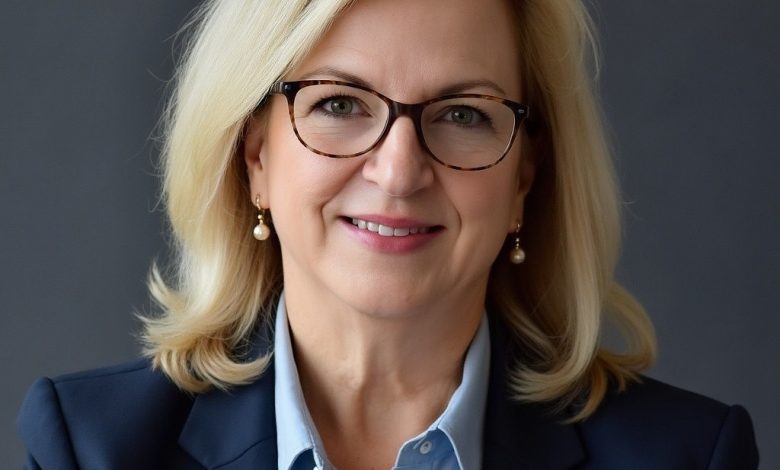
Becky Funk is a member of North Idaho Republicans and a former Republican Chair of Legislative District 4.
Credit: Source link