Profiles in courage are in short supply in politics
In a Tribune op-ed earlier this year, I called for a new generation of leaders, yet I begged the question: What is leadership? I define political leadership as the capacity of a politician to build up political capital — and then be willing to spend it in support of tough, unpopular decisions, even at the cost of losing an election.
I fear political courage is in short supply. Otherwise, we wouldn’t have huge, potentially debilitating federal deficits as well as hobbling, unfunded pension liabilities in my state of Illinois.
Political capital is money, reputation, celebrity, respect, accrued party or popular support. Without political capital, leadership is irrelevant, because such a person is incapable of being a leader. Political capital translates into power and influence, that is, the capacity to get someone to do something he didn’t want to do (power) or persuade someone to do something he hadn’t planned to do (influence).
Political party organizations could at one time provide effective support (capital) to elected officials who showed political courage that was unpopular with voters. For example, if an official lost an election for showing political courage, the party organization could provide the ousted official a good patronage job until the politician could rebuild his political capital.
Today, party organizations are mostly dead. Instead, money has become the decisive political capital that can win elections and sustain officials.
For example, Gov. JB Pritzker, who appears to be a decent fellow. Yet, do readers think he would be governor and a presidential wannabe without having spent some $400 million on his own and other political campaigns? And with endless amounts of more money on offer.
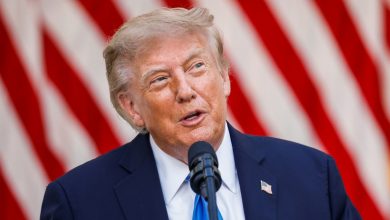
Public reputation is also important. Dwight Eisenhower commanded our troops in World War II. After the war, his stature was so great that both major political parties wanted him to run as their candidate for president! Republican Donald Trump cashed in his television celebrity to stand out instantly among 13 candidates in the 2016 presidential primary.
Most political wannabes lack big money and positive high visibility. So, they face situations where the right thing to do, often unpopular, may drain all one’s political capital and even end a public career.
If elected officials go into office promising to do what voters want, we lose. Being human, voters want more government services spent on them and lower taxes. To follow voters slavishly is “followership.” This is why we regularly run budget deficits in the national and Illinois governments.
There are illustrations of political courage.
John Peter Altgeld was governor of Illinois in the 1890s. Before he became governor, in the mid-1880s, a demonstration by professed anarchists in downtown Chicago turned into a riot known as the Haymarket affair, and people were killed. Several of the anarchists were convicted of the deaths, to strong public approval. Altgeld believed the anarchists had been railroaded, and he pardoned those who had not already been hung. Political career over. Yet, he became a hero to students of justice and historians.
By the way, Altgeld, a booster of higher education in his state, is the namesake of prominent buildings on several public university campuses in Illinois.

In the 1990s, Laurel Prussing was an up-and-coming young member of the Illinois House from downstate Urbana. An economist by education, she thought taxing services was the right thing to do, and so she proposed taxing a list of services. Goodbye, Prussing, defeated in her subsequent reelection bid. She went on to become three-term mayor of her city and has since provided important public service in many ways.
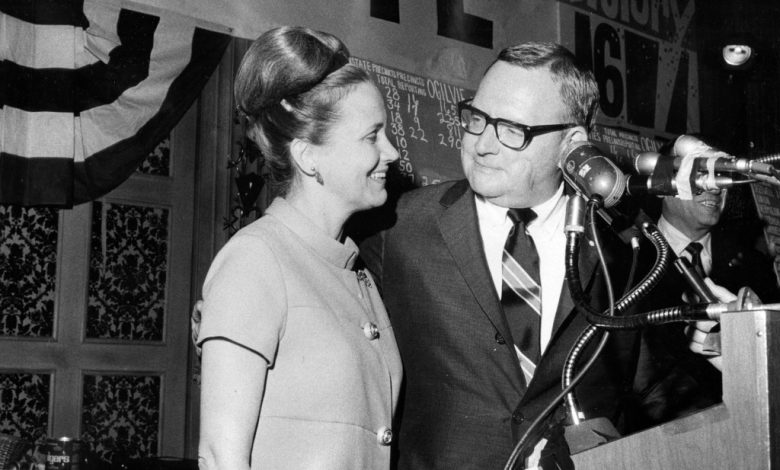
Richard Ogilvie had been a tank commander in WWII. Back in Chicago after the war, he ran for Cook County sheriff as a Republican and was elected and then became president of the county board. Ogilvie ran for governor in 1968, won and found the state’s fiscal situation dire.

In his first year as the state’s chief executive, Ogilvie proposed a new income tax. He cajoled Democratic Chicago Mayor Richard J. Daley into providing votes to offset Republicans who wouldn’t vote for the tax, which was, as you can imagine, unpopular. His campaign slogan in his 1972 reelection bid: “Do right and damn the odds.” He did, and he lost, narrowly. Ogilvie went on to become a successful, prosperous attorney in Chicago, and is today considered by close observers to be one of the state’s outstanding governors.
There is life after politics. Do right and damn the odds.
Jim Nowlan was a member of the Illinois House in the 1960 and ’70s and Gov. Richard Ogilvie’s running mate in 1972. He is also a retired professor of politics at the University of Illinois and co-author of “Illinois Politics: A Citizen’s Guide to Politics, Policy and Government.”
Submit a letter, of no more than 400 words, to the editor here or email letters@chicagotribune.com.
Credit: Source link