Rewriting history? – Illinois Times, the capital city’s weekly source of news, politics, arts, entertainment, culture
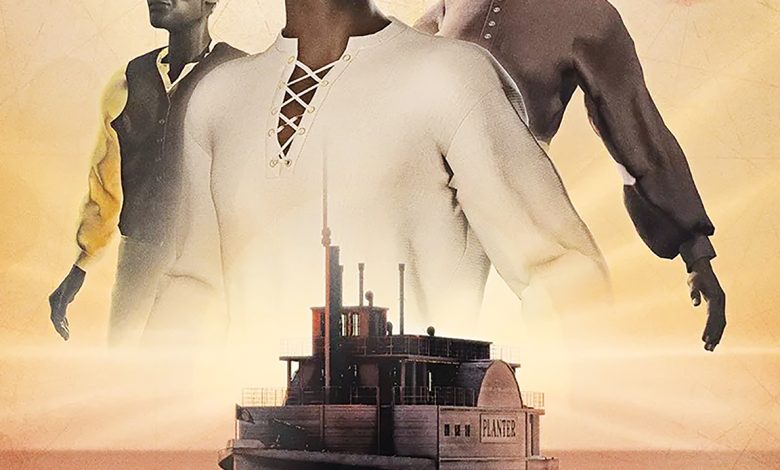
An exciting tale is told in a new $73,000 state-funded video presentation at the Abraham Lincoln Presidential Museum. The animated production brings to life the story of Robert Smalls, an enslaved man who purloined a Confederate boat, picked up other enslaved people, and piloted the boat to freedom as they reached the Union naval blockade outside of Charleston, South Carolina, in 1862. The drama is intense, especially the part in the video where Fort Sumter’s cannons fire on the fleeing boat.
The video has most of the elements that bring this dramatic and inspiring story to life. What it doesn’t have, according to historians, including at least one from the Presidential Museum, is historical accuracy – especially the part about cannons being fired at the freedom-seekers on the boat.
“In regard to Fort Sumter firing on the Planter as she escaped, there is no evidence that Southern authorities attempted to stop the Planter with artillery fire,” reads a line from a report titled “Historical inaccuracies in Robert Smalls Video” written by Ian Hunt, the head of acquisitions and Lincoln historian at the Abraham Lincoln Presidential Library and Museum (ALPLM). “Though dramatic in its recreation, the video actually takes away from the intelligence and heroism that Robert Smalls displayed that night that he and the others were able to fool highly trained military officers,” the report adds.
Hunt’s report, which also mentions other inaccuracies in the video, was submitted to ALPLM administrators on Jan. 26. During March, the video, titled Unsinkable Freedom: The Self-Emancipation of Robert Smalls, debuted in the museum’s Mr. Lincoln Theater and has been playing for visitors ever since. None of the alleged inaccuracies in the video have been corrected.
Robert Smalls was an enslaved crew member on a ship called the Planter that operated in Charleston Harbor. PHOTO COURTESY SOUTH CAROLINA DEPARTMENT OF ARCHIVES AND HISTORY
The Smalls story is well-known and well-documented. The 1862 incident received wide newspaper coverage at the time, the National Park Service interprets the story at Fort Sumter National Monument, and at least two books have been written about Smalls’ audacious journey to freedom. All of these accounts have Smalls leaving Charleston Harbor undetected, and unfired upon, by Confederate forces.
When asked about the difference between the historical record and what is presented in the video, ALPLM spokesperson Chris Wills provided this statement:
“Unsinkable Freedom is a dramatization of historical events, and has been described as such in the press release, the website and posters outside the theater. Ultimately, this animated film is designed to engage and capture the imagination of the general public and visitors to the ALPLM. As it is a dramatization, creative decisions were made to ensure the audience could fully grasp who the main players and characters were and how much danger and risk Robert Smalls undertook during his daring feat. Out of an abundance of clear communication, ALPLM will add an additional disclaimer at the beginning of the film, noting that it is a dramatization, in addition to the language featured on the website and the press release.”
“They steamed past the unsuspecting rebels.”
The official National Park Service history of Smalls, included in the Fort Sumter National Monument website, tells the story of a man who hatched a bold plan to gain freedom for himself and others. After that plan succeeded, he spent the rest of his life in activism and elected offices working to secure rights for formerly enslaved people.
According to the history on the website, Smalls was an enslaved crew member on a ship called the Planter that operated in Charleston Harbor. The ship’s owners contracted the vessel to the Confederate army as a transport ship, and Smalls was made a pilot on the ship. It was during this time that Smalls devised a plan to use the boat as a means to secure freedom for himself and other enslaved persons.
The National Park Service history describes the actions that Smalls took on that fateful journey to freedom:
“On the night of May 12, 1862, the white crew members of the Planter went ashore in Charleston, leaving Smalls and the enslaved crew members unattended. Around 3 a.m., Smalls and his fellow freedom seekers fired up the ship’s boilers and sailed to a wharf to pick up their waiting family members. From there, the 16 enslaved people passed the Confederate forces at Fort Sumter and Fort Moultrie. Being a pilot, Smalls knew the proper signals to give, and even donned a captain’s hat to help disguise his identity as they steamed past the unsuspecting rebels. Smalls sailed the group out to the naval blockade squadron and turned the Planter over to the United States Navy.”
Newspapers at the time indicated that Smalls’ group left the harbor undetected. The Charleston Daily Courier reported on May 14, 1862, that “The news, at first was not credited; and it was not until, by the aid of glasses, she [Planter] was discovered, lying between two Federal frigates, that all doubt on the subject was dispelled.”
On May 23, 1862, The Liberator newspaper quoted the Port Royal, South Carolina Commercial Advertiser that “When off Fort Sumter, the sentry on the ramparts hailed the boat, and Small sounded the countersign with the whistle, three shrill sounds and one hissing sound. The vessel being known to the officer of the day, no objection was raised, the sentry only singing out: ‘Blow the d—d Yankees to hell, or bring one of them in.’ ‘Aye, Aye,’ was the answer, and every possible effort was made to get below. Hardly was the vessel out of range when Small ran up a white flag, and went to the United States fleet, where he surrendered the vessel.” Some period accounts, like this one, list Robert’s last name as “Small” rather than “Smalls.”

Robert Small is pictured in 1862, left, the same year he piloted a ship of enslaved people to freedom, and later in life. PHOTO COURTESY SOUTH CAROLINA DEPARTMENT OF ARCHIVES AND HISTORY.
Author Cate Lineberry used numerous historical sources while researching her book, Be free or die: The amazing story of Robert Smalls’ escape from slavery to Union hero. Regarding the Planter’s passage by Fort Sumter, Lineberry writes:
“What Smalls and the others on board the Planter did not know then was that, just as they were passing Fort Sumter, Relyea (the ship’s Confederate captain) had appeared at the wharf and found his steamer was missing. He had immediately suspected what was going on, but rather than sound an alarm right away, he started asking questions. Had he notified the guards immediately, the Confederate soldiers at Sumter probably would have fired on the Planter. Instead, the ship passed the imposing fort without any trouble.”
A children’s book researched and written by Louise Meriwether, The freedom ship of Robert Smalls, also has the Planter leaving Charleston Harbor undetected by Confederate forces:
“Finally he heard the sentry yell: ‘Pass the Planter!’ They were not going to be blown out of the water! They were saved. Robert piloted the ship past the fort’s huge guns and out to the open sea.”
With all of the available sources and research on Smalls indicating that no cannons were fired while the Planter passed Fort Sumter, why did the ALPLM decide to add that extra element to the story? The institution’s chief operating officer Christen Stanley, who had just reviewed Hunt’s “Historical inaccuracies” memo on Jan. 26, wrote a memo the same day to ALPLM executive director Christina Shutt:
“When considering the telling of the story of Smalls as to whether shots were fired, I am inclined to retell the story from the family rather than the story from newspapers at the time. I feel there are equal chances that either story was embellished or diminished, each side with their own reasons for doing so. As we are telling the story of a man and his remarkable achievements, I prefer to use the sources closest to him (his descendants) as the final say.”
According to an electronic link in the memo, the definitive reference for the ALPLM’s version of the story was a video from an Oct. 3, 2015, talk by Smalls’ great-great-grandson, Michael B. Moore, who told an audience at his former Massachusetts prep school:
“It’s a story that I’ve grown up with….As they passed by Fort Sumter…they waited until the last moment and then they veered toward the blockade. At that time the sentries at Fort Sumter realized that ‘Hey, something’s going on here,’ and directed their cannons toward the Planter. Thankfully, they were outside the range of the cannons.”
When asked, the ALPLM did not provide any other source material for their version of the Smalls story. Spokesperson Wills added:
“Unsinkable Freedom is an animated dramatization designed to illuminate the heroic story of Robert Smalls. Released during Black History Month and designed to elevate one of the lesser-known stories of the Civil War to the general public, Unsinkable Freedom was meant to be enjoyed and understood by people of all ages and walks of life, especially children. Inspiring the next generation of history lovers requires innovative storytelling using engaging content and that was achieved by the animation.”
“History is based on evidence.”
Fort Sumter National Monument stands by its interpretation of the Smalls story.
“From our research and what we tell visitors, the Planter was not fired upon by Confederate forces,” said park ranger Brett Spaulding. “We tell the people that they provided the passwords that they needed to and they were allowed to steam on their way. This is the result of extensive research by National Park Service historians.”
ALPLM historian Hunt’s report also points out two other historical inaccuracies where the video does not agree with the historical record. The video shows Smalls delivering the “passwords” to get by the two Confederate forts by blowing a penny whistle, which would have been nearly impossible for the forts’ sentries to hear: “The blowing of the ship’s whistle would have been a steam whistle likely mounted on or near the bridge, not a penny whistle blown by Smalls himself.” Hunt also noted that the flag flown in the video on the Planter is incorrect.
Stanley, the institution’s COO, considered the flag faux pas to be the most egregious error, as she related in her memo to executive director Shutt: “I feel like the liberty taken with the flag at the center of the ship is the most egregious. I have consulted with Virginia Ellison, COO and head of collections at the South Carolina Historical Society. She sent me an image and quote that confirms what Ian shared…My recommendation is to ask for the flag to be corrected, pay the fee for this revision, and try to have the final cut of the film done by the end of February.”

Robert Smalls is pictured during his time in the U.S. Congress, where he served five terms from 1875 to 1887. PHOTO COURTESY SOUTH CAROLINA DEPARTMENT OF ARCHIVES AND HISTORY
A recent review of the video shows that the flag error was not corrected as Stanley recommended to Shutt. Stanley left the ALPLM on April 15 and former Springfield Ward 6 Ald. Kristin DiCenso, who has held administrative positions at the Illinois Department of Natural Resources and the Department of Financial and Professional Regulation, is the new ALPLM chief operating officer. DiCenso was not involved in the decisions regarding the video’s development or release.
Brian Mitchell was the director of research and interpretation at ALPLM from 2022-2024 and is now the Center for Lincoln Studies Public Humanities Fellow at University of Illinois Springfield. He is a well-known African American historian and had this to say after viewing Unsinkable Freedom:
“I believe that it is important to note that we are living in a time where histories, particularly those of marginalized communities, are being erased and suppressed. We are unfortunately witnessing unparalleled attacks on academic institutions, museums, libraries and the people who work within them,” Mitchell said. “What differentiates history from storytelling is that history is based on evidence, what we can prove using historical sources, and storytelling relies heavily on the plot, creativity and imagination of storytellers. By introducing false narratives into museums, we risk losing the trust of our visitors, who are relying on accurate interpretations of historical events.”
“To ensure that future exhibits are not plagued by inaccuracies, administrators must rely on the research of historians and museum professionals, which means they must trust the interpretations of those scholars and resist the temptation to embellish our histories to make them more exciting,” added Mitchell, whose former position remains vacant.
According to the ALPLM, current historians on staff with doctorate credentials include Hunt, 19th century scholar Raquel Henry, papers of Abraham Lincoln historian Daniel Worthington, oral historian Scott Lloyd, and manuscripts librarian Chris Schnell. The state historian position, based at the ALPLM, has been vacant since 2021. The ALPLM gave no indication to Illinois Times that any historian besides Hunt was asked for an opinion on Unsinkable Freedom, and his input was only sought after the video had been produced.
“Without the exaggeration that takes it into the realm of fiction rather than fact.”
The developers of the ALPLM took great pains to present the story of Lincoln and his times as accurately as possible. Tom Schwartz was the Illinois state historian from 1993 to 2011 and was extensively involved in the ALPLM’s planning process. Schwartz, who is currently executive director of the Herbert Hoover Presidential Library and Museum in West Branch, Iowa, said the ALPLM design team assembled a blue-ribbon panel of historians and educators to make sure that the interpretation of Lincoln’s legacy was accurate and appropriate.
“Obviously Illinois is the Land of Lincoln and you’ve got to be able to represent your state motto accurately, especially a story that is so large and broad and kind of encrusted in mythology,” Schwartz said. “You must get down to the basic historical core without the exaggeration that takes it into the realm of fiction rather than fact.”
The members of the initial ALPLM Historical Content Team included Lincoln site managers and researchers from the Illinois Historic Preservation Agency, the one-time state agency that initially administered the ALPLM; Lincoln-era biographers and historians; master teachers in the elementary, middle and high school levels from throughout Illinois; and Lincoln Home National Historic Site staff.
BRC Imagination Arts, the Presidential Museum’s designers, held several sessions with the Historical Content Team, plus other educators and the general public, to gauge “what people thought about when Lincoln’s name was evoked and the things that they thought should be covered in a museum dedicated to Abraham Lincoln,” Schwartz recalled.
“From those initial charrettes and design sessions, the folks at BRC distilled it down into themes and galleries, then from that there was a smaller group of historians that talked about content for each of those galleries,” Schwartz said. “When the final narrative was created, a final group of historians came in who hadn’t been involved with the process prior to this, they had no particular vested interest in seeing a particular story or idea in the museum, and they looked at the narrative and offered corrections.”
“There was an entire process of obtaining input from a wide variety of disciplines, not only leading scholars in the field but also educators,” Schwartz added. “We had master teachers because we knew that school groups were going to come through and we needed to know how a fifth or eighth-grader would be able to understand things.”
But even the experts back then missed a few things. The Chicago Tribune ran a story entitled “What would Honest Abe say?” that was later published in newspapers nationwide the week before the Presidential Museum opened to the public in April 2005. Reporter Ray Long, who was among the Tribune reporters nominated for a Pulitzer Prize for another, unrelated story, went through the museum’s exhibits and interpretation word-for-word and pointed out several apparent discrepancies between the interpretation and the historical record.
Schwartz said ALPLM officials read the story, reviewed the interpretation in the museum, and made corrections.
“That’s why museums have soft openings; you can never have enough people looking at things,” Schwartz said. “The Ken Burns Civil War series got Lincoln’s death date wrong after having been vetted by all of those leading historians. You sometimes look at something over a long period of time and you quit seeing it. So when fresh eyes come and look at it, it allows you to tweak things.”
Long was contacted recently about the Smalls’ video and the apparent discrepancy between what the video shows versus the historical record.
“If the library is intentionally adding fiction to spice up a story, that means it failed to learn from its own history,” Long said. “That the Abraham Lincoln Presidential Library and Museum would make a mistake is forgivable if the wrong information is corrected. If the library knowingly hyped a story with incorrect information, it would be unforgivable.”
Long thinks the ALPLM should adhere more closely to the legacy of “Honest Abe.”
“The library is a crown jewel in Springfield that honors its greatest citizen. Any intentional deviation from the known facts would be a stain on the institution,” Long added. “The Great Emancipator’s story and the events of his era need no hype. Any decision driven by a desire to add sizzle instead of telling the truth should be discarded immediately. The people at the library should follow the 16th President’s challenge to follow the ‘better angels of our nature.’”
“Purchase the Beaufort mansion of the man who had previously enslaved him.”
The Smalls story goes far beyond his 1862 freedom boat adventure. The official National Park Service history adds that Smalls provided intelligence to Union officials on Confederate operations around Charleston Harbor. He served as a pilot aboard several naval vessels operating against Confederate forces there, including the USS Keokuk, an ironclad which was sunk by enemy fire in April 1863, injuring Smalls in the process. Smalls was promoted to captain and given command of the Planter, the boat on which he made his journey to freedom, and the vessel saw service for the duration of the Civil War.
By early 1864 Smalls used the prize money he received for the capture of the Planter to purchase the Beaufort mansion of the man who had previously enslaved him.
Smalls began his political activism later in 1864 when he served as a delegate to the Republican National Convention, which nominated Abraham Lincoln for re-election as president. Also that year he was arrested in Philadelphia for riding in a segregated streetcar. Smalls organized a boycott in response that ultimately led to the desegregation of Philadelphia’s transit system in 1867.
Shortly after the Civil War ended, Smalls and another man opened a store for Freedmen. Smalls served as a delegate to the 1868 South Carolina state convention and lobbied for universal public education, regardless of race, as a key component of the new state constitution. That same year he was elected to the state House of Representatives, then to the state Senate in 1872. In 1874, the citizens of Beaufort elected Smalls to the U.S. Congress, where he served five terms from 1875 to 1887.
In the 2000s, citizens in Beaufort lobbied for the creation of a national park site to tell the story of Smalls and the importance of Reconstruction. President Barack Obama issued an executive order in January 2017 establishing the Reconstruction Era National Monument in Beaufort County, noting the significance of Smalls to the nation’s story. The park was renamed the Reconstruction Era National Historical Park in 2018, and it includes a visitor center a few blocks away from Smalls’ home and final resting place.
David Blanchette has been involved in journalism since 1979, first as an award-winning broadcaster, then a state government spokesperson, and now as a freelance writer and photographer. He was involved in the development of the Abraham Lincoln Presidential Library and Museum as an employee of the former Illinois Historic Preservation Agency. David currently talks about the development of the Library and Museum as part of Lincoln Land Community College’s Road Scholar speaker series.
This article appears in May 14-20, 2026.
Related
Credit: Source link