Royal Road Minerals eyes Colombia growth opportunities – ICYMI

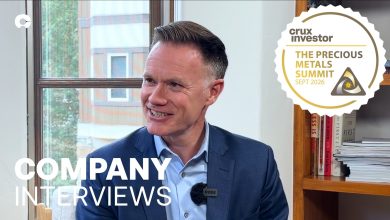
Royal Road Minerals Ltd (TSX-V:RYR, OTC:RRDMF, FRA:RLU) CEO Dr Tim Coughlin talked with Proactive about how the company’s long-term exploration strategy in Colombia remains focused on community relationships while monitoring the implications of a new administration taking office in the country.
Coughlin said it is still too early to make definitive conclusions about the political transition, but stressed that there has been no change to the company’s approach at its flagship GAM project, where drilling activities continue. He highlighted that successful project development depends primarily on maintaining strong relationships with local communities.
The CEO noted that Colombia remains highly prospective for both copper and gold exploration, pointing to growing demand for copper and the country’s geological potential. Royal Road Minerals controls approximately 1,840km² of combined titles and applications, making it one of the country’s largest title holders. The company also holds assets near the Ecuador border within a recognised porphyry belt.
The interview also covered exploration priorities beyond the GAM project, including the Northern Block, the gold-porphyry-style Ased project and the El Molino system in Caldas. Coughlin described El Molino as a “spectacular project” and outlined how previous geophysical work has helped identify priority exploration targets.
Looking ahead, Royal Road Minerals is evaluating ways to maximise value across its extensive land package, including local partnership models that could help strengthen community engagement and support future project advancement.
Proactive: Hello, you’re watching Proactive. I’m joined by Dr Tim Coughlin, CEO of Royal Road Minerals. Tim, very good morning. With a new administration set to take office in Colombia, Royal Road continues to build its Colombia portfolio through different political cycles. Does the election result change your level of confidence in the long-term opportunity, or does it simply reinforce the strategy you’ve already been pursuing?
Dr Tim Coughlin: Good to see you again. It’s probably too early to say anything definitive and objective. With respect to the GAM project, where we’ve been drilling for some time, there’s no change. Despite what happens in Bogotá, the key component to success on that project, and almost any project elsewhere, is the relationship with the community. That’s where we’ll continue to focus our efforts.
More broadly, Colombia remains highly prospective for copper and gold. We are still one of the largest title holders in the country, with approximately 1,840km² of combined titles and applications. We’d love to advance the entire licence package because it contains several porphyry intrusion-related gold systems and other prospects built on around 20 years of work by the previous owner. We also have titles near the Ecuador border in the porphyry belt that we secured in 2017.
The key variable in advancing those projects is political will. Everything else can be managed. With a change of administration, we’re hopeful we may see some of that political will, but we’ll have to wait and see.
GAM remains your most advanced project. Where else in the portfolio will exploration be focused?
There are a couple of projects we’ve already advanced in what we call the Northern Block in Caldas. One of those is Ased, which looks more like a gold porphyry system. The El Molino system in northern Caldas is also a spectacular project. We completed airborne magnetic geophysics there a few years ago and feel confident about where we need to focus exploration.
We also have several projects in Nariño, but Ased and El Molino would be our principal immediate focus.
With more than 1,840km² of exploration ground under control, how does Royal Road ensure it focuses time and capital on the opportunities with the greatest potential to create shareholder value?
Up until now, that has largely been dictated by practicality. We focus on areas where we have meaningful community support and where it is safe for our employees to operate.
If conditions change, it becomes a good problem to have, but still a challenge. The optionality includes expanding, entering joint ventures or completing transactions. One concept I’d like to revisit is the idea of very local joint ventures. Rather than partnering exclusively with international companies, we could help establish local partnerships and work alongside them on some prospects. In some cases, that could help alleviate perceived social tensions.
Tim, I hope you’ll continue to keep us updated on your progress. Thank you very much for your time today.
My pleasure. Thanks again.
Quotes have been lightly edited for style and clarity